Related hubs: AI comparisons hub, Best AI image generator ranking, Models index hub.
Creators keep returning to this comparison because they want a straight trade-off before they subscribe—not because any abstract traffic number should decide the budget.
This page states that trade-off plainly, then adds the angle binary articles usually skip: routing different engines per brief instead of forcing one aesthetic across every deliverable.
Quick answer: Midjourney alternatives still anchors many mood-board workflows thanks to compositional drama and community prompt lore. Leonardo remains attractive when you want generous sampling tiers plus canvas-style iteration inside one vendor UI. For technical photoreal tests, run Flux 2 and Google Imagen 4 against your own references rather than trusting adjectives in a blog post. Cliprise pricing is the source of truth for wallet math here; Midjourney alternatives on Cliprise ships beside Flux 2, Imagen 4, Ideogram v3, and 40+ additional routes when you want multi-engine access without juggling separate subscriptions for every flagship.
You can run those side-by-side tests from Cliprise’s multi-model image generator instead of paying for Leonardo plus separate flagship subscriptions.
What People Are Actually Asking
The "Leonardo AI vs Midjourney" search is not always a straight product comparison. It comes from a few distinct situations:
Creative professional choosing a primary tool. These users want to know which model produces better outputs for their specific use case - portfolio art, commercial photography, concept design.
Budget-conscious creator evaluating options. Leonardo has a generous free tier. Midjourney does not offer a free plan (only a trial). For creators testing before committing, Leonardo is often the starting point and Midjourney is the upgrade question.
Creator who uses one and is curious about the other. Midjourney users wondering if Leonardo's canvas features are worth switching for. Leonardo users wondering if Midjourney's aesthetic quality is worth the paid plan.
Creator who realizes they need more than one model. This is the searcher who is actually closest to the multi-model platform conversation.
Understanding which situation you are in determines which part of this comparison is most useful for you.
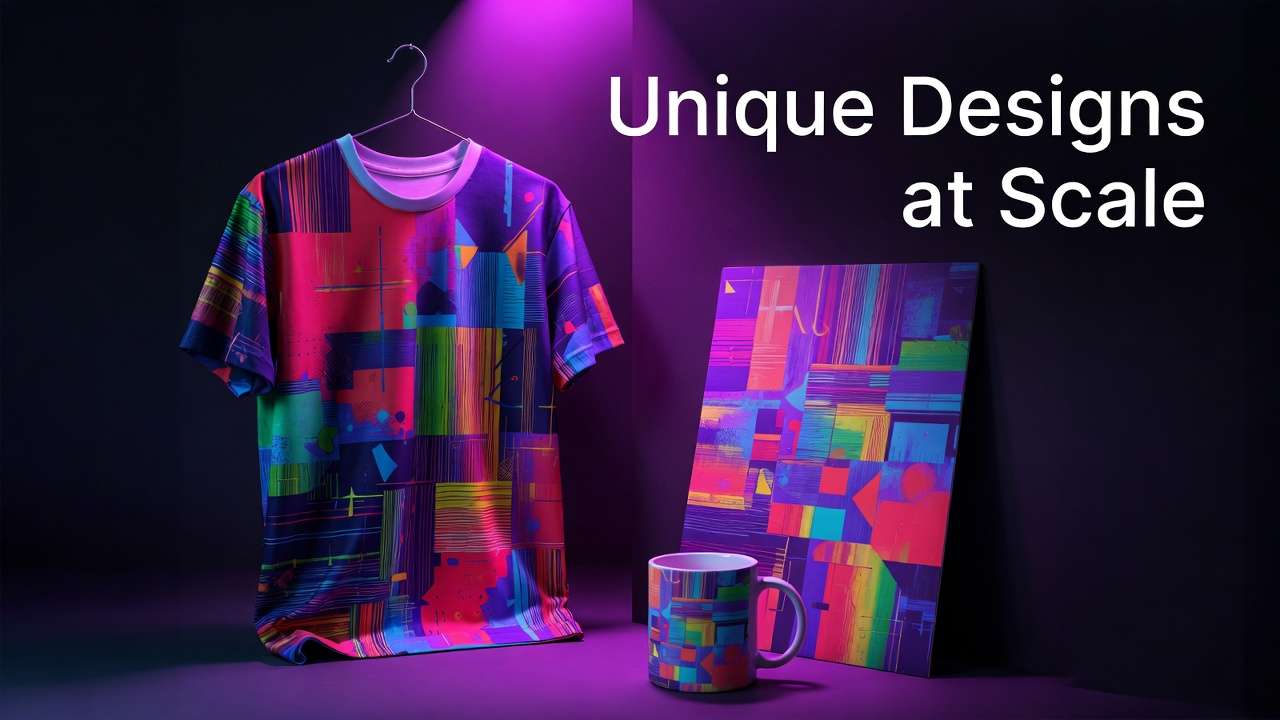
Leonardo AI: What It Does Well
Leonardo AI is a feature-rich platform with a significant free tier, a canvas editing environment, and a range of specialized models. It is not just an API wrapper - Leonardo has built a genuine product layer on top of image generation.
Free tier. Leonardo markets a meaningful daily allowance for experimentation—third-party writeups often cite ~150 tokens per day with a 24-hour reset. Treat that as historical orientation: Leonardo can change quotas without updating external articles, so confirm inside Leonardo before you bake the number into a client deck.
Canvas and editing tools. Leonardo ships a canvas workflow for outpainting, inpainting, and compositing without exporting to another editor—still a practical reason teams keep Leonardo open alongside pure generators.
Model variety within the platform. Leonardo rotates branded routes over time (examples such as Phoenix or Lightning XL appear in marketing materials). Use Leonardo's in-app catalog—not this sentence—for today's list.
Workflow integration. The product is positioned as a creative workspace rather than a bare API button—helpful when sessions blend edits with regeneration loops.
Where Leonardo can trail Midjourney: For maximalist still-frame drama—the aesthetic Midjourney became famous for—many creators still default to Midjourney first and treat Leonardo as the ergonomics layer.
Midjourney: What It Does Well
Midjourney is the model most associated with AI image generation's aesthetic potential. Its position in the creative community is built on output quality that consistently produces visually striking results.
Aesthetic quality ceiling. For concept art, editorial illustration, artistic photography, and any work where visual beauty and compositional sophistication are the primary value, Midjourney's outputs are among the highest quality available. The model has been tuned over multiple versions with heavy community feedback specifically optimizing for aesthetic excellence.
Style consistency and community. Midjourney has the most developed ecosystem of prompt conventions, style references, and community knowledge. The shared language for controlling Midjourney outputs is richer than any competing platform.
Niji Journey. Midjourney's Niji route remains the go-to reference for many anime-forward still workflows inside the Midjourney ecosystem—benchmark it yourself against other stylized stacks before declaring a universal winner.
v6 and beyond quality. Midjourney v6 introduced significantly improved prompt adherence alongside the existing aesthetic quality. The gap between "what you asked for" and "what you got" narrowed substantially.
Where Midjourney falls short: Text rendering is inconsistent - logos, posters, and any design requiring accurate embedded text need supplementary tools. The platform interface (now web-based but historically Discord-dependent) is less feature-rich than Leonardo's canvas environment. No video generation.
Head-to-Head: Leonardo AI vs Midjourney
Leonardo and Midjourney rename tiers frequently—verify checkout pages before you quote dollars in a procurement memo.
| Leonardo AI | Midjourney | |
|---|---|---|
| Free tier | Daily tokens (confirm live quota in-product) | No evergreen free plan—trial/paid access |
| Entry paid | See Leonardo pricing | See Midjourney pricing |
| Professional | See Leonardo pricing | See Midjourney pricing |
| Artistic quality ceiling | Good | Excellent |
| Photorealism | Good | Medium-high |
| Text rendering | Fair | Poor-fair |
| Canvas / editing tools | Yes (native) | Limited |
| Internal model variety | High (multiple models) | Medium (Midjourney + Niji) |
| Anime / stylized | Good | Excellent (Niji Journey) |
| Community and resources | Large | Largest |
| Video generation | Yes (limited) | No |
| API access | Yes | Yes |
Where Each Model Is Stronger
Choose Midjourney when:
- Your work is primarily artistic, editorial, or conceptual - where aesthetic quality and visual distinctiveness are the primary value
- You produce concept art, mood boards, or illustrative work where the model's aesthetic sensibility is an asset
- The Niji Journey anime model is relevant to your style
- You value access to the most developed community knowledge and prompt ecosystem
Choose Leonardo when:
- You want a free tier for learning and casual generation
- The canvas editing environment is important to your workflow
- You need an integrated platform with editing tools, not just generation
- You are producing volume content and want internal model variety to match different briefs
- You are testing AI image generation before committing to a paid subscription
When neither is the clear choice:
- For commercial photorealism, neither Midjourney nor Leonardo leads the category. Flux 2 and Google Imagen 4 produce more technically accurate photorealistic output.
- For text-in-image, Ideogram v3 is substantially better than either at accurate typography.
- For e-commerce product photography specifically, Flux 2 combined with Recraft tools produces a more reliable workflow.
The Comparison Most Articles Miss
Most Leonardo vs Midjourney comparisons present a binary choice. The more useful framing for working creators is: why choose between them?
Midjourney-style image workflows are available through Cliprise alternatives - as one of 47+ models accessible on a single subscription. Alongside it: Flux 2 for photorealism, Google Imagen 4 for product imagery, Ideogram v3 for text rendering, Seedream 4.5 for budget volume generation.
The models that Leonardo users favor for specific capabilities - photorealistic models, commercially-optimized image generation - are available through this same ecosystem.
The comparison changes from "Leonardo or Midjourney" to "why not have the best model for each job, including Midjourney, in one place?"
The pricing reality: Midjourney Standard pricing has historically hovered around ~$30/month, but Midjourney controls its own increases. Cliprise Starter currently lists $9.99/month with 900 monthly credits on /pricing (pricing.json, May 2026 snapshot)—confirm both vendors before you migrate spend.
Cliprise adds pooled credits across video and voice routes as well as image stacks, yet per-job debits still depend on the model and controls you pick. Run a short pricing rehearsal inside Cliprise before assuming any subscription alone guarantees unlimited flagship throughput.
For the full multi-model argument: Cliprise vs Midjourney: Why 47 Models Beat One and Single vs Multi-Model Platforms.
Specific Use Case Recommendations
For Concept Artists and Illustrators
Start with Midjourney for its aesthetic ceiling. When you need specific photorealistic references, switch to Flux 2. When the concept involves text elements, switch to Ideogram v3. A multi-model workflow gives you the right tool for each phase rather than forcing one model to handle everything.
For illustration and creative workflows: AI Prompt Engineering Complete Guide 2026 and Anime and Cartoon Style Models for Animation.
For Marketing and Commercial Creators
Leonardo's practical workflow tools are more relevant than Midjourney's aesthetic ceiling for most commercial briefs. But for pure generation quality, both are outperformed by purpose-built photorealism models. For commercial work, the model selection question is less "Leonardo vs Midjourney" and more "Flux 2 vs Imagen 4 vs Midjourney for this specific brief."
For commercial image workflows: Guide to Photorealistic AI Image Models and Best Image Generators on Cliprise Complete Guide.
For Thumbnail and Social Media Creators
Leonardo's free tier and faster iteration are practical advantages for social media volume. For thumbnails specifically, Ideogram v3 is the better choice when text accuracy matters. For purely visual thumbnails without text, Midjourney's compositional quality typically wins.
For thumbnail workflows: Mastering AI Models for YouTube Thumbnails and Video Content.
For E-Commerce and Product Photography
Neither Leonardo nor Midjourney is the right primary tool for e-commerce photography. Both lean toward the artistic rather than the technically photorealistic. For product photography: Flux 2 and Google Imagen 4 with Recraft background removal.
For e-commerce image workflows: AI E-Commerce Complete Guide 2026 and Creating E-Commerce Product Videos.
Prompt Style Differences
If you are switching between or testing both models, understanding prompt style differences prevents unnecessary iteration.
Leonardo prompting: Leonardo's models respond well to descriptive, scene-building prompts. Specificity about environment, lighting, and composition produces reliable results. The platform's internal tools (negative prompts, guidance scale) give you additional control levers after initial generation.
Midjourney prompting: Midjourney rewards stylistic and aesthetic language - references to photographers, film styles, artistic movements. Parameter control (--ar, --stylize, --chaos) gives you meaningful output variation. The prompt language community has developed extensive shorthand for controlling Midjourney outputs.
For Midjourney-specific prompting: Midjourney alternatives on Cliprise Integration Guide.
For general prompting across all models: Perfect Prompts Guide, Prompt Engineering Masterclass, and Advanced Prompt Engineering for Multi-Model Workflows.
Related Articles
- Best Midjourney Alternative in 2026
- Midjourney vs Flux 2: Image Quality Showdown 2026
- Midjourney vs Google Imagen 4: Style Comparison
- Ideogram v3 vs Midjourney: Text Rendering Comparison
- Flux 2 vs Google Imagen 4: Photorealism Test
- Best Image Generators on Cliprise Complete Guide
- Cliprise vs Midjourney: Platform Comparison
Conclusion
Leonardo AI and Midjourney occupy different niches. Leonardo is the more workflow-complete platform with a generous free tier and canvas editing tools. Midjourney is the higher aesthetic ceiling for artistic output with the richest community knowledge.
The honest answer for most creators: the Leonardo vs Midjourney decision matters less than having the right model for each specific brief. For artistic work, Midjourney. For photorealism, Flux 2. For text rendering, Ideogram v3. For volume, Seedream.
Cliprise provides access to Midjourney alternatives alongside many other engines behind one wallet—verify eligibility, debit estimates, and commercial terms on /pricing before you migrate contracts off Leonardo-only workflows.