Quick picks: which AI image generator wins in 2026?
Photoreal products and skin texture: Flux 2 tends to lead. Readable text in-frame: Google Imagen 4 or Ideogram v3. Distinctive art direction: Midjourney. Photoreal edits with tight instruction following: Grok Imagine (xAI). ChatGPT / OpenAI-led workflows: GPT Image 1.5. The full ranking, including licensing, speed tradeoffs, and when to combine engines, is below.
Searchers comparing Grok Imagine, Midjourney, Flux and DALL-E are usually not asking for one universal winner. They want to know which image generator fits a real brief: photoreal product shots, readable text, stylized art, fast edits, or OpenAI-style prompt following.
Midjourney remains a strong external benchmark for stylized imagery; Cliprise does not present it as a native model page. Inside Cliprise, you can route available models such as Flux 2, Google Imagen 4, Ideogram v3, Nano Banana 2, GPT Image 1.5 and Grok Imagine from one workflow.
In 2026, the image generation frontier has fractured - not because one tool failed, but because the use cases have differentiated faster than any single model can cover. Photorealism has its own frontier model (Flux 2). Text rendering has its own leader (Google Imagen 4). Commercial licensing has its own winner (Adobe Firefly 3). Artistic output has its own category (Midjourney). Each model excels in specific dimensions-and fails in others-making single-model workflows increasingly costly.
The question is no longer "which AI image generator is best?" It's "best at what, for whom, in what production context?"
This guide tests and ranks the leading AI image generators across the dimensions that actually determine production value. No vague "aesthetic quality" scoring. Real category winners, clear tradeoffs, and a framework for choosing the right model - or the right platform to access all of them. For the video equivalent, see Best AI Video Generator 2026. For platform-level comparisons, see Top 5 Midjourney Alternatives 2026 and Multiple AI Models One Platform.
On Cliprise, multi-model image generation is available on the AI Image Generator; for stylized and art-forward output, use the AI Art Generator.
The Testing Framework: What Actually Matters
Before rankings, methodology. "Best AI image generator" reviews are often based on aesthetic preference - someone generates images of fantasy landscapes and decides which one looks coolest. That's not useful for production decisions.
The categories that determine production value:
Photorealism - Does the output look like a photograph? Correct skin texture, accurate lighting behavior, convincing depth of field.
Text rendering - Can the model produce legible, correctly placed text inside an image? This is harder than it sounds, and the gap between models is enormous.
Prompt fidelity - Does the model produce what the prompt describes? Complex, multi-element prompts, specific compositions, precise color instructions.
Consistency across batch - If you generate 20 variations of the same concept, do they share a coherent visual identity? Critical for brand work.
Generation speed - Time from prompt submission to usable output. Matters at volume.
Commercial usability - Licensing clarity, watermark-free output, usage rights on paid plans.
Interface and workflow - Is the tool designed for production use or for hobbyist experimentation?
The Contenders: 2026's Leading AI Image Generators
1. Flux 2 - Best Overall for Photorealism
Flux 2 from Black Forest Labs is the current benchmark for photorealistic AI image generation. Built by former Stability AI researchers, the second iteration of Flux addresses every significant limitation of the first: improved human anatomy, significantly better skin texture rendering, more accurate lighting interaction, and stronger coherence on complex compositions.
Where Flux 2 leads:
Photorealism. If the test is "does this look like a photograph taken by a professional photographer," Flux 2 wins this category by a meaningful margin in 2026. Portrait work, product photography, architectural visualization, lifestyle imagery - the output ceiling is the highest available on any model in this comparison.
Prompt adherence on complex, multi-element prompts is also a Flux 2 strength. The model follows specific compositional instructions more reliably than most alternatives, making it practical for art direction-driven workflows rather than just generative exploration.
Where Flux 2 doesn't lead:
Stylized and illustrative output. Flux 2's optimization for photorealism works against it when the brief calls for illustration, graphic art, or high-contrast stylized aesthetics. The model produces competent stylized output but isn't the category leader.
Text rendering within images is also behind Imagen 4. Flux 2 has improved significantly on text from version 1, but for briefs where legible text inside the image is a hard requirement, it's not the right first choice.
Access: Direct via Black Forest Labs API, or via multi-model platforms like Cliprise. See Flux 2 Pro vs Flex analysis and Flux 2 vs Midjourney.
2. Imagen 4 (Google DeepMind) - Best for Text Rendering & Product Photography
Imagen 4 wins two categories decisively, and those two categories represent a significant share of commercial AI image use cases in 2026: text-in-image rendering and product photography. If you need an ai photo generator that handles both, Imagen 4 is the strongest option.
Where Imagen 4 leads:
Text rendering. This is not close. Imagen 4 produces legible, correctly placed, typographically accurate text inside generated images - a capability that has eluded AI image generators since the category began. UI mockups, product labels, book covers, poster designs, advertising copy overlaid on imagery - Imagen 4 handles all of these reliably. Every other model on this list still struggles with text in ways that require post-generation editing. Imagen 4 mostly doesn't.
Product photography is the second category win. The model's training emphasis on compositional accuracy and product rendering produces clean backgrounds, accurate reflections, and proper lighting for product subjects. For e-commerce, retail, and consumer brand photography, Imagen 4's product output is consistently strong.
Where Imagen 4 doesn't lead:
Human portraiture at the quality level of Flux 2. The model's optimization for product and text work means its portrait output, while good, sits behind Flux 2 on skin texture and lighting subtlety. Artistic and stylized output is also not a strength.
Access: Via Google Vertex AI directly (requires cloud billing setup - not consumer-friendly) or via multi-model platforms. See Flux 2 vs Imagen 4 and Midjourney vs Imagen 4.
3. Midjourney v7 - Best for Artistic & Stylized Output
Often cited as the best AI art generator, Midjourney v7 is the model that built the category, and in 2026 it retains a genuine advantage in one specific area: stylized, high-aesthetic, compositionally distinctive output.
The Midjourney aesthetic - high contrast, deliberate color grading, strong compositional intentionality - is still distinctive in 2026. It's recognizable. It has a fanbase. And for briefs where that aesthetic is what the client wants, no other model produces it as consistently.
Where Midjourney v7 leads:
Artistic stylization. When the brief calls for imagery that reads as conceptually designed rather than photographically captured, Midjourney v7's output character is distinctive and consistent. Fantasy, concept art, editorial illustration, atmospheric scenes with strong mood - these are Midjourney's home territory and it remains the strongest model here.
Community and variation ecosystem. Midjourney has the most developed community knowledge base for any image generation model - thousands of documented prompt patterns, style recipes, and technique guides. If you're starting without a senior art director's prompting knowledge, Midjourney's community resources accelerate the learning curve faster than any alternative.
Where Midjourney v7 doesn't lead:
Photorealism - Flux 2 is definitively ahead. Text rendering - Imagen 4 is definitively ahead. Workflow and interface - Discord is a functional but dated interface for production use in 2026. API access - still limited on standard subscription tiers.
Pricing: $10/mo (Basic, 200 images), $30/mo (Standard), $60/mo (Pro, unlimited relaxed), $120/mo (Mega). For professional volume, Pro at $60/mo is the realistic minimum. See DALL-E 3 vs Midjourney 2026 and Top 5 Midjourney Alternatives 2026.
4. DALL-E 3 (OpenAI) - Best for Concept Visualization & Accessibility
DALL-E 3 is the most accessible model on this list - built into ChatGPT, requiring no technical setup, and producing competent output across a wide range of subject matter. For concept visualization, ideation-stage work, and creators who want integrated text-to-image without a separate platform, it remains a practical choice.
Where DALL-E 3 leads:
Accessibility and iteration speed. Generating an image inside ChatGPT, seeing the result, and immediately adjusting via conversation is a uniquely low-friction workflow. No prompt syntax to learn, no separate platform to manage, no API integration required.
Abstract and conceptual imagery. DALL-E 3's training and OpenAI's focus on semantic understanding means the model interprets abstract, metaphorical, and conceptual prompts competently. "A visualization of loneliness in a crowded city" produces meaningful output. Many other models produce literal nonsense on the same prompt.
Diversity and representation. OpenAI has put significant research effort into diverse, representative human imagery in DALL-E 3. For content requiring representation across demographics, it's the most reliable model.
Where DALL-E 3 doesn't lead:
Photorealism - meaningfully behind Flux 2. Resolution ceiling - lower than Flux 2 and Imagen 4 on maximum output size. Safety filter conservatism - the most restrictive safety filtering of any model on this list. Certain commercial categories that other models handle freely are hard-blocked on DALL-E 3 regardless of intent.
Pricing: Included in ChatGPT Plus ($20/mo) with rate limits; API access billed per image on OpenAI's pricing schedule.
5. Stable Diffusion XL (Self-Hosted) - Best for Volume & Customization
Stable Diffusion XL represents a different category: open-source, self-hosted, infinitely customizable, and free at the point of generation for those with GPU hardware.
Where SDXL leads:
Volume and marginal cost. With sufficient hardware, generation volume is unlimited at zero ongoing cost. For teams running training pipelines, bulk generation for dataset creation, or volume experimentation, no closed-source model can match the economics.
Fine-tuning and customization. SDXL's open-source architecture means you can train custom LoRA adapters on your specific visual style, brand aesthetic, or product catalog. The ability to generate on-brand imagery without prompt engineering - because the model has been fine-tuned on your visual identity - is a genuine production advantage that closed-source models cannot currently offer. If you're optimizing for bilingual text rendering and layout control, also consider Qwen Image on Cliprise: Complete Guide to Alibaba's Open-Source Image Model →. For xAI's photorealistic, instruction-following workflows, see Grok Imagine on Cliprise: Complete Guide to xAI's Image Generator →. For the January 2026 API launch and early platform scale, see Grok Imagine 1.0 →.
Where SDXL doesn't lead:
Frontier quality. SDXL's photorealism and overall output quality is behind Flux 2, Imagen 4, and Midjourney v7 by a meaningful margin in 2026. The gap between community-fine-tuned SDXL and frontier closed-source models is real and visible on most benchmark categories.
Access requirements: Minimum 8GB VRAM for basic operation, 16GB+ for production-quality output. Significant setup and maintenance overhead. Not the right path for teams without technical infrastructure.
6. Adobe Firefly 3 - Best for Commercially Safe Output in Creative Cloud
Adobe Firefly 3 wins a category that's easy to underestimate: commercially safe output with provable licensing lineage.
Where Firefly 3 leads:
Commercial licensing clarity. Firefly 3 is trained exclusively on licensed content - Adobe Stock, openly licensed material, and public domain imagery. The output has a clean content provenance that Midjourney, Flux 2, and DALL-E 3 cannot currently claim with the same specificity. For brands, agencies, or clients operating in legally conservative environments, this matters.
Adobe CC integration. Generative Fill, Generative Expand, and direct generation within Photoshop and Illustrator are genuinely useful workflow features for creative professionals already inside the Adobe ecosystem. The integration is seamless in a way that third-party tools cannot replicate.
Where Firefly 3 doesn't lead:
Artistic range and photorealism - both behind Flux 2 and Midjourney v7. The model's safe training dataset produces output with a polished but somewhat constrained aesthetic range. It doesn't produce the extremes - neither the highest photorealism nor the most distinctive artistic output.
Comprehensive Rankings Table
| Model | Photorealism | Text Rendering | Artistic Output | Speed | Commercial Rights | Starting Price |
|---|---|---|---|---|---|---|
| Flux 2 | ★★★★★ | ★★★☆☆ | ★★★☆☆ | ★★★★☆ | Yes (paid) | API usage |
| Imagen 4 | ★★★★☆ | ★★★★★ | ★★★☆☆ | ★★★★☆ | Yes (paid) | Usage-based |
| Midjourney v7 | ★★★☆☆ | ★★☆☆☆ | ★★★★★ | ★★★☆☆ | Yes (Pro+) | $10/mo |
| DALL-E 3 | ★★★☆☆ | ★★★☆☆ | ★★★★☆ | ★★★★☆ | Yes (paid) | $20/mo |
| Firefly 3 | ★★★☆☆ | ★★★☆☆ | ★★★☆☆ | ★★★★☆ | Yes (licensed) | CC included |
| SDXL | ★★★☆☆ | ★★☆☆☆ | ★★★★☆ | ★★★☆☆ | Open source | Hardware cost |
| Cliprise (multi-model) | ★★★★★ | ★★★★★ | ★★★★★ | ★★★★★ | Yes (paid) | $9.99/mo |
The Cliprise row reflects access to multiple best-in-class models - Flux 2 for photorealism, Imagen 4 for text rendering, Midjourney-style alternatives for artistic output - under one subscription. The rating reflects the combined ceiling of the model set, not a single proprietary model.
Category Decision Guide: Which Model for Which Brief
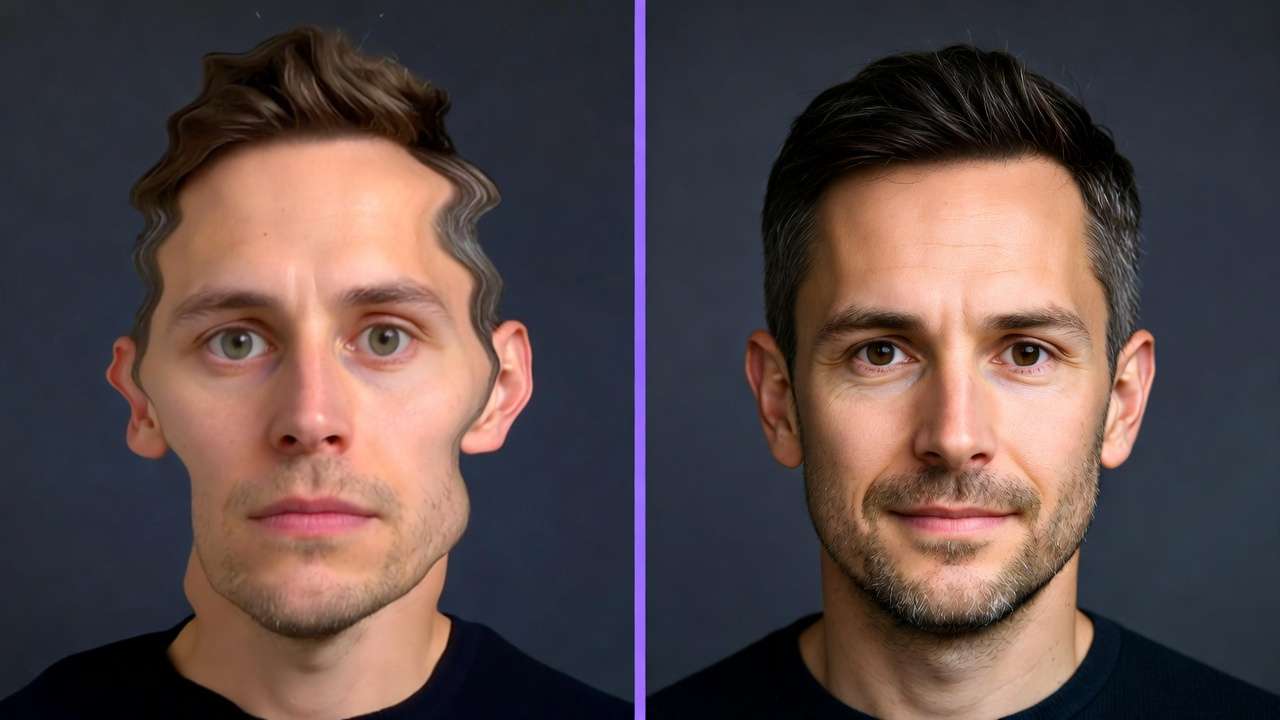
Portrait and lifestyle photography → Flux 2 Best skin texture, lighting accuracy, and photorealistic human rendering.
Product photography → Imagen 4 Clean backgrounds, accurate reflections, strong compositional control.
Any image with text in the frame → Imagen 4 Not close. Nothing else handles legible in-image text as reliably.
Concept art and editorial illustration → Midjourney v7 The distinctive aesthetic, strong stylization, best community knowledge base.
Brand campaign concepts (ideation stage) → DALL-E 3 Fastest iteration loop via ChatGPT integration, strong abstract concept handling.
Commercially licensed content for legally conservative clients → Adobe Firefly 3 Only model with fully documented content provenance and licensed training data.
High-volume experimentation and custom style training → Stable Diffusion XL Unlimited volume at marginal cost, fine-tuning capability on custom visual identities.
Production workflow requiring multiple output types → Cliprise Access to Flux 2, Imagen 4, Ideogram v3, Seedream, and other Cliprise-native image models under one credit system. No platform switching for mixed-brief production.
The Multi-Model Argument Applied to Image Generation
The same architectural principle that applies to AI video applies to ai image generation: no single ai picture generator leads all categories, and forcing every brief through one model's output ceiling is an unnecessary constraint.
The difference in image generation is that the capability gaps between models are even more specific and pronounced than in video. Flux 2 and Midjourney v7 produce meaningfully different outputs on the same prompt - not better and worse, but different in ways that determine which is right for a specific brief. Imagen 4's text rendering advantage is not marginal; it's categorical.
A workflow that selects the right image model for each brief type produces systematically better output than a workflow locked to one model - not because any one model is bad, but because the right model for each specific brief is rarely the same model across all briefs.
This is exactly the use case Cliprise's AI image generator is built for. Flux 2, Imagen 4, DALL-E 3, Stable Diffusion variants, and more - accessible from one interface, one credit system, with model comparison built into the workflow. See Multiple AI Models One Platform for the architectural case.
The production advantage is not theoretical. It's the difference between using the right tool for the brief versus the only tool you have access to.
Pricing Reality Check: What You Actually Pay for Best-in-Class Access
Monthly prices are not directly comparable when credit weights, retries, export limits, and accepted-output rates differ. Use the AI photo editor pricing tiers guide to calculate cost per accepted image before choosing a plan for production work.
Here's where the market dynamics in 2026 work in the creator's favor - but only if you know the access architecture.
Individual model access:
- Midjourney Pro: $60/mo
- DALL-E 3 (via ChatGPT Plus): $20/mo
- Flux 2: API usage-based (~$15-30/mo at moderate volume)
- Imagen 4: Google Vertex AI usage-based ($20-40/mo at moderate volume)
- Adobe Firefly: Included in CC ($54.99/mo+)
Total for best-in-class access across all categories: $170-220/mo
Multi-model platform access (Cliprise):
- All of the above models accessible from one subscription
- One unified credit system across all models
- Starting at $9.99/mo
See the full breakdown at Cliprise pricing.
The model quality is identical - same APIs, same underlying models. The billing architecture is not.
What's Coming: Image Generation in Late 2026 and 2027
The frontier is not static. Understanding where each model is heading helps you make platform decisions that stay relevant:
Flux 3 is expected to address the text rendering gap with Imagen 4 while maintaining the photorealism lead. If this delivers, Flux 3 may become the single strongest model across the two most commercially important categories.
Midjourney's web interface and API continue to develop. The Discord dependency is increasingly acknowledged as a limitation by Midjourney themselves, and broader API access would significantly change the competitive landscape.
Imagen 5 will likely advance into video territory more aggressively, following Veo's trajectory. Google's integration of image and video generation research under one team is worth watching.
Stable Diffusion 3 and its successors continue to narrow the gap with closed-source models on standard benchmarks, though the frontier gap on photorealism remains real.
The implication for platform choice: build on infrastructure that updates model access as these releases happen, rather than being locked to a specific model version by a single-platform subscription.
Other AI Image Generator Platforms Worth Considering
The rankings above focus primarily on individual AI image models and their output characteristics. Some users, however, may prefer a complete browser-based platform that provides a guided creative workflow.
DeeVid AI Image Generator
DeeVid is a browser-based creative platform for users who want to generate images from text prompts without managing model setup, API keys, or self-hosted infrastructure. It is a practical option for creators, marketers, small businesses, and social media teams exploring visual concepts, campaign ideas, product imagery, or creative assets through a guided web interface.
Unlike the individual foundation models ranked above, DeeVid is a complete platform rather than a single underlying image model. That makes it most relevant when accessibility and a streamlined creative workflow matter more than configuring separate model endpoints. Its wider creative ecosystem also includes AI video and image-to-video tools, which can help when a project starts with a generated image and later needs motion content.
DeeVid is worth considering for users who prioritize browser access, ease of use, and the convenience of creating different types of AI media in one ecosystem. Readers can explore the DeeVid AI Image Generator to see whether its workflow and creative options match their needs.
Frequently Asked Questions
What is the best AI image generator in 2026? There is no single answer. Flux 2 leads on photorealism. Imagen 4 leads on text rendering and product photography. Midjourney v7 leads on artistic stylization. DALL-E 3 leads on accessibility and abstract concept visualization. The best AI image generator is the right model for the specific brief - which is why multi-model access is the strongest production architecture.
Is Midjourney still worth it in 2026? For artistic and stylized output, yes - Midjourney v7's aesthetic is genuinely distinctive and its community knowledge base is the most developed of any image generation model. For photorealism, commercial product photography, or any brief requiring text in the image, other models are stronger.
Which AI image generator is best for commercial use? Depends on your definition of commercial use. For commercial licensing clarity, Adobe Firefly 3 (trained on licensed data) is the most defensible. For commercial quality output, Flux 2 and Imagen 4 are the strongest models - both available with commercial rights on paid plans. For commercial volume at lowest subscription cost, a multi-model platform starting at $9.99/mo covers all categories.
Can AI generate images with text in them? Yes, but with significant variation across models. Imagen 4 is the clear leader - it produces legible, correctly placed text reliably. Flux 2 has improved significantly but still produces errors on complex text. Midjourney v7 and DALL-E 3 are unreliable on legible text for professional use. If text in image is a hard requirement, Imagen 4 is the right model.
Is Flux 2 better than Midjourney v7? On photorealism, yes - definitively. On artistic stylization and compositional distinctiveness, Midjourney v7 retains its advantage. They're optimized for different output categories. The right answer for most production workflows is access to both.
How has AI image generation changed since 2024? Three major shifts: photorealism has advanced to the point where AI-generated imagery is often indistinguishable from photography; text rendering has become reliable for the first time (Imagen 4); and the model landscape has fragmented into genuinely specialized leaders per category rather than one dominant model. The workflow implication is that multi-model access has moved from a nice-to-have to a production requirement.
What resolution do AI image generators produce in 2026? Top-tier models (Flux 2, Imagen 4, Midjourney v7) produce images at 2048×2048 pixels minimum, with upscaling options extending to 4096×4096 or higher on some platforms. This is sufficient for most commercial print and digital applications. Verify specific resolution limits on your chosen platform before committing to large-format deliverables. For a Cliprise-native generate-edit-upscale workflow, see AI image upscaling: 4K and 8K quality enhancement.
Do I need a GPU to use AI image generators? No. Cloud-based platforms handle all computation on their infrastructure. You access the output via a web browser or app. GPU hardware is only required for self-hosted open-source models (Stable Diffusion and its derivatives). For commercial use of closed-source frontier models, a subscription or API account is sufficient.
The Bottom Line
AI image generation in 2026 is a multi-model discipline, not a single-model choice.
Flux 2 for photorealism. Imagen 4 for text and product photography. Midjourney v7 for artistic output. DALL-E 3 for concept visualization. Each model is the right answer for specific categories and the wrong answer for others.
The strongest production architecture accesses all of them from one place - one credit system, one interface, model selection determined by the brief, not by which subscription you happen to maintain.
That's not a future workflow. It's available now. Starting at $9.99/mo.
Next Steps
- Explore Cliprise AI image generator - all models →
- See Flux 2 capabilities on Cliprise →
- Compare all Cliprise plans →
- Best Image Generators on Cliprise - Model selection for Cliprise workflows
Related Guides
- Leonardo AI vs Midjourney 2026 →
- Nano Banana 2 vs Imagen 4 vs Flux 2 →
- Adobe Firefly Alternative 2026 →
- Flux 2 vs Midjourney vs Imagen 4 →
- Best Image Generators on Cliprise - Cliprise-specific model selection and workflows
- Best AI Video Generator 2026 - Parallel comparison for video models
- Flux 2 Pro vs Flux 2 Flex - Photorealism variant comparison
- DALL-E 3 vs Midjourney 2026 - Detailed head-to-head
- Flux 2 vs Google Imagen 4 - Photorealism and text rendering
- Top 5 Midjourney Alternatives 2026 - Cheaper & better options
- Photorealistic AI Image Models - Production workflow guide