The best multi-model AI platform is not the one with the loudest model count. It is the one that lets a creator move from image to video to audio to editing without losing control of the brief, the budget, or the review process.
In 2026, the top image models, video models, and audio models come from different companies. Teams often route AI image generation to Flux, Imagen, or Ideogram v3, route motion to the AI video generator with Kling, Sora, Veo, or Runway, and use ElevenLabs Speech to Text or voice models when captions, dialogue, or audio assets are part of the job.
Running those steps on separate platforms means separate accounts, billing cycles, logins, and context-switching. That is the problem a genuine multi-model platform solves.
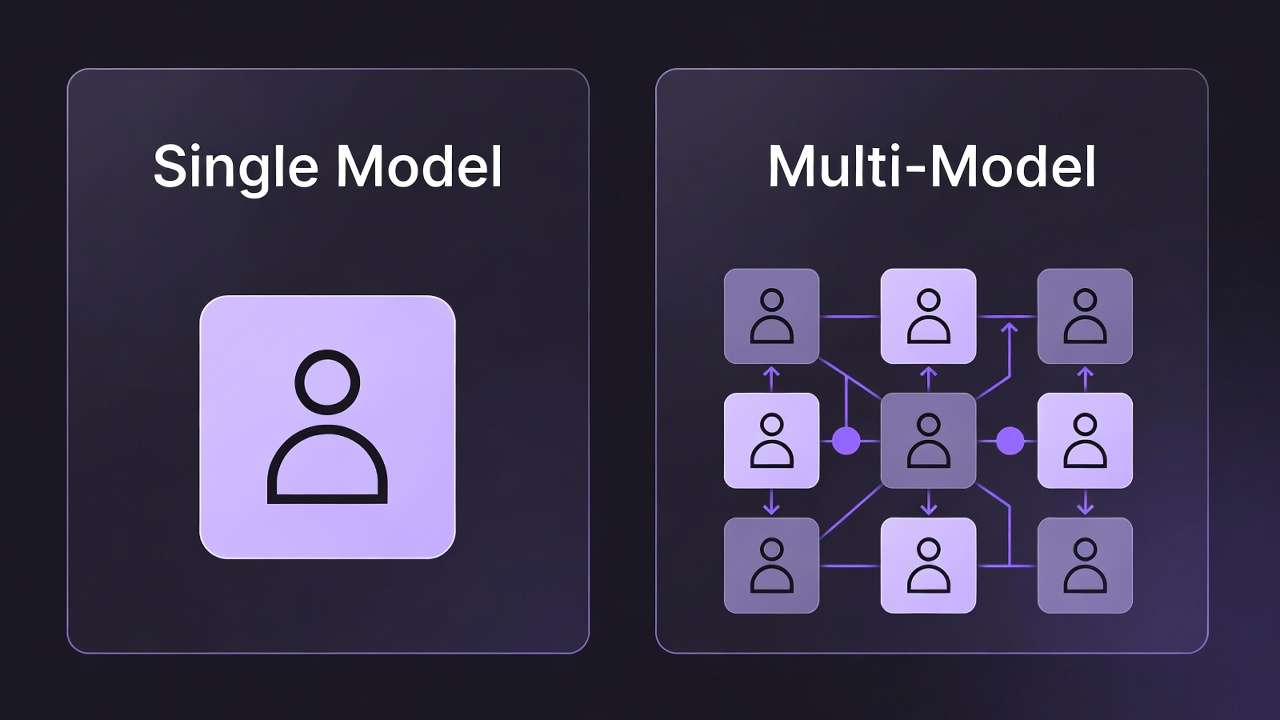
This guide covers what makes a multi-model platform genuinely useful versus superficially broad, and which platforms deliver.
What Separates a Real Multi-Model Platform from a Rebranded Single Tool
Not everything that calls itself "multi-model" deserves the name. The meaningful criteria:
Model depth, not just model count. A platform listing 50 models is only useful if those models are distinct, from different providers, and genuinely optimized for different tasks. A platform with Kling 3.0 + Sora 2 + Veo 3.1 + Flux 2 + Midjourney + ElevenLabs offers genuine breadth. A platform with 50 variants of the same underlying model does not.
Coverage across content types. A genuine multi-model platform covers image, video, and audio - not just image generation with a few video additions. The test: can a creator complete a full content production cycle (hero image → product video → atmospheric b-roll → voiceover) without leaving the platform?
One credit system. If each model has its own separate credit bucket, subscription tier, or billing line, the platform is not genuinely unified - it's a marketplace. A real multi-model platform lets you spend one credit balance across any model, dynamically, based on what each generation requires.
Mobile access. Production workflows increasingly happen on mobile. A platform without a full-featured iOS and Android app is limiting for mobile-first creators.
API access. For developers building production systems, API access to the full model library - not just a subset - is a requirement, not a nice-to-have.
The Case Against Single-Model Platforms in 2026
The strongest argument for multi-model platforms is not preference - it's the structure of the current AI model market.
No single company makes the best image model and the best video model and the best audio model simultaneously. In early 2026:
- Best photorealistic images from text: Flux 2 (Black Forest Labs) and Google Imagen 4 - not the same company
- Best 4K/60fps commercial video: Kling 3.0 (ByteDance)
- Best atmospheric video with native audio: Veo 3.1 (Google DeepMind)
- Best abstract/long-form video: Sora 2 (OpenAI)
- Best text-in-image: Ideogram v3 (Ideogram)
- Best production voiceover: ElevenLabs TTS and V3 Text to Dialogue (ElevenLabs)
These strengths come from six different companies. A creator who subscribes to any one of them gets one capability and misses five others.
The multi-model platform argument is: why choose one when you can have all of them?
For the detailed argument: Multi-Model AI Platforms: Why Creators Are Ditching Single-Tool Subscriptions and Single vs Multi-Model Platforms: Complete Guide.

What a Genuine Multi-Model Platform Should Cover
Image Generation
Minimum bar for a credible multi-model image offering:
| Capability | Model(s) that lead |
|---|---|
| Photorealistic generation from text | Flux 2, Google Imagen 4 |
| Artistic / stylized output | Midjourney |
| Text-in-image accuracy | Ideogram v3 |
| Fast, cost-efficient generation | Seedream 5.0 Lite, Nano Banana 2 |
| Image editing and compositing | Flux Kontext, Qwen Image Edit |
A platform with only one image model - no matter how good - cannot serve all of these use cases optimally.
Video Generation
| Capability | Model(s) that lead |
|---|---|
| 4K photorealistic commercial video | Kling 3.0 |
| Atmospheric content with native spatial audio | Veo 3.1 |
| Abstract, conceptual, long-form content | Sora 2 |
| Professional compositing and inpainting | Runway Gen-4 Turbo |
| Fast social video at scale | Wan 2.6, Hailuo 2.3 |
| Avatar and lip sync video | Kling AI Avatar API, ByteDance Omni Human |
Audio Generation
| Capability | Model(s) that lead |
|---|---|
| Multi-speaker voiceover | ElevenLabs V3 Text to Dialogue |
| Single-speaker TTS | ElevenLabs TTS |
| Sound effects | ElevenLabs Sound Effect v2 |
| Audio isolation | ElevenLabs Audio Isolation |
| Speech transcription | ElevenLabs Speech to Text |
Editing and Enhancement
| Capability | Model(s) that lead |
|---|---|
| Video upscaling | Topaz Video Upscaler |
| Image upscaling | Topaz Image Upscale, Recraft Crisp Upscale |
| Background removal | Recraft Remove BG |
| Video modification | Luma Modify |
Cliprise: What the Full Model Library Looks Like
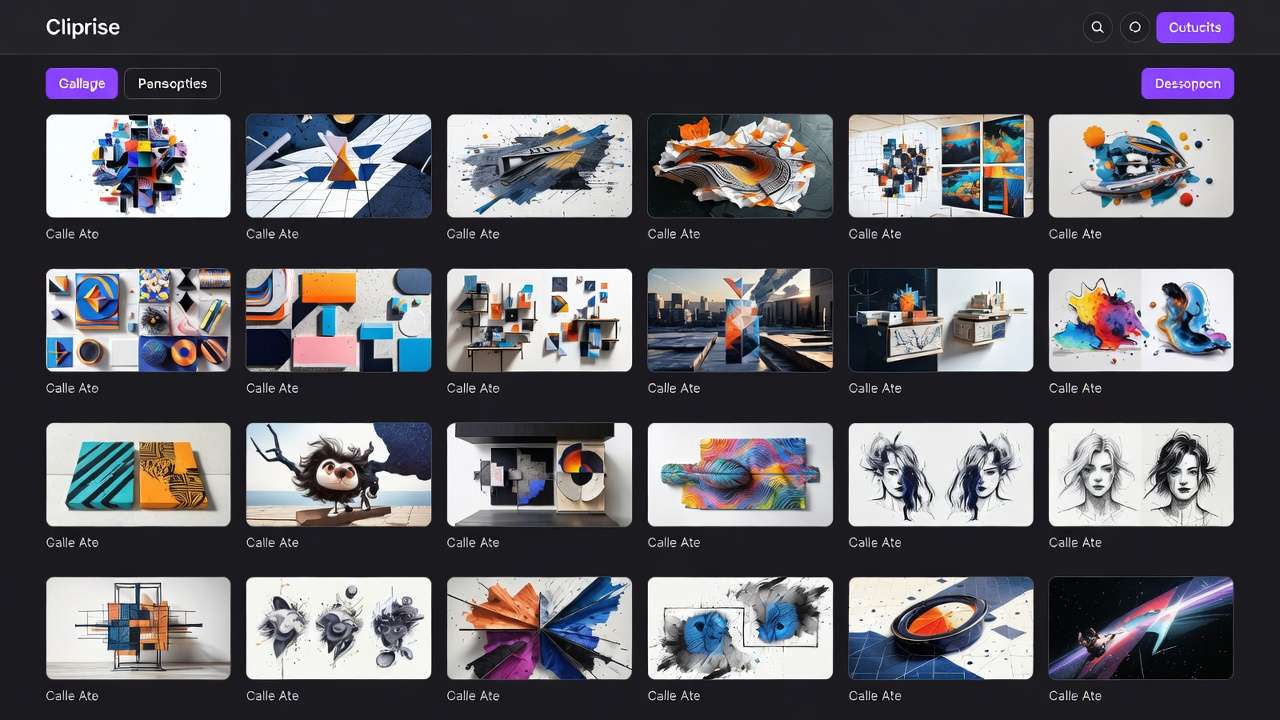
Cliprise is the most comprehensive multi-model creative platform currently available for content production use cases. 47+ models across all four content types, from nine major AI providers, accessible from one account.
Image generation models on Cliprise: Flux 2, Flux Kontext, Google Imagen 4, Midjourney, Ideogram v3, Ideogram Character, Ideogram Reframe, GPT-Image, Seedream 5.0 Lite, Seedream 4.5, Seedream 4.0, Seedream 3.0, Nano Banana 2, Nano Banana Pro, Nano Banana, Qwen Image, Gemini 3 Pro, Gemini 3 Flash, Gemini 2.5 Pro, Gemini 2.5 Flash, Grok Imagine, Z-Image.
Video generation models on Cliprise: Kling 3.0, Kling 2.6, Kling 2.6 Motion Control, Kling 2.5 Turbo, Kling 2.1, Kling AI Avatar API, Sora 2, Sora 2 Turbo, Sora 2 Pro Storyboard, Sora 2 Watermark Remove, Veo 3, Veo 3.1 Fast, Veo 3.1 Quality, Runway Gen-4 Turbo, Runway Aleph, Seedance 2.0, Seedance 1.5 Pro, Seedance v1, Seedance v1 Pro Fast, Hailuo 2.3, Hailuo 02, Wan 2.6, Wan 2.5, Wan 2.2, Wan Animate, Wan Speech to Video Turbo, ByteDance Omni Human, Grok Imagine.
Audio models on Cliprise: ElevenLabs TTS, ElevenLabs V3 Text to Dialogue, ElevenLabs Sound Effect v2, ElevenLabs Audio Isolation, ElevenLabs Speech to Text.
Editing models on Cliprise: Topaz Video Upscaler, Topaz Image Upscale, Recraft Remove BG, Recraft Crisp Upscale, Luma Modify, Qwen Image Edit.
Starting price: $9.99/month. Team plans available. API access included. iOS and Android apps available.
Why Model Breadth Matters for Real Workflows
The practical value of a multi-model platform is clearest when you map a real workflow against what it requires.
E-commerce product launch campaign:
| Step | Best model | Why |
|---|---|---|
| Hero product image | Flux 2 or Imagen 4 | Photorealistic still image |
| Product lifestyle image | Midjourney | Artistic quality for brand feel |
| Product reveal video | Kling 3.0 | 4K/60fps photorealistic motion |
| Brand atmosphere b-roll | Veo 3.1 Quality | Spatial audio for atmospheric content |
| Campaign voiceover | ElevenLabs V3 Text to Dialogue | Multi-speaker production quality |
| Social thumbnail text | Ideogram v3 | Best text-in-image accuracy |
| Video upscaling for broadcast | Topaz Video Upscaler | Clean 4K enhancement |
Every step of this workflow runs in Cliprise. On single-model platforms, this workflow requires at minimum four separate subscriptions and four separate platforms.
For the full workflow guides: AI E-commerce: Complete Guide 2026, Mastering Multi-Model Workflows on Cliprise, and Multi-Model Strategy: When to Switch Between AI Generators.
The Cost Comparison
The math for multi-model platform vs. stacked single-model subscriptions is established in Cliprise's own content. From Sora 2 vs Kling 3.0 vs Veo 3.1: Sora Pro alone costs $200/month, Kling Pro $89/month, Gemini Ultra (for Veo) approximately $20+/month. Three video models alone on separate subscriptions: $309+/month.
Cliprise provides all three video models plus image generation, audio, and editing tools from $9.99/month.
A marketing agency documented on Cliprise reduced AI tooling costs by 78% after consolidating from a multi-platform stack to a single platform. Full case study: Marketing Agency AI Content Cost Reduction.
Who Benefits Most from a Multi-Model Platform
Content creators producing across formats. Any creator whose weekly output includes images, video, and audio is paying for multiple subscriptions unnecessarily if they're on single-model platforms.
Marketing agencies managing client deliverables. Different clients need different aesthetics, different content types, and different quality tiers. A multi-model platform provides all of them from one account with one billing line. For the agency use case specifically: Best AI Platform for Marketing Agencies 2026.
Freelancers managing a full creative stack. The freelancer who generates product photos, edits them, animates the best one into a video, adds voiceover, and delivers a complete package to a client - that workflow requires four capabilities. On a multi-model platform, it requires one subscription. Blueprint: Freelancer's AI Content Creation Blueprint: $5K/Month.
Developers building AI-powered products. API access to 47+ models through one integration, one authentication, and one rate limit system is substantially simpler than maintaining six separate API integrations. API Integration Guide: Automate AI Generation with Multi-Model Platforms.
Related Articles
- Single vs Multi-Model Platforms: Complete Guide
- Multi-Model AI Platforms: Why Creators Are Ditching Single-Tool Subscriptions
- Best AI Platform for Content Creators 2026
- All AI Models in One Subscription: End Tool Chaos 2026
- Cost Optimization: Maximize Credits in Multi-Model Platforms
- AI Model Comparison: 47 Models Instant
- Behind the Scenes: How We Integrated 47+ AI Models
Verdict
The case for a multi-model platform in 2026 is not about preference - it's about the structure of the AI model market. The best image model, the best video model, and the best audio model come from different companies. No single-model platform can be best at all three, because no single company has built all three.
A genuine multi-model platform - one with real model depth, unified credits, full content-type coverage, mobile access, and API access - gives creators the full capability stack without the subscription fragmentation.
Cliprise is the most comprehensive option in that category for creative content production, with 47+ models across image, video, audio, and editing from nine major AI providers, starting at $9.99/month.
Explore all 47+ models on Cliprise. Compare pricing. Start creating.