Introduction
Looking for the complete AI content creation framework? This guide focuses on social media applications. For the broader overview, see AI Content Creation: Complete Guide 2026.
Research consistently shows that 69% of consumers prefer watching short videos to learn about products over reading text. For complex topics, that preference exceeds 80%. Social media algorithms reward this preference: platforms prioritize video content, push Reels and Shorts over static posts, and penalize accounts that post infrequently. The result is an insatiable content machine where every ai video editor and creator faces demand for 20 to 50 fresh visual assets per week from every brand with serious social ambitions.
Traditional production cannot keep pace. A single professionally produced Reel costs $500 to $2,000 and takes three to five days from concept to upload. Multiply that by five platforms, four posts per week each, and you are looking at $40,000 to $160,000 per month in content production costs - a budget reserved for enterprise brands, not the small businesses and solo creators who dominate social commerce.
AI generation changes the equation entirely. A creator with a multi-model platform like Cliprise can generate 20 thumbnails and ai pictures in 30 minutes, five Reels in two hours, and a week of feed content in a single afternoon - for under $50 in credits. This is not a marginal improvement. It is a structural shift in who can afford to compete on social media. Our Marketing Solutions page details how Cliprise supports every stage of a marketing content pipeline.
This guide delivers platform-by-platform playbooks for every major social network: YouTube, TikTok, Instagram, Facebook, and LinkedIn. You will learn which AI models produce the best results for each format, how to build a scalable content pipeline, the common mistakes that waste credits and kill engagement, and the economics that make AI-first social media strategy the only viable approach at scale. Whether you are a solo creator building an audience or a brand managing multi-platform presence, these workflows apply.
Why AI Is the Only Way to Keep Up with Social Media Demand
The Content Velocity Problem
Social media algorithms reward consistency. Accounts that post daily outperform those that post weekly. Accounts that post multiple times daily outperform those that post once. But creating high-quality visual content - images, videos, thumbnails, stories - takes time and skill. Most creators and brands hit a ceiling: the quality-consistency tradeoff, where increasing frequency means decreasing quality.
AI eliminates this tradeoff. Generation takes seconds to minutes, not hours to days. Iteration is nearly free: creating ai images with 10 thumbnail variants costs the same as one. And the quality floor of AI output continues rising - models like Veo 3.1, Flux 2 Pro, and Sora 2 produce social-ready content without post-production in many cases.
Platform Fragmentation Multiplies the Problem
Each platform has different optimal formats: 9:16 vertical for TikTok and Reels, 16:9 horizontal for YouTube, 1:1 square for Instagram feed, various aspect ratios for Stories and ads. Creating one piece of content and cropping it for different platforms is a losing strategy - you sacrifice composition, text placement, and visual hierarchy.
AI generation makes multi-format native creation practical. Generate the same concept in three aspect ratios using three prompts. Use aspect ratio optimization as a creative advantage rather than a production burden.
The Multi-Model Advantage for Social Content
Different social formats demand different AI strengths. Thumbnails and ai profile picture generator free headshots need bold, eye-catching photorealism - Flux 2 Pro and Ideogram v3 excel here. TikToks need dynamic, attention-grabbing motion - Kling 2.6 and Wan 2.5 deliver. YouTube Shorts need narrative coherence in short formats - Sora 2 and Veo 3.1 shine. Trying to force one model to handle all these use cases produces mediocre results across the board.
This is why multi-model platforms have become essential for serious social media creators. Cliprise provides access to 47+ models - the ability to match each content type to its optimal model is what separates amateur AI content from professional output.
Platform Playbooks: Model Selection by Social Network
YouTube: Long-Form Videos, Shorts, and Thumbnails
YouTube remains the highest-value social platform for creators: longer watch times, stronger ad revenue, and superior search discoverability. AI enhances every stage of the YouTube workflow.
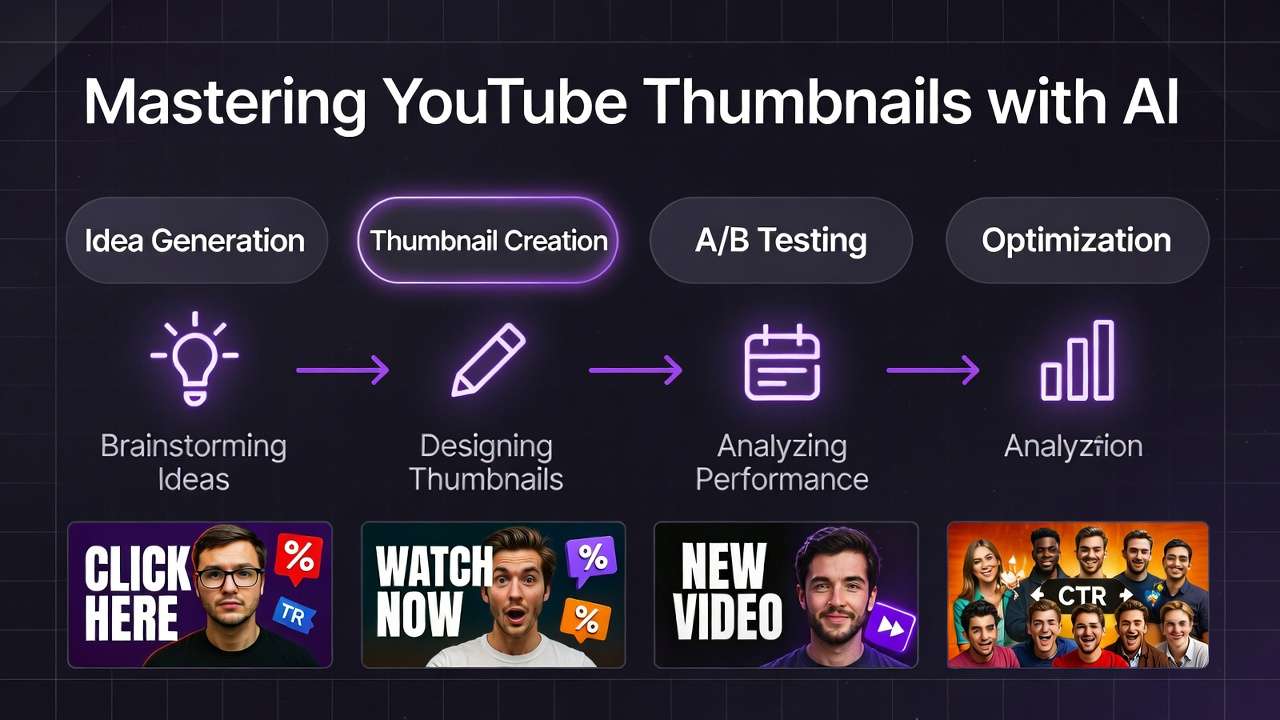
Thumbnails are the single most important factor in YouTube click-through rate. Custom thumbnails with bold text and compelling imagery drive over 90% of clicks. AI thumbnail generation using Flux 2 Pro (for photorealistic scenes) and Ideogram v3 (for text-heavy designs with readable typography) produces professional thumbnails in minutes instead of the 30 to 60 minutes a designer typically spends. The complete thumbnail workflow - from concept to A/B testing - is detailed in Mastering AI Models for YouTube Thumbnails and the optimization-focused YouTube Thumbnail Workflow.
YouTube Shorts are YouTube's fastest-growing format, and AI video generation is ideal for producing the short, visually striking clips that perform well. Use Veo 3.1 Fast for high-volume Shorts production and Sora 2 when narrative quality matters more than speed. The full YouTube creator pipeline - from ideation through Shorts optimization - is mapped in AI Video Generation YouTube Creator Workflow 2026.
B-roll generation for long-form videos solves one of the biggest production bottlenecks. Instead of spending hours sourcing stock footage (and paying licensing fees), generate custom B-roll that matches your video's aesthetic perfectly. This is one of the clearest examples of AI replacing stock footage in practice.
TikTok: Viral Hooks and Trend Riding
TikTok's algorithm rewards two things above all: strong opening hooks and trend relevance. AI generation excels at both - but only with the right approach.
The first three seconds determine everything. TikTok's algorithm evaluates early retention aggressively. AI-generated videos need visually striking opening frames that stop the scroll instantly. This means front-loading your most dramatic visual - the reveal, the transformation, the unexpected - rather than building slowly. Prompt engineering for TikTok requires thinking in terms of "scroll-stopping frames" rather than narrative arcs. For a repeatable generator workflow across TikTok and Reels, see How to Build an AI Video Workflow for Social Content.
Trend responsiveness is TikTok's unique advantage and challenge. Trends emerge and peak within 48 to 72 hours. Traditional production cannot keep pace. AI generation can: spot a trending format, generate 5 to 10 variants in an hour, post the strongest, and ride the algorithmic wave before it crests.
Model recommendations: Kling 2.6 for dynamic motion and physics that feel organic on TikTok. Wan 2.5 for stylized and artistic content that stands out from photorealistic feeds. Always generate in 9:16 natively - never crop horizontal footage to vertical. The complete TikTok strategy is in TikTok Creator Viral Strategy: AI Video Workflow.
Instagram: Reels, Stories, and Feed Posts
Instagram requires the most diverse content mix of any platform: Reels (vertical video), Stories (ephemeral vertical), feed posts (square or portrait images), and carousels (multi-image educational content). AI enables creators to ai cartoonify content and produce for all four formats efficiently.
Reels have become Instagram's primary content distribution mechanism. The algorithm heavily favors Reels over static posts, making video production non-optional for growth. AI video generation with Veo 3.1 and Hailuo 02 produces Reels-native content: 9:16 vertical, 5 to 30 seconds, with strong visual hooks. The practical workflow is in Creating Instagram Reels with AI Video.
Feed posts still matter for brand identity and evergreen content. AI image generation with Flux 2 Pro produces feed-worthy images in 1:1 or 4:5 portrait formats that match Instagram's visual language: clean, aspirational, and high-contrast.
Stories are the lowest-production-value format but the highest-frequency one. AI-generated imagery with quick text overlays creates stories that feel polished without requiring design hours.
Facebook and Instagram Ads
Social advertising demands the highest volume of creative variants. Performance marketing best practice calls for testing 10 to 20 ad creative variants per campaign, refreshing winning creatives every two to four weeks to combat ad fatigue, and creating platform-specific variants for each placement.
AI generation makes this volume economically viable for the first time. Generate 20 video ad variants for $50 to $100 in credits, deploy them across ad sets, and let platform algorithms identify winners. This data-driven approach to ad creative - where generation cost is negligible and testing volume is the competitive advantage - is detailed in AI Video Ads: Facebook and Instagram Performance Guide.
Podcasts and Audio Content
Podcast growth creates visual content needs that most audio creators do not anticipate: episode thumbnails, audiogram visuals, picture to avatar generator headshots, social promotion images, and YouTube video versions. AI image generation handles all of these efficiently.
Thumbnail consistency across episodes builds brand recognition. Using seed values and prompt templates, creators generate on-brand episode art in minutes rather than commissioning custom designs for each release. The strategic approach is in Podcast Creators: AI Thumbnail Generation Strategy. For time-coded captions and accurate transcripts (audiograms + social video versions), use ElevenLabs Speech to Text: Complete Guide →.
The Social Media AI Content Pipeline
Step 1: Content Planning and Prompt Preparation
Batch your content planning weekly. Define what you need for each platform: Monday's thumbnail, Tuesday's Reel, Wednesday's carousel images. Then prepare prompts in advance - this is where prompt templates become your most valuable asset.
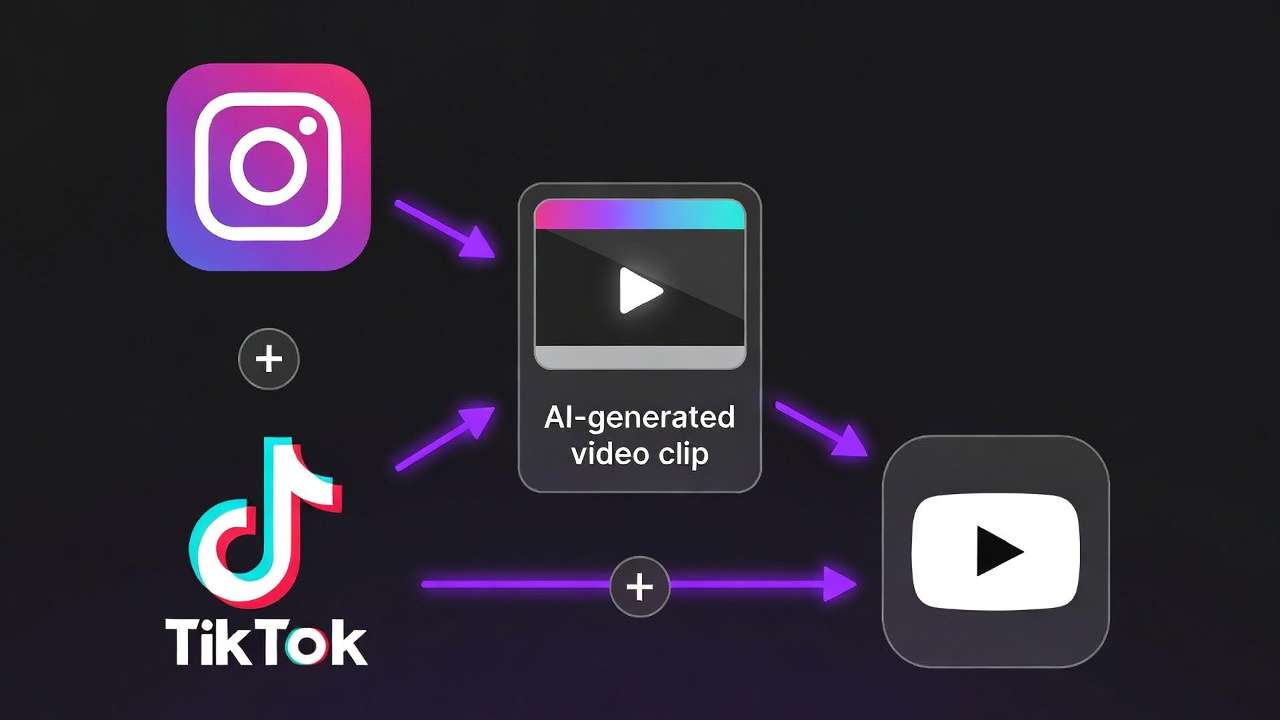
Build a prompt library organized by platform and content type. A TikTok prompt template looks fundamentally different from a YouTube thumbnail prompt. TikTok prompts emphasize motion, energy, and bold visuals. Thumbnail prompts emphasize contrast, text readability, and emotional triggers. Template evolution - refining prompts based on performance data - is what separates AI content that converts from AI content that fills feeds.
Step 2: Image Generation (The Foundation)
Start with image generation. Even video-first strategies benefit from generating keyframe images first: they serve as thumbnails, feed posts, story content, and reference frames for video extension.
Model matching: Flux 2 Pro for photorealistic content (product shots, lifestyle scenes). Ideogram v3 for text-heavy images (quote graphics, educational carousel slides, thumbnails with readable text). Midjourney for aspirational aesthetic content (mood boards, brand imagery). Use seed values to maintain visual consistency across a content series.
Step 3: Video Extension
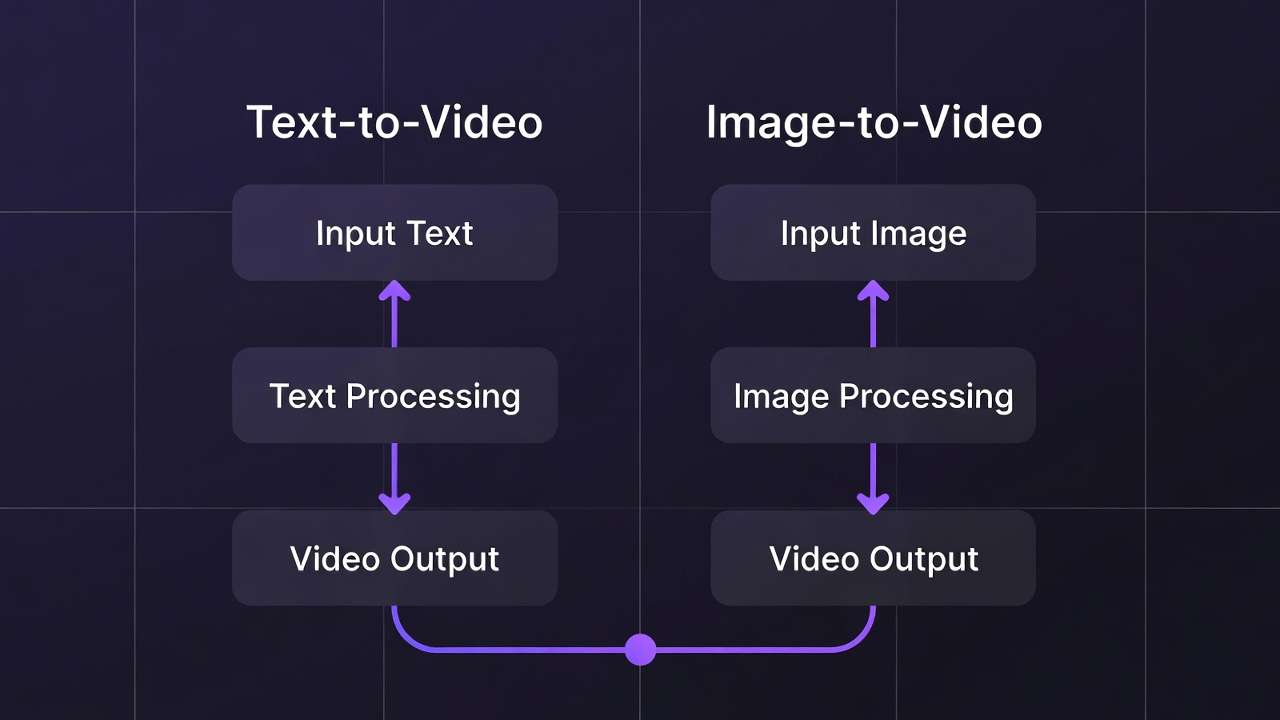
Transform your best images into video content using image-to-video generation. This is the most efficient social video workflow: your static images become the first frame, and video generation models add motion, camera movement, and life.
If your social workflow happens mostly on a phone, use the Cliprise mobile app guide to plan prompts, model choice, review, and posting around mobile constraints.
Mode selection matters: Use Fast mode for drafts and iteration, Quality mode for hero content. For high-volume social content (daily TikToks, Instagram Stories), Fast mode delivers sufficient quality at dramatically lower cost and wait times. Reserve Quality mode for YouTube content and ad creative where every pixel matters.
Step 4: Optimization per Platform
Aspect ratio is non-negotiable. 9:16 for TikTok, Reels, and Shorts. 16:9 for YouTube long-form. 1:1 or 4:5 for Instagram feed. Generating natively in each ratio - rather than cropping - preserves composition and ensures your subject fills the frame correctly. The complete aspect ratio strategy is in Aspect Ratio Mastery: Optimize Videos for Every Platform. When you need to preserve a text-heavy banner while adapting aspect ratios, use Ideogram Reframe: Complete Guide →.
Duration optimization per algorithm: TikTok rewards 7 to 15 second videos for new accounts and 30 to 60 seconds for established creators. YouTube Shorts perform best at 30 to 58 seconds. Instagram Reels favor 7 to 15 seconds for reach and 30 to 90 seconds for watch time. Generate to these specifications rather than producing one length and trimming.
Step 5: Multi-Platform Distribution
Repurpose intelligently. One concept can generate three or more platform-native assets: a horizontal YouTube version, a vertical TikTok version, and a square Instagram feed version. This is not "reposting the same content" - it is regenerating the concept in each platform's native format, which algorithms reward far more than cross-posted content.

Model Selection Guide for Social Content
| Platform | Content Type | Best Models | Duration | Aspect Ratio |
|---|---|---|---|---|
| YouTube | Thumbnails | Flux 2 Pro, Ideogram v3 | N/A (image) | 16:9 |
| YouTube | Shorts | Veo 3.1 Fast, Sora 2 | 15-58s | 9:16 |
| TikTok | Feed videos | Kling 2.6, Wan 2.5 | 7-15s | 9:16 |
| Reels | Veo 3.1, Hailuo 02 | 7-30s | 9:16 | |
| Feed posts | Flux 2 Pro, Midjourney | N/A (image) | 1:1 or 4:5 | |
| Video ads | Sora 2, Runway Gen4 | 5-15s | Various | |
| Professional | Imagen 4, Flux 2 Pro | N/A (image) | 16:9 or 1:1 | |
| Podcast | Episode art | Flux 2, Ideogram v3 | N/A (image) | 1:1 or 16:9 |
Content Volume: How Creators Scale to 50+ Posts per Week
The secret to high-volume AI social content is not generating more - it is generating smarter. Batch generation sessions, where you produce an entire week of content in one focused session, are dramatically more efficient than daily ad-hoc generation.
Batch workflow: Dedicate two to three hours on Monday. Generate all thumbnails for the week (30 minutes). Generate all feed images (30 minutes). Generate all video content (60 to 90 minutes). Schedule everything using your distribution tool of choice. Spend the rest of the week engaging with your audience instead of creating content.
Prompt libraries compound value over time. Every prompt that produces a winning piece of content goes into your library. Over months, your library grows to contain proven formulas for every content type and platform. This is the asset that separates high-output creators from those stuck in the prompt-roulette cycle.
Model selection by content type: Use the best social media video models guide to match models to platform-specific requirements. Understanding which models produce the best results for each format eliminates trial-and-error wasted credits.
For social video, HappyHorse 1.0 is especially useful when the clip is product-driven, app-driven, or built from a strong first-frame image. Use it for vertical product teasers, short app promos, creator-style visual hooks, and campaign variations, then compare the result against Seedance or Kling to choose the strongest social asset.
For creators in specialized niches, the multi-model approach extends to industry-specific content. Music producers use AI to create music video visuals. Fitness influencers generate workout demonstration content. Food creators produce recipe videos with AI-generated B-roll. The platform is the same; the prompts and models vary by niche.
Common Mistakes in Social Media AI Content
1. Same style across all platforms. TikTok's visual language is energetic, raw, and trend-driven. LinkedIn is polished and professional. Instagram sits between them. Using the same AI-generated style everywhere makes your content feel generic on every platform instead of native on any.
2. Ignoring platform-native aspect ratios. Auto-cropping a 16:9 image to 9:16 for TikTok cuts out 75% of your composition. Generate natively for each platform. The extra credits are negligible compared to the engagement loss from poorly framed content.
3. Over-relying on one model. Flux produces gorgeous images but they all share a similar "look." Veo 3.1 generates great video but has distinct motion characteristics. Using multiple models introduces visual variety that keeps your feed from feeling monotonous.
4. Skipping negative prompts. Social media audiences have developed sharp eyes for AI artifacts. Negative prompts that exclude "blurry, watermarks, distorted hands, text artifacts, unnatural skin" are essential for every social generation.
5. Not leveraging CFG scale for brand consistency. CFG scale determines how closely output follows your prompt. Higher values produce more prompt-faithful results - critical for brand consistency. Lower values introduce creative variation - useful for trend content. Knowing when to use each setting is a meaningful skill.
6. Posting AI content without human creative direction. AI generates; humans direct. The generation is the easy part. The creative direction - what to generate, why it matters for your audience, how it fits your content strategy - is where the value lives. Treat AI as a production tool, not a content strategist.
7. Ignoring the analytics feedback loop. Track which AI-generated content performs best. Note the models, prompts, aspect ratios, and styles that drive engagement. Feed those insights back into your generation process. This feedback loop is what makes AI social content improve over time rather than plateau.
The Economics: AI Social Content vs Traditional
| Content Type | Traditional Cost | AI Cost | Time (Traditional) | Time (AI) |
|---|---|---|---|---|
| 20 thumbnails per week | $400 - $800 (designer) | $10 - $30 | 8-10 hours | 30 minutes |
| 5 Reels per week | $2,500 - $5,000 (videographer) | $25 - $75 | 15-20 hours | 2-3 hours |
| 10 feed images per week | $300 - $600 (photographer) | $10 - $25 | 4-6 hours | 20 minutes |
| 3 video ads per week | $3,000 - $9,000 (production) | $30 - $90 | 20-30 hours | 3-4 hours |
| Monthly total | $25,000 - $60,000+ | $300 - $900 | 200+ hours | 25-35 hours |
Note: Traditional costs assume outsourced production. In-house costs are lower but require dedicated staff. AI costs based on multi-model platform credit pricing.
The math is stark: AI social content production costs 95 to 98% less than traditional production and takes 85 to 90% less time. For a solo creator, this means professional-quality social presence is achievable on a budget of $50 to $100 per month. For brands, it means social content production shifts from a major budget line to a rounding error - freeing resources for strategy, community management, and paid amplification.
The Future of AI Social Media Content
Real-time trend-reactive generation is the next frontier. When a trend emerges, AI tools will detect it, suggest relevant content concepts, generate variants, and queue them for posting - reducing the time from trend detection to publication from hours to minutes.
Platform-native AI tools versus multi-model platforms will be the defining tension of 2027. TikTok, Instagram, and YouTube are all building native AI creation tools. But these tools are limited to each platform's models and capabilities. Multi-model platforms like Cliprise will remain essential for creators who need variety, quality, and cross-platform consistency.
Personalized content per audience segment will enable brands to serve different visual content to different follower segments - young audiences see one style, professional audiences see another - using the same AI generation pipeline with different prompt parameters.
The authenticity challenge is real. As AI content floods social feeds, audiences are developing sensitivity to "AI slop" - generic, soulless content that lacks human perspective. The winners will not be those who generate the most content, but those who use AI to execute a distinctly human creative vision more efficiently. The tool is the amplifier; the taste is the signal.
In 2026, AI-generated social content is not a competitive advantage - it is table stakes. The advantage comes from how creatively and strategically you deploy it. Master the platforms, the models, and the workflows in this guide, and you will be building content systems while your competitors are still manually editing one Reel at a time.
Related Articles
- Best AI Tools for Social Media Managers 2026 →
- Best AI Video Tool for TikTok Creators 2026 →
- AI Content Creation: Complete Guide 2026
- AI Image Generation: Complete Guide 2026
- AI Thumbnail Generator: Complete Guide 2026 →
- AI Video Generator: Complete Guide 2026 →
- AI Video Generation: Complete Guide 2026
- AI Video + AI Voice: Social Media Workflow
- AI Prompt Engineering: Complete Guide 2026
- Multi-Model AI Platforms
- AI for E-commerce: Complete Guide 2026
- Freelancer $5K/Month Blueprint
- Advertising Agency: AI Video Ad Campaign Results
- Death of Stock Footage: AI Impact on Media
- Mobile AI Content Creation: Complete Guide 2026
- AI Video Editing and Post-Production: Complete Guide 2026