OpenAI makes two of the most significant AI creative models available right now: Sora 2 for video and GPT-Image for images. Both are genuinely strong. Both are also accessible on Cliprise - alongside Kling 3.0, Veo 3.1, Runway Gen-4 Turbo, Flux 2, and 47+ other AI models.
That creates a direct question: what does accessing OpenAI's models through OpenAI's own products give you that Cliprise doesn't? And what does Cliprise give you that OpenAI's products can't?
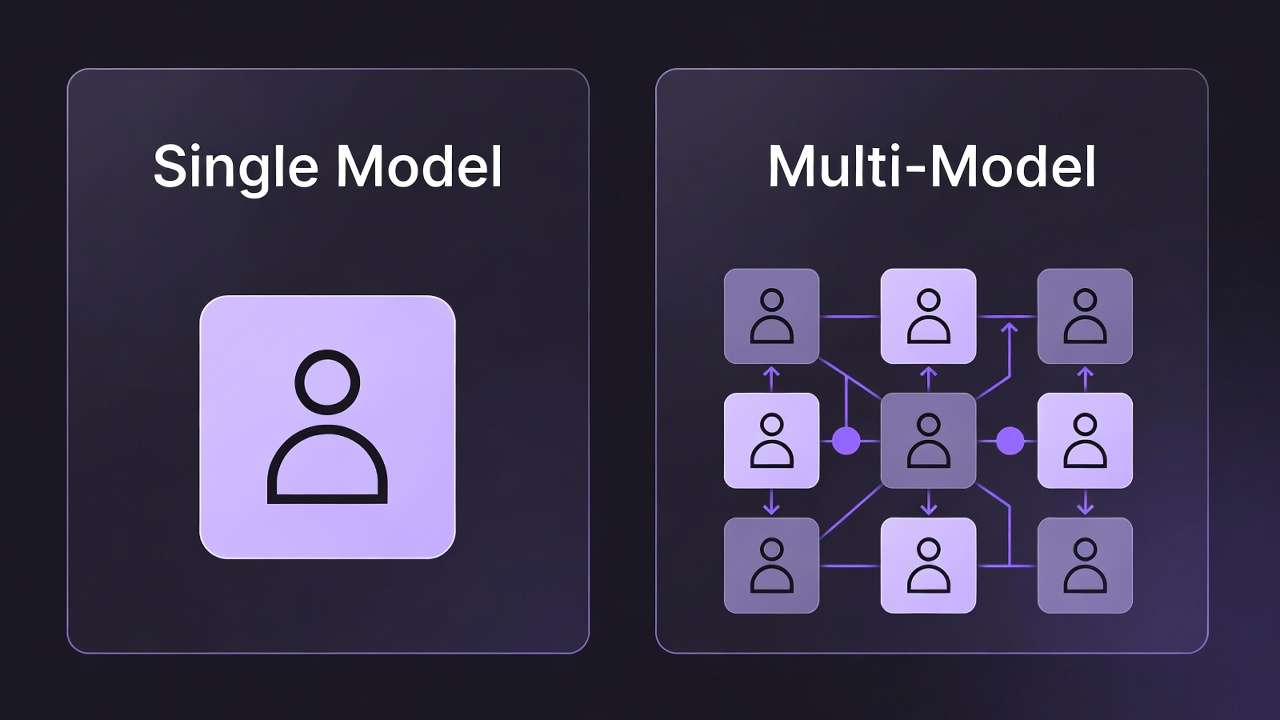
Quick answer: OpenAI's products - particularly ChatGPT - give you a conversational interface for iterating on creative work through dialogue. That is a genuinely different workflow that Cliprise doesn't replicate. For everything else - generation quality, model variety, cost, and production breadth - Cliprise's multi-model argument applies as clearly here as it does against any single-model platform.
What OpenAI Offers for Image and Video
OpenAI's creative generation tools fall into two distinct products:
ChatGPT (Plus and Pro) with image generation: ChatGPT can generate and edit images through conversation. You describe what you want, see a result, ask for adjustments, and iterate in a dialogue. The model powering this is GPT-Image. This conversational loop - prompt, see, refine, repeat - is ChatGPT's defining creative workflow.
Sora (via openai.com/sora): OpenAI's dedicated video generation platform. Generates video from text prompts, image prompts, or storyboard sequences. Available in standard and Pro tiers; Pro pricing is confirmed at $200/month. Sora Pro offers higher resolution, longer clips, and more generations per month.
What neither product offers: access to any model other than OpenAI's own. No Kling 3.0, no Veo 3.1, no Flux 2, no ElevenLabs audio. The OpenAI platform is OpenAI models only.
What Cliprise Offers That Overlaps
Cliprise hosts the following OpenAI models:
- Sora 2 - OpenAI's flagship video model
- Sora 2 Turbo - faster generation, lower credit cost
- Sora 2 Pro Storyboard - directorial shot sequencing
- Sora 2 Watermark Remove - clean output for production use
- GPT-Image - OpenAI's current image generation model
All five are accessible through Cliprise credits. No separate OpenAI account required. The same credit balance that runs Sora 2 also runs Kling 3.0, Veo 3.1, Flux 2, and ElevenLabs - in the same session.
Feature Comparison
| OpenAI (ChatGPT + Sora) | Cliprise | |
|---|---|---|
| Sora 2 video access | Yes (via Sora platform) | Yes |
| GPT-Image access | Yes (via ChatGPT) | Yes |
| Other video models | No | Kling 3.0, Veo 3.1, Runway Gen-4 Turbo, Seedance 2.0, and more |
| Other image models | No | Flux 2, Midjourney, Google Imagen 4, Ideogram v3, and more |
| Audio / voice | Limited (ChatGPT voice features, not generation-focused) | Full ElevenLabs suite |
| Conversational image iteration | Yes (ChatGPT's core workflow) | No |
| Storyboard control | Yes (Sora Pro Storyboard) | Yes (Sora 2 Pro Storyboard on Cliprise) |
| Mobile app | Yes (ChatGPT app) | Yes (iOS + Android) |
| Sora Pro standalone cost | $200/month | - |
| Cliprise starting price | - | $9.99/month |
| Access to non-OpenAI models | No | Yes (47+ additional models) |
Where OpenAI's Products Have the Edge
ChatGPT's conversational image workflow. This is OpenAI's most distinctive creative capability and the one Cliprise doesn't replicate. In ChatGPT, generating an image is part of a dialogue. You describe an idea, see a result, say "make the background darker and the figure more centered," see the adjustment, and continue refining. The conversation history carries context forward; refinements build on previous generations.
This workflow is qualitatively different from a prompt-and-generate interface. For creators who think through visual ideas by iterating in language - who use conversation to clarify their own creative intent - ChatGPT's integrated approach is genuinely more useful than any standalone generation platform, including Cliprise.
Ecosystem integration. OpenAI's models work within a broader ChatGPT context that includes web browsing, code execution, file analysis, and text generation. A creator who wants to research a topic, write copy, and generate images in a continuous workflow benefits from having all of these in one conversation. Cliprise does not offer any of these non-generation capabilities.
Direct OpenAI relationship for API users. Developers who need OpenAI's models with direct SLA agreements, the latest model releases immediately upon launch, and OpenAI's own usage policies for compliance purposes may prefer accessing models through OpenAI directly rather than through a third-party platform.
Where Cliprise Wins
Multi-model access for production workflows. The most common professional video production workflow in 2026 uses more than one model. Confirmed from Sora 2 vs Kling 3.0 vs Veo 3.1: Sora Pro at $200/month + Kling Pro at $89/month + Gemini Ultra (for Veo) at ~$20+/month = over $300/month for three video models accessed separately. On Cliprise, all three are accessible from $9.99/month.
Image model variety. GPT-Image is a strong image generation model. It is not the leader in photorealism (that's Flux 2 and Google Imagen 4), artistic style (Midjourney alternatives), or text-in-image rendering (Ideogram v3). For a creator who needs the best image output for a specific use case, choosing between GPT-Image and the full model library on Cliprise is not a close comparison.
For the image model quality benchmark: Best AI Image Generator 2026: Tested and Ranked.
Audio production. OpenAI's audio features are primarily conversational (ChatGPT voice). Cliprise's ElevenLabs V3 Text to Dialogue and ElevenLabs TTS are purpose-built for production voiceover. For creators who need professional audio alongside images and video, Cliprise provides a complete stack.
Cost for multi-tool users. If your creative workflow uses Sora 2 for video, any image model beyond GPT-Image, and ElevenLabs for audio - you are already managing multiple platforms and multiple billing lines. Cliprise consolidates all of them, including Sora 2 itself, into one subscription.
The Honest Use Case Map
| What you're trying to do | Better platform |
|---|---|
| Iterate on visual ideas through conversation | ChatGPT (OpenAI) |
| Research, write, and generate images in one continuous workflow | ChatGPT (OpenAI) |
| Generate Sora 2 video as part of a multi-model production workflow | Cliprise |
| Access Sora 2 + Kling 3.0 + Veo 3.1 from one subscription | Cliprise |
| Generate images across multiple models (Flux, Midjourney, Imagen, GPT-Image) | Cliprise |
| Produce AI voiceover alongside image and video generation | Cliprise |
| Access OpenAI models via API for production systems requiring direct OpenAI SLA | OpenAI directly |
| Compare Sora 2 vs Kling 3.0 vs Veo 3.1 for a specific content type | Cliprise (all three accessible) |
Sora 2 on Cliprise: What You Actually Get
Because Sora 2 is often the primary reason creators evaluate OpenAI for video, it's worth detailing what Cliprise provides:
Sora 2 - standard generation, up to 20 seconds, 1080p. The baseline model for long-form, abstract, and conceptual content.
Sora 2 Turbo - faster generation at lower credit cost. Practical for drafting and iteration before committing to a final-quality Sora 2 generation.
Sora 2 Pro Storyboard - defines explicit shot sequences. For multi-scene content where you want directorial control over how a sequence unfolds.
Sora 2 Watermark Remove - clean output for commercial production use.
All four Sora 2 variants, no OpenAI subscription required. For the full capability overview: Sora 2 Complete Guide and Mastering Sora 2: Professional Video Production.
The Framing Problem with "Cliprise vs OpenAI"
This comparison is worth framing honestly: OpenAI and Cliprise are not really competing for the same user.
OpenAI's creative products are built around ChatGPT - a conversational AI that happens to generate images and video. The workflow is dialogue-driven. The value is in the conversation as much as the output.
Cliprise is built around production. The workflow is prompt-generate-compare-deploy. The value is in accessing the widest possible model library for the highest output quality across content types.
A creator who uses ChatGPT to brainstorm ideas and refine creative direction, then switches to Cliprise to generate final assets using the best available models for each task, is using both correctly. They are not substitutes - they serve different stages of the creative process.
The reason this comparison exists is the growing group of creators who use ChatGPT's image and video generation features as their only AI generation tool, not realizing that the OpenAI models are a fraction of what's available - and that the same OpenAI models they rely on are accessible within a broader multi-model platform at lower cost.
For those creators, the argument is simple: you're already using Sora 2 and GPT-Image. You could access them on Cliprise alongside 47+ other AI models for less than the cost of a standalone Sora Pro subscription.
Common follow-ups from the broad AI content overview
If you arrived here from the main pillar guide, these are the usual next clicks - still English on-page, grouped for navigation:
- Safety & Copyright Essentials
- Mobile Image Generation
- Veo vs Sora: Model Specifications Comparison
- Seeds & Consistency
- Cliprise vs Midjourney
- Image-to-Video Workflow: Complete Guide
Related Articles
Full-stack and platform strategy (beyond a single vendor):
Verdict
OpenAI makes excellent models. ChatGPT's conversational image workflow is genuinely useful for a specific type of creative process - iterative, dialogue-driven, integrated with research and writing. If that's your workflow, ChatGPT Plus or Pro is the right product.
For production workflows - generating the best possible image, video, or audio output for a deliverable, across multiple model types, at the lowest total cost - Cliprise includes OpenAI's own models alongside 47+ others. Sora 2, Sora 2 Turbo, Sora 2 Pro Storyboard, and GPT-Image are all on Cliprise. So is Kling 3.0, Veo 3.1, Flux 2, Midjourney alternatives, and ElevenLabs.
Choosing between OpenAI and Cliprise is not choosing between model quality - you can access the same OpenAI models on both. It's choosing between a conversational workflow and a production workflow.
Access Sora 2 and GPT-Image on Cliprise. Compare all models. See pricing.