Pillar guide. Part of the AI Image Generation: Complete Guide 2026 series. For model comparison across 47+ options, see Best AI Image Generator 2026.
Google released Nano Banana 2 on February 26, 2026 - and it landed at a moment when the text to image ai market is more competitive than it has ever been. Midjourney's v7 series leads for artistic distinctiveness. Flux 2 from Black Forest Labs leads for photorealism. Ideogram v3 leads for text rendering. Imagen 4 leads for product accuracy. Where does this ai image generator Nano Banana 2 fit, and why did Google's blog announce it as their "best image generation and editing model" within hours of its launch?
This guide covers everything: the technical architecture, what's new compared to Nano Banana Pro and the original Nano Banana, the complete capability breakdown, where Nano Banana 2 fits in production workflows, who should be using it and for what, how it compares to the models it now competes with directly, and how to access it via the Gemini API, AI Studio, and through the Cliprise multi-model platform.
This is the most comprehensive Nano Banana 2 guide available. It will take approximately 45 minutes to read in full. If you're looking for a specific section, use the navigation below.
Navigation:
- What Nano Banana 2 is and why it matters
- The model history: from Nano Banana to Nano Banana 2
- Technical architecture: Gemini 3.1 Flash Image explained
- Complete capability breakdown
- Nano Banana 2 vs. Nano Banana Pro
- Nano Banana 2 vs. the competition
- Where Nano Banana 2 fits in production workflows
- Use cases: who should use it and when
- Access: Gemini app, API, AI Studio, and Cliprise
- Pricing and cost structure
- SynthID watermarking and content credentials
- Limitations and what to watch for
- Prompt examples by use case
What Nano Banana 2 Is and Why It Matters
Nano Banana 2, technically named Gemini 3.1 Flash Image, is Google DeepMind's latest AI image generation and editing model. It was developed to combine the advanced capabilities of Nano Banana Pro - the studio-quality model built on Gemini 3 Pro - with the generation speed of the Gemini Flash architecture. The result, according to Google: Pro-level intelligence and fidelity, delivered at Flash speed and with a significantly improved price-performance ratio.
On the day of launch (February 26, 2026), Nano Banana 2 became the default image generation model across the Gemini app (replacing Nano Banana Pro for Fast, Thinking, and Pro modes), the default model in Google's Flow video production platform, and the standard model for AI image generation in Google Search across 141 countries. Its simultaneous deployment across four major Google surfaces - Gemini app, Search, Flow, Google Ads - makes this the broadest single AI model launch Google has executed in the image generation category.
Why does this matter beyond Google's own product suite? Because Nano Banana 2 is not only available through Google platforms. It's available through the Gemini API and Vertex AI - which means any developer, any platform, and any business can build applications on top of it. And it's available through multi-model platforms like Cliprise, which means creators who want to use Nano Banana 2 alongside Flux 2, Ideogram v3, and Midjourney-style alternatives from a single credit system can do so from today.
The significance of the launch is threefold. First, Google has validated that the image generation market is now multi-tier: speed and quality are no longer a forced tradeoff, and a model can now credibly claim both. Second, the scope of Google's distribution - Gemini app, Search, Ads, Flow, Vertex AI, all updated simultaneously - brings Nano Banana 2 to a user base far larger than any individual AI image tool. Third, the API availability means the model's capabilities immediately flow into the platforms and applications that professional creators and businesses already use for production.
The Model History: From Nano Banana to Nano Banana 2
Understanding what Nano Banana 2 is requires understanding where it came from. The Nano Banana model family didn't begin as a product - it began as a viral moment.
The Original Nano Banana (August 2025)
Google released the original Nano Banana model in August 2025 as a new image generation capability inside the Gemini app. The launch was deliberately understated. What happened next was not: the model went viral within days, particularly in markets where AI image generation had previously been constrained by language and cultural representation.
India was the epicenter. The Gemini app's accessibility (free tier, mobile-first, no special account required) combined with the model's ability to generate culturally relevant imagery from prompts in local languages drove usage that Google described as generating "millions of images" in the first week. The viral sharing of Nano Banana outputs on Indian social media platforms created a feedback loop that drove further adoption across South Asia, Southeast Asia, and eventually global markets.
The original Nano Banana was built on Gemini 2.0 Flash architecture. Its strengths were accessibility, speed, and surprising quality for a Flash-tier model. Its limitations were visible in fine detail work, complex scene composition, and text rendering - the categories that distinguish casual generation from professional production.
Nano Banana Pro (November 2025)
Google responded to Nano Banana's viral success by launching Nano Banana Pro in November 2025, three months after the original. Where Nano Banana was a Flash-speed model, Nano Banana Pro was built on Gemini 3 Pro - the full-capability model tier.
Nano Banana Pro represented a significant quality jump. The model introduced:
- Studio-quality image generation with professional composition and lighting
- Significantly improved text rendering (though not yet at Ideogram v3 levels)
- Better subject consistency across generation sessions
- Enhanced material and texture rendering for commercial applications
- More precise instruction following for complex or multi-element prompts
Nano Banana Pro found its market in professional creative workflows - graphic designers, brand agencies, marketing teams, and product photographers who needed consistently professional output quality rather than the fast-but-limited capability of the original model.
The tradeoff was speed and cost. Nano Banana Pro's Gemini 3 Pro architecture was slower than the original's Flash architecture, and it consumed more API credits per generation. For users who needed volume - testing multiple creative directions, iterating rapidly on variants - the Pro model's speed was a meaningful constraint.
Nano Banana 2 (February 26, 2026)
Nano Banana 2 is the answer to the question the two previous models implicitly posed: can you have Pro quality at Flash speed?
Google's answer, with Nano Banana 2 (Gemini 3.1 Flash Image), is yes - with the specifics being more nuanced than the headline. The model represents a genuine architectural advancement over both predecessors: it inherits the intelligence, world knowledge, and creative reasoning of the Gemini 3.1 Pro line while running on the optimized Flash inference architecture that produces faster generation and lower per-call cost.
The result is not "Pro quality made slower by speed optimization" or "Flash speed with quality compromises." Independent benchmarks published alongside the launch show Nano Banana 2 outperforming Nano Banana Pro on multiple capability dimensions, including text-to-image quality, instruction following, and character consistency - while generating meaningfully faster and costing less per generation.
Technical Architecture: Gemini 3.1 Flash Image Explained
Understanding what makes Nano Banana 2 technically distinct requires some context on what Gemini 3.1 Flash Image represents architecturally.
The Gemini Model Family in 2026
Google's Gemini model family in 2026 operates on three capability tiers, each with a corresponding inference speed tier:
Pro: Highest capability, highest intelligence, slowest inference, highest cost. Gemini 3 Pro is the base for Nano Banana Pro and for advanced multimodal tasks.
Flash: High capability, optimized inference, faster generation, lower cost. Gemini 3.1 Flash is the base for Nano Banana 2 (Gemini 3.1 Flash Image).
Flash-Lite: Fastest inference, lower capability, lowest cost. Used for high-volume applications where speed is the primary concern and quality ceiling is lower.
The key to understanding Nano Banana 2 is that "Flash" in the Gemini 3.1 context does not mean "lighter" or "less capable." It means "architecturally optimized for fast inference without sacrificing the intelligence that powers the output." The Gemini 3.1 Flash model inherits the reasoning capability, world knowledge integration, and multimodal understanding of the full Gemini 3.1 family - but through architectural optimization (specifically in the attention and sampling mechanisms), it runs significantly faster than the Pro tier.
World Knowledge Integration
The most technically distinctive feature of Nano Banana 2 for image generation is its integration of Gemini's world knowledge directly into the generation process. Earlier AI image models - including Stable Diffusion, Flux 2, and even Midjourney - generate images from a learned mapping between text and visual patterns. They know what things look like in general, based on their training data. They don't know what's currently real about a specific place, product, or cultural context.
Nano Banana 2 knows more. Because it's built on Gemini 3.1 Flash, it can access Google's real-time world knowledge - the same knowledge that powers Gemini's factual responses - to generate images that are more specifically accurate to real-world references.
The demo application Google built to illustrate this is called "Window Seat." The app prompts Nano Banana 2 to generate photorealistic window views inspired by specific world locations with live weather data. The model can generate a window view from a specific city in specific current weather conditions because it has access to factual knowledge about what those locations and conditions actually look like - not just a generalized approximation from training data.
For commercial production, this matters in specific categories:
- Location-specific imagery: A campaign requiring imagery that references a specific city's architectural style, landscape, or environmental character
- Cultural accuracy: Imagery for markets where specific cultural details matter - clothing styles, food, architecture, domestic settings
- Brand and product accuracy: Generating imagery that references real brand aesthetics or product specifications with greater fidelity
- Time-sensitive content: Marketing materials that need to reference current events, seasons, or real-world contexts
Subject Consistency Architecture
Nano Banana 2 can maintain character consistency for up to five simultaneous characters and object fidelity for up to 14 objects within a single generation workflow. These numbers are specific and significant.
The five-character limit means that narrative content - advertisements with multiple distinct human subjects, educational content with recurring characters, brand content featuring a team or family - can maintain consistent visual identity across generations without manually re-describing each character for every prompt. Each character in a multi-character workflow maintains their facial structure, skin tone, hair style, clothing style, and physical proportions.
The 14-object fidelity limit means that complex product scenes - lifestyle images with multiple distinct brand products, commercial photography with varied objects, or still-life compositions - can be generated with consistent, accurate rendering of each individual element.
These numbers don't appear in isolation across competitors. Midjourney's character consistency works best with one or two reference characters and degrades with additional subjects. Flux 2's photorealistic output is exceptional for individual character portraits but shows inconsistency at three or more distinct subjects. Nano Banana 2's multi-character and multi-object consistency represents a specific technical advance that matters most for content that requires multiple distinguishable subjects in the same scene.
Resolution Specifications
Nano Banana 2 supports image generation and editing from 512px to 4K resolution in native generation, with support for all standard aspect ratios plus new ultra-wide and ultra-tall ratios specifically added for the model's launch: 4:1, 1:4, and 8:1.
The ultra-wide 4:1 and 8:1 ratios address specific commercial production requirements that weren't natively supported by previous AI image models:
- Billboard and banner advertising: Wide-format outdoor and digital advertising uses 4:1 and wider ratios
- Website headers and hero sections: Responsive web design headers often require 4:1 ratios
- Social media covers: Facebook, LinkedIn, and YouTube channel art use wide-format ratios
- Panoramic photography: Travel and architectural content in panoramic format
The 1:4 ultra-tall ratio addresses mobile-first vertical content:
- Instagram Stories and TikTok thumbnails: Vertical 9:16 is standard; 1:4 is useful for tall single-image Story sequences
- Pinterest pins: Pinterest's optimal pin ratio is approximately 2:3; 1:4 provides taller creative content
- Mobile app display advertising: Tall-format display ads for mobile placement
Complete Capability Breakdown
Nano Banana 2 introduces or substantially improves seven distinct capability areas compared to its predecessors. Understanding each helps determine where the model should sit in your production workflow.
1. Text-to-Image Generation
Nano Banana 2's core text-to-image generation inherits the advanced reasoning capability of the Gemini 3.1 series. The model interprets prompts with understanding of intent, context, and creative direction rather than executing purely pattern-based matching.
The practical difference: prompts that include conceptual direction - "elegant but approachable," "technically advanced but accessible," "nostalgic without being retro" - are interpreted with nuance rather than defaulting to the most literal visual interpretation. This is the "reasoning" capability that architectural models like Luma Ray3 have emphasized: generating from understanding rather than from pattern-matching.
For commercial production, this means prompts can be written more like creative briefs and less like keyword lists. A prompt like "professional product photography of coffee brewing equipment for a brand that values quality craft but is accessible to everyday coffee drinkers - warm, natural light, uncluttered but not minimalist" produces more directionally accurate output than the equivalent keyword string would on pattern-matching models.
2. Image Editing
Nano Banana 2's editing capability is specifically highlighted in Google's developer documentation as a primary advancement over predecessors. The model supports:
Natural language editing: Describe the change you want in plain language. "Make the background warmer and more golden," "Replace the blue jacket with a red one," "Add a subtle shadow under the object" - all interpreted and executed from conversational language without requiring selection tools or layer management.
Precise instruction following: The model's advanced instruction following means editing commands are executed accurately - changing what you specified without changing what you didn't specify.
In-image text editing: Nano Banana 2 can edit text within generated images - changing the content, style, or language of text elements without requiring external graphic design tools.
Multi-step editing: Sequential editing instructions can be applied to the same image within a session, with the model maintaining awareness of the editing history.
3. In-Image Text Rendering and Localization
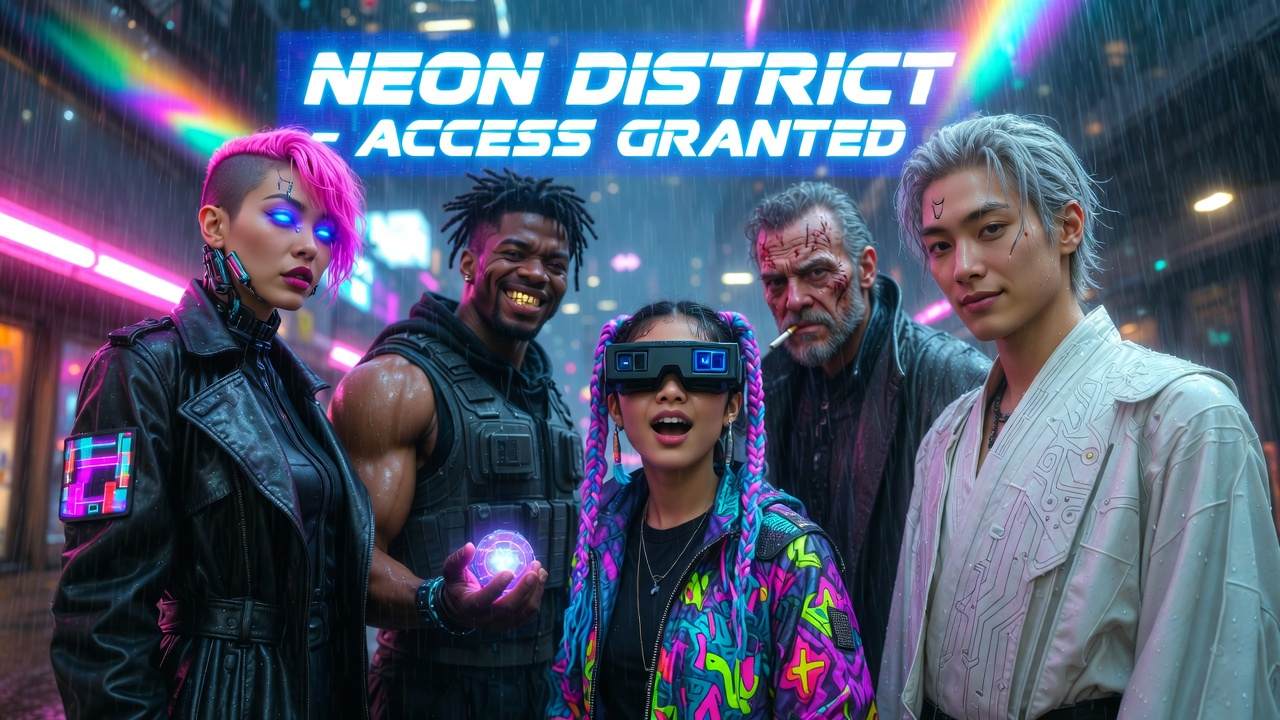
Text rendering has been the persistent failure mode of AI image generation since the technology emerged. Nano Banana 2 addresses this with two specific capabilities:
Accurate text rendering: Text generated within images by Nano Banana 2 is legible, correctly spelled, and stylistically appropriate to the context.
In-image localization: Nano Banana 2 supports text generation in multiple languages within images, and can translate text across languages within existing images. The model doesn't just translate the text string - it understands the localization context, renders the text in the appropriate script and character system, and adapts the visual composition if the translated text has different spatial requirements.
Nano Banana 2's text rendering is competitive with Ideogram v3 - the previous category leader - for standard Latin character text, and specifically leads Ideogram for multilingual text generation given Gemini's language model foundation.
4. Advanced Creative Features
Vibrant lighting and rich textures: Nano Banana 2 produces more vibrant lighting effects and richer material textures than predecessors. Jewel tones are more saturated without losing realism, metallic surfaces reflect more accurately, fabric textures are more differentiated.
Sharpness and detail retention at 4K: At native 4K generation, Nano Banana 2 maintains sharpness and detail in fine-grained elements.
Native aspect ratio generation: Native support for 4:1, 1:4, and 8:1 means the model generates natively at these ratios rather than generating at a standard ratio and cropping.
5. Subject Consistency Workflow
The five-character consistency system works through reference anchoring within a generation session. When you introduce a character in Nano Banana 2 - either through a text description that produces a consistent representation, or through a reference image of an existing person or character - the model locks that character's visual identity for the session duration.
The 14-object fidelity system works similarly for products and objects, maintaining brand-accurate visual representation of specific product items across multiple scenes and contexts within a session.
6. Developer API Capabilities
For developers building applications on Nano Banana 2, the model offers specific capabilities:
- Google web search integration for visual grounding: API calls can enable Gemini's web search capability
- Batch generation: High-volume API applications can use batch generation endpoints
- Seeds and deterministic generation: Developers can specify generation seeds for reproducible outputs
- Partial image editing via masks: API-based editing supports region-specific editing through mask inputs
- Output format control: Native support for multiple output formats (JPEG, PNG, WebP)
7. SynthID Content Credentials
Every image generated by Nano Banana 2 includes a SynthID watermark - Google's imperceptible watermarking technology. Alongside the invisible SynthID watermark, Nano Banana 2 adds C2PA (Content Credentials) metadata in accordance with the Content Authenticity Initiative standards. This dual-layer marking means Nano Banana 2 outputs are technically compliant with the EU AI Act Article 50 requirements that take effect in August 2026.
Nano Banana 2 vs. Nano Banana Pro: What Actually Changed
For users of Nano Banana Pro who need to understand whether and how Nano Banana 2 changes their workflow:
Quality: Nano Banana 2 outperforms Nano Banana Pro on text rendering accuracy, instruction following, generation speed, character consistency at scale (5 characters vs Pro's more limited consistency), and world knowledge grounding.
Nano Banana Pro retains advantages in: Specialized fine art and abstract generation, complex long-form scene reasoning for very dense multi-condition creative prompts.
Speed: Nano Banana 2 is 2-4x faster than Pro for standard generation tasks.
Cost: Nano Banana 2 costs significantly less per image than Nano Banana Pro.
Migration recommendation: Test Nano Banana 2 on your 5-10 most common production prompt types. Compare output quality side by side. For prompts where Nano Banana 2 matches or exceeds Pro quality, migrate to Nano Banana 2. Retain Nano Banana Pro access for specialized artistic generation tasks where Pro's deeper creative reasoning produces meaningfully better results.
Nano Banana 2 vs. the Competition
Nano Banana 2 vs. Flux 2
Flux 2's strengths: The current photorealism benchmark leader for human subjects. Skin texture, facial expression, material physics. For portrait work and face-forward lifestyle photography, Flux 2 remains the model most production professionals choose.
Nano Banana 2's strengths: Text rendering, world knowledge grounding, multi-character consistency, editing capability, developer API features, and EU AI Act compliance. For anything involving text in the image, multiple distinct characters, or editing of existing images, Nano Banana 2 is the better tool.
Recommendation: Nano Banana 2 for most commercial production use cases. Flux 2 retained for face-forward photorealistic portraits. Access both via Cliprise's AI image generator.
Nano Banana 2 vs. Ideogram v3
Ideogram v3's strengths: Category leader for text rendering since v3's launch. Specifically optimized for YouTube thumbnails with text hooks and marketing graphics.
Nano Banana 2's strengths: With significantly improved text rendering (including multilingual in-image localization), the gap has substantially closed. Nano Banana 2 adds editing capability, character consistency, world knowledge, and speed that Ideogram v3 doesn't match.
Recommendation: Nano Banana 2 as the primary image model for most workflows. Ideogram v3 retained for specialized thumbnail work. Both on Cliprise.
Nano Banana 2 vs. Midjourney v7
Midjourney v7's strengths: Compositional distinctiveness, artistic style range, recognizable aesthetic quality.
Nano Banana 2's strengths: Instruction following, commercial utility, text rendering, editing capability, API access, cost, and speed.
Recommendation: Nano Banana 2 for commercial production output. Midjourney v7 for initial creative direction and reference imagery.
Nano Banana 2 vs. Imagen 4
Imagen 4's strengths: Product photography accuracy - when the primary requirement is accurately representing a specific product.
Nano Banana 2's strengths: Speed, editing, character consistency, text rendering, broader creative range.
Recommendation: Imagen 4 for e-commerce product photography where accuracy is the primary criterion. Nano Banana 2 for lifestyle imagery, editorial content, and scenarios where character consistency or editing capability is required. Both accessible via Cliprise's model library.
Where Nano Banana 2 Fits in Production Workflows
Social Media Content Production
Workflow: Brief development → Nano Banana 2 for lifestyle/character image generation → Editing pass for copy or environmental adjustments → Export at platform-native ratios. Use Cliprise's Caption Generator for captions.
E-Commerce Product Photography
Workflow: Reference photograph → Imagen 4 for accurate white-background product shots → Nano Banana 2 for lifestyle context shots with product in scene. See the complete AI product photography guide.
Brand Campaign Development
Workflow: Nano Banana 2 to develop campaign character representations → Session-locked character consistency → World knowledge grounding for location-specific imagery → Hand off to Kling 3.0 or Sora 2 for video extension.
YouTube Thumbnail Creation
Workflow: Nano Banana 2 for face-forward character expression thumbnail → Text rendering for hook text → Cliprise's Thumbnail Maker for final formatting. See the Best AI for YouTube Thumbnails guide.
Marketing and Advertising Creative
Workflow: Nano Banana 2 for lifestyle/character ad imagery with integrated copy → Multiple variants for A/B testing → In-image localization for international adaptations. See AI video ads complete guide.
Use Cases: Who Should Use Nano Banana 2 and When
Content Creators: Social media content with text overlays, thumbnail generation, series content with recurring characters. Pair with Kling 3.0 for animated versions of approved still frames via Cliprise.
Marketing Teams and Agencies: Campaign imagery, social content, ad creative, international market adaptations. Related: AI Video for Marketing | AI Video Ads.
E-Commerce Brands: Lifestyle product photography, catalog imagery, social commerce content. See AI product photography guide.
Small Business Owners: Website imagery, social media content, promotional materials. Access: Free tier via Gemini app, or Cliprise from $9.99/mo for multi-model access.
Graphic Designers: Concept development, campaign visualization, rapid ideation. Edit-based iteration within session means design reviews happen at generation speed. For highly stylized work, Midjourney v7's aesthetic distinctiveness still has a place; Nano Banana 2 handles commercial production.
Access: Gemini App, API, AI Studio, and Cliprise
Gemini App (Free and Paid)
Nano Banana 2 is the default image generation model across all Gemini app modes. The free tier provides limited generation credits per day. Paid plans (Google AI Pro and Google AI Ultra) provide expanded limits and retain access to Nano Banana Pro for specialized tasks via the three-dot menu.
Google Flow (Video Production)
For users of Google's Flow video production platform, Nano Banana 2 is the default image model for zero credits. Integration with Veo 3.1: The Ingredients-to-Video feature uses reference images. Nano Banana 2's subject consistency makes it the ideal reference image generator for Veo 3.1 video generation.
Cliprise Multi-Model Platform
Cliprise provides access to Nano Banana 2 alongside the full model library: Nano Banana Pro, Imagen 4, Flux 2, Ideogram v3, Midjourney-style alternatives, and all video generation models (Kling 3.0, Sora 2, Veo 3.1, Runway Gen-4.5, Seedance 2.0).
The Cliprise advantage:
- Side-by-side comparison with Flux 2, Ideogram v3, and Imagen 4 from one credit system
- Integrated image-to-video pipeline: generate with Nano Banana 2, animate with Kling 3.0 or Sora 2
- Single credit system across 47+ models
- 30 signup credits once + 10 credits/day refill on the free plan
Pricing and Cost Structure
Gemini App: Free tier available with limited credits. Google AI Pro ($19.99/month) expands limits. Google AI Ultra (pricing varies) for highest limits.
API: Consumption-based per image. Nano Banana 2 priced significantly below Nano Banana Pro. See Google AI Studio pricing for current rates.
Cliprise: Free — 30 credits on signup (one-time) + 10 credits/day (auto-reset) | Starter $9.99/mo (900 credits/mo) | Pro $29.99/mo (3,500 credits/mo) | Business $79.99/mo (10,000 credits/mo). Full pricing.
SynthID Watermarking and Content Credentials
Every image includes SynthID (imperceptible pixel watermark) and C2PA Content Credentials (structured metadata). C2PA metadata records model used, generation date, and provenance hash. Outputs are technically prepared for EU AI Act Article 50 requirements (August 2026). See the complete EU AI Act Article 50 compliance guide.
Limitations and What to Watch For
Photorealism at extreme close range: For face-forward portraits at high resolution, Flux 2 still produces more convincing skin texture. For social media display sizes, the difference is minimal.
Highly stylized artistic generation: Midjourney v7's artistic distinctiveness isn't replicated. Use Midjourney for creative direction when visual distinctiveness is primary.
API preview status: At launch, Nano Banana 2 API access is in preview. Production applications should monitor Google's GA announcement.
Training data transparency: Like most commercial AI image models, specific training data composition is not publicly documented. Adobe Firefly's licensed stock data addresses this explicitly.
Prompt Examples by Use Case
Marketing Lifestyle Photography
Professional lifestyle photograph of a 35-year-old woman in activewear
sitting at a bright, modern kitchen counter, holding a reusable water bottle
with natural morning light from a large window. The space suggests an urban
apartment - clean, contemporary, lived-in but not cluttered. She is looking
at her phone, relaxed. Shot composition: medium shot, slightly elevated angle,
warm natural color grade. The water bottle label should read "HYDRA" in bold
sans-serif - white text on a dark blue bottle.
YouTube Thumbnail (Text Hook)
High-contrast YouTube thumbnail: close-up headshot of a 40-year-old man with
a shocked expression, mouth slightly open, eyes wide. Dramatic orange-to-dark
gradient background on the right side. Large bold text on the right side reads
"THEY LIED ABOUT AI". Text: Impact or Bebas Neue style, white with black
stroke, large enough to read at thumbnail size (1280x720). Thumbnail-style
composition - face takes up left 40% of frame, text right 60%.
International Ad Localization
Generate this advertisement in Spanish for the Mexican market:
A happy family of four sitting around a dining table with food, warm home
environment. The mother is serving a meal. On the wall behind them, text
reads "La familia primero" in warm wooden lettering. Photorealistic style,
warm evening light, contemporary Mexican home interior.
Nano Banana 2 for Image-to-Video Workflows
Nano Banana 2 → Kling 3.0: For native 4K video with audio. Best for commercial product showcase, lifestyle advertising.
Nano Banana 2 → Veo 3.1: For environmental and lifestyle video with native audio. Best for travel content, outdoor lifestyle. See Veo 3.1 complete tutorial.
Nano Banana 2 → Sora 2: For cinematic narrative video. See Sora 2 tutorial.
Nano Banana 2 → Seedance 2.0: For complex multi-reference video. Nano Banana 2's multi-character consistency pairs with Seedance 2.0's @tag system.
All pairings executable on Cliprise - generate with Nano Banana 2, pass to video model without platform switching.
Getting Started with Nano Banana 2 Today
Free (via Gemini app): Open gemini.google.com, start a new conversation, ask Gemini to generate an image.
Free (via Cliprise): Create a free account at cliprise.app for 30 signup credits once, then 10 daily credits.
API access: Visit Google AI Studio for an API key.
Multi-model production: Cliprise Professional provides Nano Banana 2 alongside 47+ models from $9.99/month.
Related Guides and Articles
Model comparisons:
Production guides:
Related news:
Cliprise model library: