Video advertising has a cost problem. A 30-second commercial from a production house costs $15,000-$80,000. A Meta video ad campaign needs 5-10 creative variants to run meaningful A/B testing. A YouTube pre-roll needs to hook in the first 5 seconds or get skipped. TikTok ads need to look native, not polished.
Multiply those requirements across platforms, markets, and testing cycles, and traditional production costs become the bottleneck on what's actually testable - which means most advertisers are running fewer creative variants than the data says they should.
Every modern ai video maker breaks this bottleneck. Not by replacing creative strategy - that still requires human judgment - but by making ai video editing software production of video ad variants fast enough and cheap enough to actually run the tests the data recommends.
This guide covers which AI models produce the best ad content by platform, what makes video ads actually convert, the complete workflow from brief to live campaign, and how to structure AI video ad production for real ROI.
Why AI Video Ads Work in 2026
The advertising case for AI video is not about novelty. It's about the economics of creative testing.

The creative testing problem: Meta's own data shows that creative quality accounts for 56% of purchase intent lift in video ads. The problem is that you don't know which creative is strongest until you've tested it. Testing requires producing multiple variants. Production costs make multiple variants expensive. The result: most advertisers test 2-3 creative variants when the data says 8-10 would find a significantly stronger performer.
AI generation solves the variant production problem. Advertisers who use an ai clip maker through multi-model platforms can produce 8 visual approaches to a single ad brief at roughly the same cost as producing 2 with traditional production. You test more, find better creative faster, and scale winning ads with higher confidence.
The speed advantage: Trend-responsive advertising - reacting to news cycles, cultural moments, or competitor moves - requires production speed that traditional agencies can't match. An ai tools for marketing video workflow can produce campaign-ready creative in 2-4 hours. Traditional production is measured in days or weeks.
The personalization advantage: Versioning video ads for different audience segments, geographies, or funnel stages requires producing multiple versions. With traditional production, versioning is expensive. With AI, creating 5 versions of an ad - same core message, different visual contexts for different audience segments - takes an afternoon.
Video Ad Requirements by Platform
Different ad platforms have different format requirements, viewer psychology, and performance benchmarks. Your AI generation settings and prompt strategy should be calibrated to platform specifics.
Meta (Facebook & Instagram)
Format: 1:1 square or 9:16 vertical for feed and Stories; 16:9 for in-stream
Length: 15-30 seconds for feed ads; under 15 seconds for Stories
Hook window: 3 seconds - Meta's data shows 65%+ of video views stop within 3 seconds if the hook doesn't land
Best model: Kling 3.0 for product and lifestyle; Veo 3.1 for emotionally resonant content
What works on Meta: Product in context (lifestyle over studio), problem-solution narrative structure, clear and early value proposition, human faces that establish emotional connection. Meta's algorithm rewards high watch-through rates - ending with a clear CTA that prompts action improves the metric.
YouTube
Format: 16:9 widescreen
Length: 15 seconds (non-skippable), 30-60 seconds (skippable pre-roll)
Hook window: 5 seconds (skip button appears at 5s on skippable ads)
Best model: Sora 2 for cinematic brand advertising; Kling 3.0 for product demo
What works on YouTube: Brand storytelling performs better on YouTube than on any other platform - viewers are in a higher-intent viewing mode. The 5-second hook before the skip button is high stakes; the visual and audio setup in seconds 1-5 determines whether viewers skip or watch. After the skip window, pacing can be slower and narrative more developed.
TikTok Ads
Format: 9:16 vertical
Length: 15-60 seconds
Hook window: 1-2 seconds (TikTok scroll behavior is faster than Meta)
Best model: Kling 3.0, Veo 3.1 for audio-synced content
What works on TikTok: Native-looking content outperforms polished commercial content. AI-generated ads that look like organic creator content (slightly naturalistic, vertically framed, trending audio) consistently outperform obviously produced ads. The fastest path to high-performing TikTok ads is making the ad not look like an ad. See AI Video for TikTok.
Format: 16:9 or 1:1
Length: Under 30 seconds; under 15 seconds performs best
Hook window: 3 seconds
Best model: Sora 2 for professional storytelling; Flux 2 or Imagen 4 for image-based creative

What works on LinkedIn: Professional credibility signaling, problem-identification hooks, and specific outcome-focused messaging. LinkedIn viewers are in professional evaluation mode - visual quality signals brand credibility more directly than on entertainment-first platforms.
Best AI Models for Video Advertising
Kling 3.0 - Best for Product Advertising
4K/60fps output, fast generation, strong motion quality for product showcase. Kling 3.0's resolution ceiling means product details render cleanly after platform compression. For e-commerce, retail, and consumer brand advertising where the product needs to look premium, Kling 3.0 is the primary model.
Key capability for ads: multi-shot generation allows creating a product ad sequence (product reveal → feature showcase → context use → CTA frame) in a single generation workflow.
Sora 2 - Best for Brand Storytelling
Cinematic quality and Storyboard mode make Sora 2 the right tool for brand advertising that tells a story rather than showcases a product. 30-60 second narrative ads, emotional brand films, and high-concept campaigns benefit from Sora 2's compositional quality and character consistency.
Veo 3.1 - Best for Emotionally Resonant Content
Native audio-visual synchronization is uniquely valuable for advertising where the emotional resonance comes from the relationship between image and sound - environmental ads, lifestyle content, atmospheric brand pieces. Veo 3.1's physics accuracy also matters for ads in categories where environmental authenticity is important (outdoor brands, food and beverage, travel).
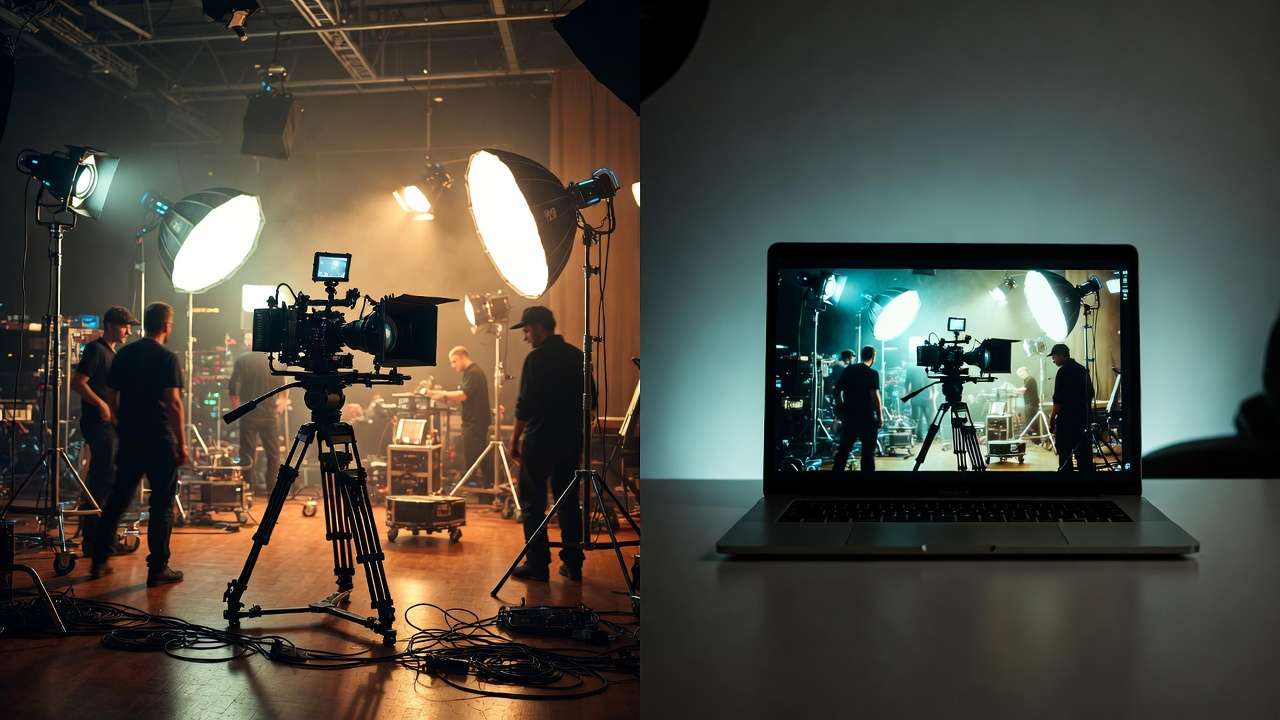
Imagen 4 - Best for Static Ad Creative
Not video, but essential for the image assets in mixed video/image ad campaigns - carousel ads, end-card frames, thumbnail images. Imagen 4's text rendering capability is the difference between an AI-generated ad graphic that looks professional and one that requires manual text replacement in post.
What Makes AI Video Ads Convert
The model quality is necessary but not sufficient. Conversion comes from creative structure and messaging - AI generates what you brief, not what works.
The 5-Second Rule
The hook is everything. Design the first 5 seconds as an independent unit - it should create enough interest or pattern interrupt that a viewer stops regardless of what follows. Common effective hook patterns:
The unexpected visual: Something that doesn't match the viewer's mental model of what this category looks like. A product used in an unusual context. A surprising visual scale or perspective.
The problem identification: State the viewer's problem directly and specifically in the first 3 seconds - verbally (if there's voiceover) or visually. Specific problems ("You're spending 3 hours a week on X") perform better than general ones.
The result first: Show the outcome before showing the product or process. Reversing the traditional narrative structure (product → result) to (result → product) is counterintuitive but consistently increases completion rates.
The Value Proposition Window
After the hook, you have 10-15 seconds to communicate the core value proposition before viewer attention drops significantly. One clear, specific claim - not three. "The only tool that does X, Y, and Z" consistently underperforms "The fastest way to achieve X."

The CTA Architecture
End the ad with a visual CTA that matches the platform's conversion action. On Meta: "Shop Now" with product in frame. On YouTube: "Learn more" with brand visual. On TikTok: implicit CTA through product demonstration that ends on a desire trigger.
AI prompt your CTA frame explicitly: "Final 3 seconds: [specific CTA description], product in frame, brand color palette."
ROI Analysis: AI Video Ads vs. Traditional Production
Traditional production cost (30-second ad, agency produced): $15,000-$80,000
Traditional production variants (typical): 2-3 versions
Time to launch: 3-6 weeks
AI video ad production cost (30-second ad, multi-model platform): $50-200 in generation credits (some platforms offer a free ai video generator tier for testing)
AI production variants: 8-15 versions testable at same budget
Time to launch: 2-4 hours
The ROI argument is not that an ai video maker produces better ads than a top creative agency. It's that AI produces testable ads at a volume and speed that changes what's financially viable to test - which means you find the top-performing creative faster, scale it sooner, and generate more return from the same media budget.
For most direct-response advertisers, the practical finding is: AI video generation pays for itself within the first media flight by enabling creative testing that would otherwise be cost-prohibitive.
Complete AI Video Ad Workflow
Step 1: Brief
Define per ad: platform, format (aspect ratio, length), target audience, single value proposition, desired emotional tone, CTA. A brief that fits on an index card is better than a brief that fills a page - the constraint focuses the creative.
Step 2: Model and Format Selection
| Platform | Format | Recommended Model |
|---|---|---|
| Meta Feed | 1:1 or 9:16 | Kling 3.0 |
| Meta Stories | 9:16, 15s | Kling 3.0 |
| YouTube Pre-roll | 16:9, 30s | Sora 2 |
| TikTok Ads | 9:16, 15-30s | Kling 3.0 or Veo 3.1 |
| 16:9, 15s | Sora 2 |
Step 3: Prompt by Section
Structure the generation prompt by ad section: hook (0-5s), core content (5-20s), CTA (final 3-5s). Describe each section explicitly rather than leaving the model to interpret a single overall brief.
Step 4: Generate Variants
Produce 3-5 hook variants (same core content, different opening 5 seconds). Hook variation is the highest-leverage test variable in video advertising - different hooks on identical content can produce 3-5x variation in completion and conversion rates.
Step 5: Select, Edit, Add Audio
Review variants. For TikTok: add trending audio in CapCut. For Meta/YouTube: add voiceover or music in your editing tool. Keep editing minimal - AI-generated video over-edited in post often loses cohesion. For a broader audio workflow map (voice-over, music, and sound effects layers), see AI video with voice and sound.
Step 6: Launch with Structured Testing
Launch 2-4 variants simultaneously per ad set. Let the platform's algorithm run the creative test for 3-7 days at sufficient spend to generate statistical significance. Kill underperformers. Scale the winner.
Step 7: Iterate
Use winning hook patterns on new content directions. Identify which value proposition framing performs best across your audience segments. AI generation makes iteration rapid enough that learning compounds quickly - week 6 creative should be meaningfully better than week 1 because you've run 5 weeks of test data.
Frequently Asked Questions
Are AI-generated video ads effective? Yes - for direct-response advertising in particular, AI-generated creative performs comparably to traditional production at significantly lower cost, and the volume of variants you can test with AI budgets consistently finds higher-performing creative than low-variant traditional production.
Which platforms allow AI-generated video ads? Meta, YouTube, TikTok, and LinkedIn all permit AI-generated ad content as of 2026. Requirements for disclosure of AI-generated content vary by platform and are evolving - check each platform's current advertising policies before running AI creative at scale.
What is the best AI model for video ads? Kling 3.0 for product and e-commerce advertising (4K/60fps, fast iteration). Sora 2 for brand storytelling and higher-production-value campaigns. Veo 3.1 for emotionally resonant content requiring audio-visual sync. All accessible via Cliprise on one subscription.
How much does AI video ad production cost? Generation costs range from $50-200 per campaign creative batch depending on model, resolution, and volume. Platform subscription starts at $9.99/mo via Cliprise. Compare to $15,000+ for traditional video ad production.
How many creative variants should I test per campaign? Meta's data recommends 6-8 creative variants per ad set for statistically significant testing. AI video generation makes this volume achievable at negligible additional cost versus 2-3 variants. Test more hooks, find the winner faster, scale with confidence.
Can I use AI video ads for all campaign objectives? AI video works best for awareness, consideration, and conversion objectives with product or lifestyle creative. Brand campaigns requiring specific talent, licensed content, or documentary-style authenticity may still benefit from traditional production components. The most common workflow in 2026 is hybrid: AI for testing volume, traditional for proven winner scaling.
How do I ensure brand consistency in AI video ads? Create a visual style prompt library specific to your brand - color palette references, lighting descriptions, model/talent reference images, environment references. Use consistent references across all generations and document the prompt patterns that produce on-brand results.
Conclusion
AI video advertising is not a future capability - it's the current standard for direct-response advertisers who test creative at scale. The production economics have shifted irreversibly: generating 8 creative variants costs the same as generating 2, which means there's no longer a cost justification for running under-tested campaigns.
The workflow is established. The models are production-grade. The platforms permit the content. What remains is implementing a testing-first ad production process built on AI generation, learning from variant data, and scaling what works.
Start producing AI video ads on Cliprise → cliprise.app/pricing
Related Articles:
- AI Video Generator for Marketing, Ads and Business
- AI Ad Creative Testing Workflow
- AI Video Storyboard Workflow
- AI Video Generator with Audio, Voice and Sound
- AI Video for TikTok: Complete Guide
- AI Video for Marketing: Strategy Guide
- AI Video Ads: Facebook & Instagram Performance
- Luma Modify Guide: Edit Video With AI →
- Kling 3.0 Tutorial
- ElevenLabs Sound Effects: Complete Guide →
- Cliprise pricing