Video now accounts for 82% of consumer internet traffic. Every major marketing channel - social media, email, paid advertising, website - rewards video content with higher engagement, longer session times, and better conversion rates than any other content format.
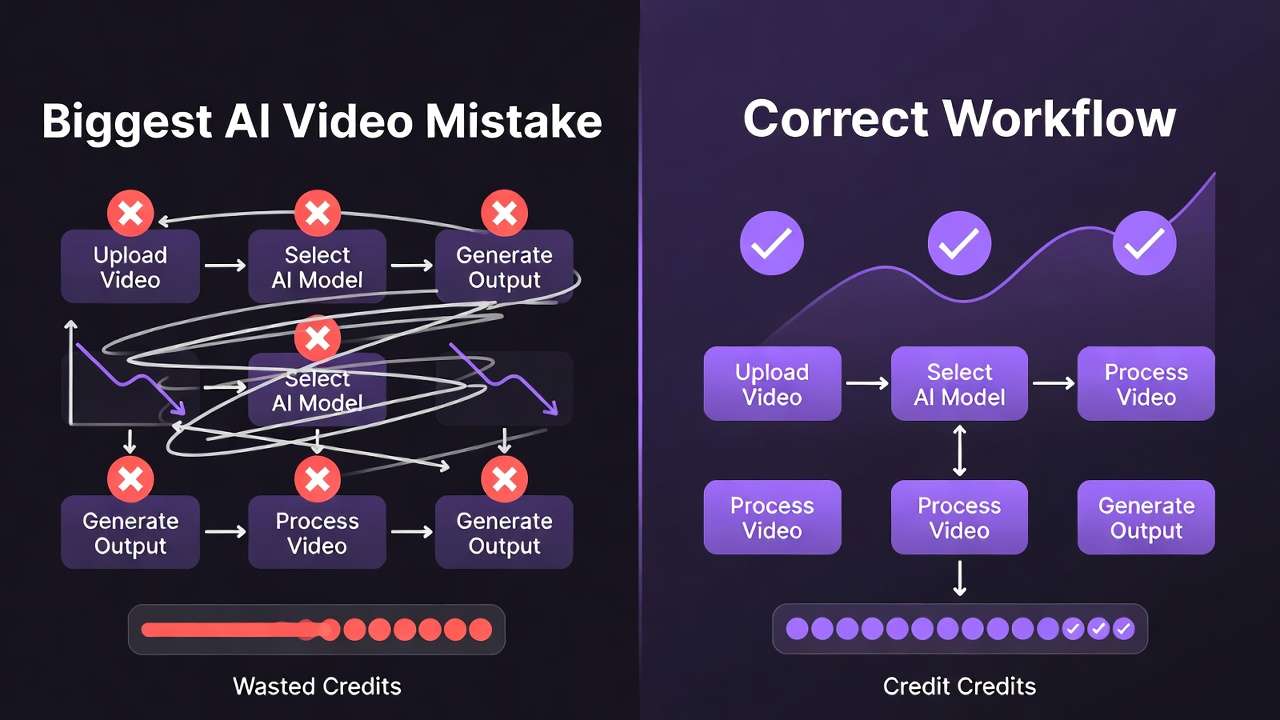
The problem for most marketing teams is not the strategic case for video. It's the production reality. Video is expensive, slow to produce, and difficult to iterate. A 60-second brand video takes weeks to shoot, run through ai video editing software, and approve. A 15-second social ad needs 5-10 creative variants to run proper A/B testing. A product demo needs updating every time the product changes. At the rate marketing moves in 2026, traditional video production can't keep up with content demand.
An ai video creator closes this gap - not by replacing creative strategy, but by collapsing the production bottleneck. This guide covers every major marketing use case, the right AI models for each, implementation workflows, measurement frameworks, and the specific ai marketing tool tactics that produce measurable results.
The AI Advantage in Marketing Video Production
The case for AI video in marketing is built on three operational advantages that compound:

Speed to market. Campaign-responsive video - reacting to trends, news cycles, competitor moves, or seasonal moments - requires production speed that traditional agencies cannot match. An ai video generation workflow produces campaign-ready creative in 2-4 hours. Traditional production is measured in weeks.
Creative testing at scale. Marketing video performance is highly variable and unpredictable. The only reliable way to find high-performing creative is to test. Testing requires variants. Traditional production makes variants expensive. AI generation makes them essentially free - 8 variants costs the same as 2, enabling the test coverage that actually finds strong creative.
Content volume for consistent presence. Consistent social media presence requires 5-7 posts per week at high visual quality. Traditional production cannot sustain this volume at acceptable cost. An ai movie maker makes consistent, quality video production achievable for marketing teams of any size.
Marketing Use Cases and Best AI Models
Social Media (Organic)
Objective: Consistent brand presence, community engagement, awareness
Volume requirement: 5-7 posts/week per platform
Best model: Kling 3.0 (quality and speed), Veo 3.1 (audio-synced content)
Format: 9:16 vertical for Instagram/TikTok, 16:9 for LinkedIn/YouTube
Organic social video optimizes for watch-through rate and engagement (comments, saves, shares). The content structure that performs: problem identification or curiosity hook (0-3 seconds), core value content (5-20 seconds), implicit or explicit CTA (final 5 seconds).
AI generation advantage: produce daily video content without a daily production workflow. Batch generate a week's content in a 2-3 hour session; schedule the rest.
Workflow: Weekly content session → 5-7 prompts written based on content calendar → Batch generate via Cliprise → Edit/text overlay in CapCut → Schedule via social management tool.
Paid Advertising
Objective: Direct response conversion, awareness at scale
Volume requirement: 5-10 creative variants per campaign for proper A/B testing
Best model: Kling 3.0 for product/lifestyle, Sora 2 for brand storytelling, Veo 3.1 for emotionally resonant content
Format: Platform-specific (9:16 for Meta/TikTok, 16:9 for YouTube)
Paid video advertising is the highest-ROI application of AI video generation in marketing. The creative testing problem in advertising - you need many variants to find the strong performer, but traditional production makes variants expensive - is directly solved by AI generation's low marginal cost per variant.
Meta's performance data shows that creative quality accounts for 56% of purchase intent lift. The test coverage enabled by AI generation finds better creative faster, which compounds into better campaign performance over time.
See detailed breakdown: AI Video Ads: Complete Guide
Email Marketing
Objective: Click-through rate improvement, engagement
Volume requirement: 1-2 video assets per email campaign
Best model: Kling 3.0 for lifestyle, Imagen 4/Flux 2 for static product imagery used in GIF format
Format: 600px width, 15-30 seconds, GIF or embedded video depending on email client
Video in email is underutilized relative to its performance impact. The average click-through rate for email with video is 65% higher than text-only emails. AI generation makes producing email-specific video assets - short product demos, ambient brand moments, animated product reveals - fast enough to include in routine email campaigns, not just special productions.
Key consideration: Many email clients don't support native video playback. The standard approach is a GIF thumbnail with a play button overlay that links to a video landing page. Generate your video asset, export the opening frame as a GIF with a play button, embed the GIF, link to the full video on your website or YouTube.
Website and Landing Pages
Objective: Engagement, time on page, conversion
Volume requirement: 1-3 hero videos per major landing page
Best model: Sora 2 for cinematic brand videos, Kling 3.0 for product demos, Veo 3.1 for atmospheric brand content
Format: 16:9 for hero sections, looping background video (15-30 seconds)
Website hero video has one of the strongest conversion impacts of any marketing video application - it reduces bounce rate, increases time on page, and establishes brand quality perception before the visitor reads a word. The challenge has always been production cost: a professional website hero video costs $5,000-$20,000.
AI generation produces website-quality hero video for a fraction of the cost. Key requirements: seamlessly loopable (the video needs to loop without a visible cut), appropriate for background use (not overly dynamic), and loading-optimized (compress output for web delivery).
Loopable prompt technique:
Generate a [scene description] that can loop seamlessly -
visual content that transitions smoothly from end back to beginning.
Slow, atmospheric movement [specify: camera drift, natural motion, etc.].
No hard cuts or sudden motion changes. 20-second loop.
YouTube Content Marketing
Objective: SEO traffic, brand authority, organic distribution
Volume requirement: 2-4 videos per month for consistent growth
Best model: Sora 2 for narrative segments, Kling 3.0 for high-production-value b-roll, Imagen 4/Ideogram for thumbnails
Format: 16:9, 1080p minimum
AI video generation in YouTube content marketing is most valuable for three specific applications:
B-roll production: AI generates b-roll footage at production quality without a camera crew. A tutorial or educational video's talking-head footage is supplemented with relevant b-roll that would otherwise require a shoot day.
Intro sequences: Channel intro animations and brand sequences - historically requiring motion graphics specialists - are generatable via AI with cinematic quality.
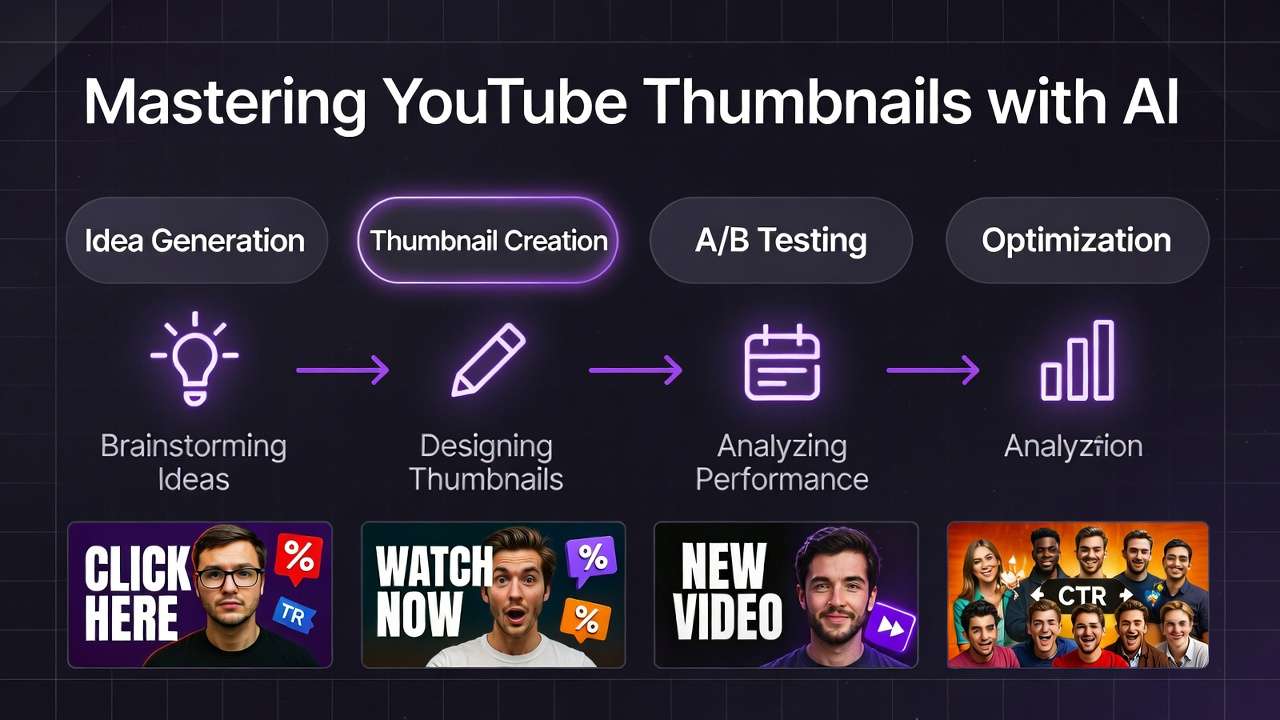
Thumbnail generation: See the Best AI for YouTube Thumbnails and AI Thumbnail Generator guide for the model-specific workflow.
Implementation Strategy: Getting Started
Phase 1: Pilot (Weeks 1-2)
Pick the single highest-volume, lowest-stakes application for your team - typically organic social content. Define 2-3 content categories that appear weekly in your social calendar. Build prompt templates for each category. Generate a week's worth of content and evaluate quality.
This phase answers: Does the quality meet our brand standard? What prompt refinements are needed? How does the workflow fit our team's process?
Phase 2: Expand to Paid Creative (Weeks 3-6)
Apply AI generation to your next paid media campaign. Generate 5-8 creative variants using the same brief. Run all variants in your ad platform's creative testing framework. Let the data identify the strong performer.
This phase answers: Do AI-generated ad creatives perform competitively? What creative patterns emerge from test data? What is the actual CPM/CPA impact of higher creative testing volume?
Phase 3: Full Integration (Months 2-3)
Integrate AI video generation into the standard workflow for all applicable content types: social (organic and paid), email, website updates, product demos. Build team prompt libraries by content category. Establish quality review process and brand consistency guidelines.
Metrics and Measurement
Track AI video performance using the same metrics as traditional video - with the additional dimension of production efficiency:
Performance metrics:
- Social: Watch-through rate (%), engagement rate (comments+saves/impressions), click-through rate
- Paid: CTR, conversion rate, CPA, ROAS vs. control (traditional creative)
- Email: Click-through rate vs. non-video emails (benchmark: +65%)
- Website: Time on page, bounce rate, conversion rate vs. pre-video baseline
Production efficiency metrics:
- Time to produce per asset (AI vs. traditional)
- Cost per asset (AI vs. traditional)
- Number of variants tested per campaign
- Iteration cycle time (time from brief to approved asset)
The efficiency KPI that matters most: Number of creative variants tested per campaign. This is the direct output of AI generation's low marginal cost, and it directly correlates with finding higher-performing creative faster.
Best Practices for Marketing Teams
Build brand prompt libraries. Every marketing team should maintain a documented set of prompt templates for their brand's visual style, product contexts, and audience types. The investment in prompt library development pays off with every subsequent generation - consistent on-brand output without per-generation prompt calibration.
Human strategy, AI production. The most effective AI video marketing workflows use human judgment for creative strategy (what message, what emotion, what CTA) and AI for production (the visual execution). Giving AI complete creative autonomy produces average output. Giving AI specific creative direction produces marketing-grade output.
Test with the same media budget, more creative. Don't reduce media spend to offset AI production savings. Keep media spend constant and use AI-enabled production savings to test more creative variants. The compounding effect of better creative testing is larger than the production cost savings.
Establish clear brand guardrails. Document what the brand's visual style is - color palette, lighting aesthetic, tone, subject types - and reference it in every prompt. AI generates what you brief; the output is only as on-brand as the brief.
Review before publishing. AI video generation in 2026 is reliable but not infallible. Every asset should be reviewed by a human before going live on any channel. Establish a QA checklist: brand consistency, factual accuracy (especially for product demos), appropriate tone, no AI artifacts.
Frequently Asked Questions
Can AI video replace my video production team? Not entirely - but it changes the role. Creative strategy, brand direction, and quality review remain human responsibilities. Production execution - filming, editing, post-production - is where AI generation produces the largest operational change. Teams increasingly position video producers as creative directors of AI systems rather than camera operators.
Is AI video good enough quality for professional marketing? For most marketing applications - social media, paid advertising, email, website - frontier AI video models (Sora 2, Kling 3.0, Veo 3.1) produce quality that is commercially appropriate. The quality threshold where traditional production is definitively superior has narrowed to: content requiring specific talent or real people, live events, documentary-style authenticity content, and highly product-specific demonstrations requiring physical props.
How do I maintain brand consistency in AI video? Create a visual style prompt guide specific to your brand: color palette (hex codes referenced in descriptions), lighting treatment ("soft studio, warm" vs. "dramatic, high contrast"), environment types, talent description (if applicable), and aesthetic references. Use this guide in every generation prompt. The more specific your brand prompt elements, the more consistent your output.
What marketing video types produce the best ROI from AI generation? Paid advertising creative variants (highest testing leverage), social media organic content (highest volume need), and website hero video (high traditional production cost, strong conversion impact). Email video has strong performance data but lower production volume need.
How much does AI video marketing production cost? Platform subscription from $9.99/mo via Cliprise. Per-campaign generation costs range from $20-200 in credits depending on volume and model selection. Compare against $5,000-80,000 per traditional video production. The production cost savings are significant; the compounding value comes from the testing volume the cost savings enable.
How quickly can an ai video maker respond to trends? 2-4 hours from brief to campaign-ready asset. This is the operational threshold that enables trend-responsive marketing - the ability to produce and launch relevant content the same day a trend emerges. Traditional production cannot compete at this speed.
Conclusion
The ability to create ai videos for marketing is not a future capability. It's the operational standard for marketing teams that produce content at the volume and speed that competitive presence in 2026 requires.
The ROI argument is clear: lower production costs, faster iteration cycles, more creative variants tested, and better-performing campaigns as a result of that testing. The implementation path is straightforward: start with the highest-volume, lowest-stakes use case, build a prompt library, and expand to paid creative once quality and workflow are established.
Every model you need - Sora 2 for brand storytelling, Kling 3.0 for product and lifestyle, Veo 3.1 for atmospheric and audio-synced content - is accessible from Cliprise on one subscription, one credit system, one production workflow.
Start producing marketing video with AI → cliprise.app/pricing
Related Articles: