Not every video generation task needs the model with the highest benchmark score. Sometimes you need a model that does one thing particularly well - and for content where physics realism and cinematic quality are the priority, Hailuo 02 has a specific case to make.
Developed by MiniMax and ranked second globally on the Artificial Analysis video generation benchmark at release, Hailuo 02 generates 1080p video up to 10 seconds with physics simulation that handles water, fire, smoke, fabric, and object interactions more accurately than most models. This guide covers what it does well, where to use it, and how it fits into a multi-model workflow on Cliprise.
What Hailuo 02 Is
Hailuo 02 is MiniMax's second-generation video model, built on the NCR (Noise-aware Compute Redistribution) architecture. It was developed with 3x larger parameters and 4x more training data than MiniMax's previous video generation model, with specific focus on physics simulation, character consistency, and cinematic framing.
Technical specifications:
- Resolution: 1080p native (1920x1080)
- Duration: up to 10 seconds per generation
- Modes: Text-to-Video (T2V) and Image-to-Video (I2V)
- Camera control: text-based cinematographic direction
- Languages: English and Chinese prompt support
Benchmark context: At release, Hailuo 02 ranked #2 on the Artificial Analysis global video generation benchmark - behind Seedance 1.0 and ahead of Google Veo 3. Independent testing positioned it above Veo 3 in cinematic emotion and character consistency, though Veo leads in certain physics accuracy scenarios.
What Hailuo 02 Does Particularly Well
Physics Simulation
This is Hailuo 02's most distinctive strength. The model renders physical phenomena more accurately than most video generation models - the behavior of materials and elements in motion:
- Water: reflections tracking across moving surfaces, fluid dynamics in rivers, ocean waves, rain
- Fire and smoke: natural plume behavior, heat distortion, fire spread patterns
- Fabric: weight and drape behavior as fabric moves, clothing in wind
- Object interactions: collision physics, momentum transfer, realistic material deformation
- Light: refraction in glass and water, caustic patterns, realistic shadow behavior
For content where physical realism is the point - a product falling into water, smoke from a candle, fabric blowing in wind, liquid pouring - Hailuo 02 produces results that hold up to scrutiny in a way that other models sometimes do not.
Prompt example for physics content:
A luxury perfume bottle falling in slow motion into clear water,
precise splash physics with droplets tracking realistically,
underwater visibility, refraction and light caustics,
cinematic high-speed footage aesthetic,
1080p, black background
Camera Control
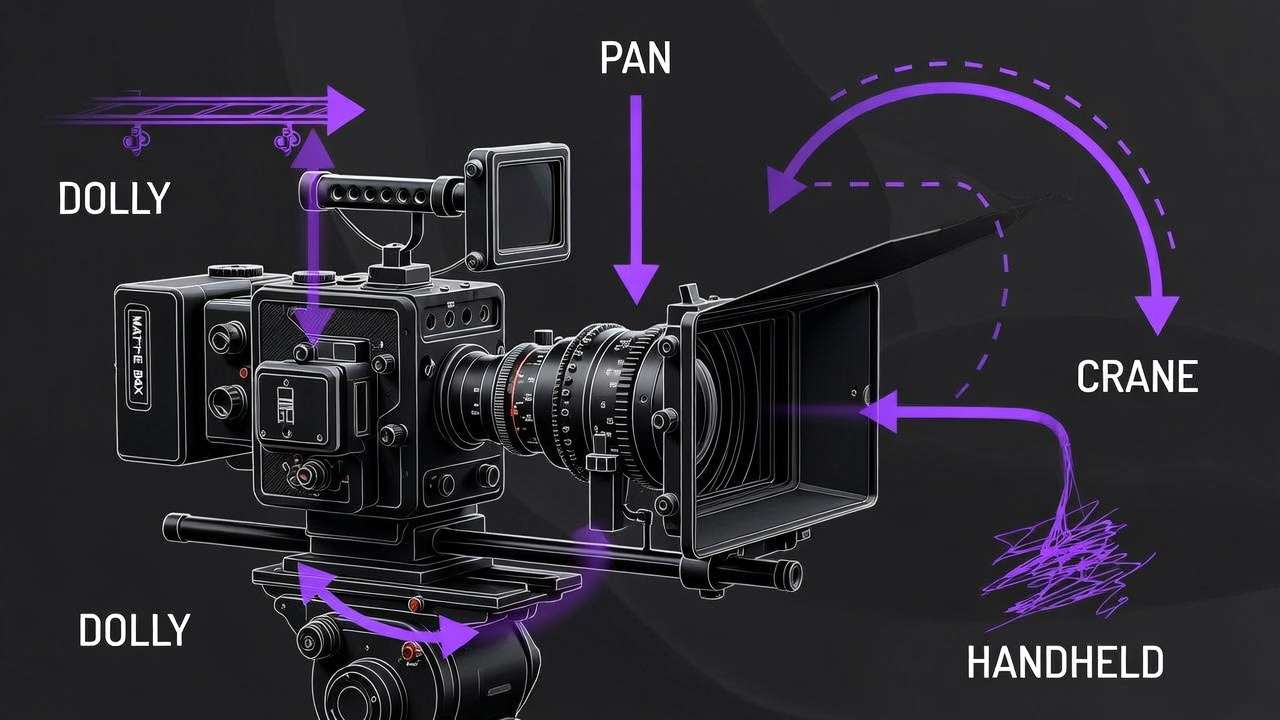
Hailuo 02 responds reliably to cinematographic camera direction in prompts. Standard camera movement language - pan, dolly, tracking, overhead, bird's eye, handheld - produces the expected camera behavior without the prompt fighting the model.
Camera language that works well:
- "Slow dolly push toward the subject"
- "Overhead bird's eye view rotating clockwise"
- "Tracking shot alongside the moving subject"
- "Camera rises from ground level to reveal the environment"
- "Handheld energy, slightly unstable but purposeful"
- "Static locked-off wide shot"
For content where the camera's behavior is central to the shot's feeling - a slow push that builds tension, a rise that reveals scale, a tracking shot that follows motion - Hailuo 02's camera control precision makes the difference between a clip that feels directed and one that feels accidental.
Character Consistency
Hailuo 02 maintains character appearance across the duration of a clip more reliably than earlier video generation models. A face introduced in the first frame stays recognizably the same face through the 10-second clip. Clothing details, distinctive features, and general appearance hold through motion and lighting changes.
This matters most for content where the same character needs to appear in multiple generated clips assembled in an edit. When characters drift in appearance between the clips, cuts between them read as cuts between different people. Hailuo 02's consistency reduces this problem.
Text-to-Video vs Image-to-Video on Hailuo 02
Both modes are available on Cliprise.
Text-to-Video (T2V) generates a clip entirely from a text description. The model creates the visual starting point and animates it. Use this for concept clips where you do not need to control the exact first frame, atmospheric B-roll, and scene generation where the model's interpretation of the scene is acceptable.
Image-to-Video (I2V) takes an uploaded image as the first frame and animates it according to the motion description. Use this when the starting composition is critical - a specific product, a specific character, a specific environment - and you need the video to begin from that exact visual.
For brand and commercial content, I2V is typically the stronger workflow: generate the starting frame with an image model (Flux 2, Midjourney, or Google Imagen 4 for the visual you want), then animate with Hailuo 02 I2V for precise control over what the first frame contains.
Where Hailuo 02 Fits in a Multi-Model Workflow
Hailuo 02 is one of several video models on Cliprise. It is not the right model for every task - it is the right model for specific task types.
| Use case | Best model | Why |
|---|---|---|
| Physics-heavy scenes (water, fire, fabric) | Hailuo 02 | Physics simulation strength |
| Cinematic B-roll with precise camera work | Hailuo 02 | Camera control reliability |
| Highest single-shot visual quality, 4K | Kling 3.0 | 4K native, photorealism ceiling |
| Multi-shot narrative in one generation | Wan 2.6 | Native multi-shot planning |
| Audio-synchronized music video | Seedance 2.0 | @Audio tag generation |
| Fast iteration, social content | Kling 2.5 Turbo or Veo 3.1 Fast | Speed-optimized |
| Environmental physics, weather | Veo 3.1 Quality | Google's physics specialization |
A practical workflow for commercial video production on Cliprise: use Hailuo 02 for atmospheric and physics-driven B-roll clips, Kling 3.0 for hero product shots at maximum quality, and Seedance 2.0 for any clips that need audio synchronization. Edit together in CapCut.
Prompting for Hailuo 02
Structure that works well:
[Subject and action],
[physics or environmental element],
[camera movement],
[lighting and atmosphere],
[quality descriptor]
Working examples:
Action with physics:
A chef pours hot oil into a cold pan,
immediate sizzle and steam rising dramatically,
tight close-up with slow camera pull back,
warm kitchen light from above,
cinematic slow motion, food photography quality
Cinematic establishing:
Wide aerial view of a coastal city at blue hour,
camera slowly descending and pushing toward the waterfront,
city lights reflecting on harbor water,
cinematic color grading, professional documentary quality
Atmospheric B-roll:
Autumn leaves falling from a tree in slow motion,
static wide shot, golden afternoon light from the right,
leaves spinning naturally in the breeze,
shallow depth of field, film grain, cinematic quality
Note
Hailuo 02 is on Cliprise alongside Kling 3.0, Veo 3.1, Seedance 2.0, and 40+ other video models. Try Cliprise Free →
Related Articles
Video model comparisons:
- Best AI Video Generator 2026: Tested and Ranked →
- Best AI Video Models on Cliprise 2026 →
- Sora 2 vs Kling 3.0 vs Veo 3.1 →
Video generation guides:
- AI Video Generation 2026: Complete Guide →
- Image-to-Video Workflow: Complete Guide →
- Motion Control Mastery: Camera Angles & Movement →
- How to Generate AI Video →
Models on Cliprise: