Three models. Three architectures. Three different answers to the same question: what does the best ai video generator look like at its absolute ceiling in 2026?
Sora 2 from OpenAI. Kling 3.0 from Kuaishou. Veo 3.1 from Google DeepMind.
These are not similar tools competing in the same lane. They are genuinely different systems with genuinely different strengths - built by different research teams, optimized for different objectives, and excelling in different production contexts.
The internet is full of superficial comparisons that pick one winner and declare the debate settled. This guide does something different: it maps the actual technical landscape across every dimension that matters for production use, gives you a clear answer on which model wins each category, and then makes the case that the real competitive advantage in 2026 is not choosing the right model - it's building a workflow that uses all three.
Let's get into it.
The Three Contenders: Architecture Overview
Before the head-to-head, a fast orientation on what each model is and what research direction built it.

Sora 2 - OpenAI's Cinematic Engine
Sora 2 is a diffusion transformer model trained on an enormous corpus of video data with a specific research emphasis on spatial understanding and temporal consistency. OpenAI's approach to video generation prioritizes the model's ability to understand how the world works - how objects occupy and move through space, how lighting behaves over time, how narrative action sequences unfold coherently.
The result is a model that produces video which makes physical sense at a level that previous generation AI video did not. Characters don't glitch through walls. Shadows fall correctly. Camera motion feels deliberate rather than procedural.
Key specs: 1080p native (4K in staged rollout), up to 60-second generations, available via ChatGPT Pro ($200/mo direct) or multi-model platforms from $9.99/mo. See Sora 2 complete guide and Kling 3.0 vs Sora 2.
Kling 3.0 - Kuaishou's Production Powerhouse
Kling 3.0 is the third major iteration of Kuaishou's video generation model, built with a specific emphasis on resolution, motion quality, and generation speed. Where OpenAI prioritized scene understanding, Kuaishou prioritized throughput - the ability to produce high-resolution, fluent video quickly and consistently at scale.
The result is the first AI video model to deliver native 4K/60fps generation at production quality, with generation speeds that are 30-50% faster than Sora 2 at comparable quality settings. Kling 3.0 is the workhorse. It's the model you run when volume and resolution define the brief.
Key specs: 4K/60fps native, up to 30-second generations, strong motion quality, fastest of the three models, available via platform access. See Kling 3.0 complete guide and Kling 3.0 vs Veo 3.
Veo 3.1 - Google DeepMind's Physics Laboratory
Veo 3.1 is Google DeepMind's third-generation video model, developed with a research emphasis on physical simulation accuracy. DeepMind's approach to video generation draws on the same team and research tradition that produced AlphaFold - a focus on modeling how the physical world actually behaves at a computational level.
The result is a model that outperforms both Sora 2 and Kling 3.0 on physics-intensive content: fluid dynamics, particle systems, material behavior, environmental interaction, crowd motion. When the content requires the physical world to behave correctly, Veo 3.1 is the reference model.
Key specs: 4K support, up to 60-second generations, best-in-class physics simulation, built-in audio-visual synchronization, available via Google Vertex AI or platform aggregators. Compare Google Veo 3 vs OpenAI Sora 2.
The Head-to-Head: 8 Categories That Matter for Production
Category 1: Cinematic Quality & Scene Realism
This is the category most people mean when they ask which model is "best." It's also the most subjective - but there are objective dimensions to anchor the comparison.
Sora 2: ★★★★★
Sora 2 leads the field on overall cinematic quality. The model's spatial understanding produces video that reads as intentionally composed - depth of field feels deliberate, lighting interacts with subjects correctly, and the overall aesthetic has the quality of footage shot by someone who understands cinema, not just someone who generated video.
Kling 3.0: ★★★★☆
Kling 3.0 produces excellent cinematic output but with a different character. The aesthetic is cleaner and more commercial than Sora 2's more nuanced approach. For product video and lifestyle content, Kling's output often looks more immediately professional. For narrative and artistic work where subtlety matters, Sora 2 has the edge.
Veo 3.1: ★★★★☆
Veo 3.1's cinematic quality is strongest in environmental and wide-scale scenes where physics simulation contributes directly to visual realism. A stormy seascape, a crowd in motion, a fire burning - these look more real in Veo 3.1 than in either competitor. Human-centered close-up work is slightly behind Sora 2.
Winner: Sora 2 - for cinematic realism, compositional intentionality, and overall "looks like it was filmed" quality across diverse subject matter.
Category 2: Resolution & Technical Output
Sora 2: ★★★☆☆
1080p native in 2026, with 4K in staged rollout on higher-tier access. For many production use cases, 1080p is sufficient. For 4K delivery requirements - which are standard in advertising and premium brand work - Sora 2 is behind the competition.
Kling 3.0: ★★★★★
Native 4K/60fps - the current technical ceiling for AI video generation. No other model matches Kling 3.0 on raw resolution and frame rate. For any production context where 4K delivery is a requirement, Kling 3.0 is the only model in this comparison that fully meets spec.
Veo 3.1: ★★★★☆
4K support at up to 60 seconds. Strong technical output, slightly behind Kling 3.0 on frame rate consistency at 4K but competitive at the resolution level.
Winner: Kling 3.0 - uncontested on native 4K/60fps capability in 2026.
Category 3: Generation Length
Sora 2: ★★★★★

Up to 60 seconds. The longest generation capability of the three models, and - critically - Sora 2 maintains quality and consistency across the full 60-second window. Long-form coherence is a genuine differentiator: character appearance, environmental consistency, and narrative flow hold across the entire generation.
Kling 3.0: ★★★☆☆
Up to 30 seconds. Sufficient for most advertising, product, and social content. Not sufficient for narrative work requiring continuous scenes beyond 30 seconds.
Veo 3.1: ★★★★★
Up to 60 seconds, matching Sora 2. Veo 3.1's environmental and physics consistency across long generations is particularly strong - outdoor scenes with dynamic weather or crowd motion remain coherent throughout.
Winner: Tied - Sora 2 and Veo 3.1 both at 60-second maximum, with Sora 2 leading on character consistency and Veo 3.1 leading on environmental consistency over long durations.
Category 4: Physics Simulation Accuracy
This category is where Veo 3.1 separates itself from the field.
Sora 2: ★★★★☆
Sora 2's physics is good - dramatically better than previous-generation models, with realistic object behavior, correct gravity, and reasonable material interaction. For general production use, it's sufficient.
Kling 3.0: ★★★☆☆
Kling 3.0's physics is competent for standard motion - walking, running, standard object movement. For complex physics-intensive content (fluid dynamics, particle systems, destructive events), it shows more artifacts than the other two models.
Veo 3.1: ★★★★★
Best-in-class physics by a clear margin. Water flows correctly. Fire behaves like fire. Smoke dissipates realistically. Crowd dynamics follow real crowd motion patterns. Fabric responds to movement with accurate material behavior. This is the direct result of DeepMind's physics simulation research applied to video generation, and the output quality reflects it.
Winner: Veo 3.1 - no contest on physics-intensive content.
Category 5: Generation Speed
Sora 2: ★★★☆☆
Sora 2's generation speed is the slowest of the three models at equivalent quality settings. The computational cost of the model's scene understanding and physics simulation shows in processing time. At scale, this matters.
Kling 3.0: ★★★★★
Kling 3.0 is the fastest model in this comparison - 30-50% faster than Sora 2 at comparable quality settings. For high-volume production workflows where generation turnaround time affects project timeline, Kling's speed advantage is operationally significant.
Veo 3.1: ★★★★☆
Veo 3.1 is faster than Sora 2 and competitive with Kling 3.0 on shorter generations. On longer generations (30-60 seconds), Veo's processing time increases relative to Kling.
Winner: Kling 3.0 - fastest time-to-output across standard production generation parameters. See AI video speed test.
Category 6: Character Consistency Across Long Generations
Sora 2: ★★★★★
Character consistency is one of Sora 2's most important technical advantages. Across a 60-second generation, the same character looks the same - same face, same clothing details, same proportions. This is not trivial; it's one of the hardest problems in AI video generation, and Sora 2 handles it better than any competing model in 2026.
Kling 3.0: ★★★★☆
Good character consistency within 30-second generations. Occasional minor inconsistencies on facial detail across longer clips. Strong enough for advertising and commercial content where cuts are short anyway.
Veo 3.1: ★★★☆☆
Veo 3.1's character consistency is the weakest of the three for human subjects in close-up or mid-shot contexts. Environmental consistency (the beach looks the same throughout, the building doesn't shift) is strong. Human character detail over long generations is behind Sora 2 and Kling 3.0.
Winner: Sora 2 - the clear leader on human character consistency across full generation length.
Category 7: Prompt Fidelity
How accurately does the model produce what the prompt describes?
Sora 2: ★★★★★
Sora 2's prompt fidelity is the strongest of the three models. Long, complex, multi-clause prompts are interpreted accurately. Specific camera angle descriptions, lighting specifications, action sequences in temporal order - Sora 2 follows detailed direction more reliably than competitors.
Kling 3.0: ★★★★☆
Strong prompt fidelity on concrete, visual descriptions. Slightly less reliable on abstract or metaphorical direction. The model performs best when the prompt describes what is visually present rather than conceptual or narrative meaning.
Veo 3.1: ★★★★☆
Strong semantic understanding, particularly for environmental and physical descriptions. "A stormy coastline where waves crash against a rocky shore at sunset" is interpreted with high accuracy. Complex character interaction prompts are slightly less reliable.
Winner: Sora 2 - strongest prompt fidelity across complex, multi-element descriptions.
Category 8: Audio-Visual Integration
Sora 2: ★★★☆☆
Audio-visual synchronization is available but limited in native Sora 2 output. The model generates video; audio is handled separately or added in post.
Kling 3.0: ★★★☆☆
Similar to Sora 2 - strong video generation, audio handled separately. Not a current differentiator.
Veo 3.1: ★★★★★
Built-in audio-visual synchronization is one of Veo 3.1's distinct technical features. The model generates video and spatially coherent audio together - ambient sound, environmental audio, and even dialogue timing can be generated in sync with the visual output. For content where the audio layer is integral to the brief (product demos, nature content, atmospheric scenes), this capability is a genuine workflow advantage.
Winner: Veo 3.1 - only model with native audio-visual integration at production quality.
Consolidated Scorecard
| Category | Sora 2 | Kling 3.0 | Veo 3.1 |
|---|---|---|---|
| Cinematic Quality | ★★★★★ | ★★★★☆ | ★★★★☆ |
| Resolution (4K/60fps) | ★★★☆☆ | ★★★★★ | ★★★★☆ |
| Generation Length | ★★★★★ | ★★★☆☆ | ★★★★★ |
| Physics Simulation | ★★★★☆ | ★★★☆☆ | ★★★★★ |
| Generation Speed | ★★★☆☆ | ★★★★★ | ★★★★☆ |
| Character Consistency | ★★★★★ | ★★★★☆ | ★★★☆☆ |
| Prompt Fidelity | ★★★★★ | ★★★★☆ | ★★★★☆ |
| Audio-Visual Integration | ★★★☆☆ | ★★★☆☆ | ★★★★★ |
| Category Wins | 4 | 2 | 2 |
What the Scorecard Doesn't Tell You
Sora 2 wins four categories. Kling 3.0 and Veo 3.1 win two each. If you're looking for a single winner, that's the table.
But the scorecard misses something important: category wins don't translate into workflow wins.
A production team that uses only Sora 2 - even though it leads on cinematic quality and prompt fidelity - is leaving real capability on the table:
- They can't deliver native 4K/60fps (Kling 3.0's exclusive)
- They get slower generation turnaround on high-volume briefs (Kling 3.0 is 30-50% faster)
- Their physics-intensive scenes are behind what Veo 3.1 would produce
- They're missing native audio-visual integration (Veo 3.1 only)
The same is true for any single-model workflow. The model that wins the most categories is not necessarily the model that covers your specific use cases - and it's definitely not a substitute for the models that win the categories you care most about. See multi-model strategy.
The Multi-Model Workflow: How Professional Teams Use All Three
Here's what a mature 2026 AI video production workflow looks like when you have access to all three models:
Brief type 1: Brand film (30-60 seconds, narrative, character-driven)
Route to → Sora 2
Why: Long-form coherence, character consistency, cinematic quality
Brief type 2: Product video (4K, lifestyle, high-volume batch)
Route to → Kling 3.0
Why: 4K/60fps native, fast generation, strong motion quality
Brief type 3: Nature/documentary/environmental content
Route to → Veo 3.1
Why: Physics-accurate water, fire, weather, crowd dynamics
Brief type 4: Product demo with synchronized ambient audio
Route to → Veo 3.1
Why: Native audio-visual integration, strong product/environment rendering
Brief type 5: Short-form social content (under 15 seconds, any subject)
Route to → Kling 3.0
Why: Fastest generation, 4K output, strong enough on brief content for all subject types
The routing decision takes 30 seconds. The output quality improvement from correct model selection is significant across all brief types. This is what orchestration means in practice - not switching tools, but making deliberate model decisions within one workflow. See AI video models ranked for routing guidance.
Access and Pricing: The Real Comparison
Understanding which model is best is only useful if you can actually access it. Here's the current access landscape:

| Model | Direct Access | Direct Cost | Via Multi-Model Platform |
|---|---|---|---|
| Sora 2 | ChatGPT Pro | $200/mo | Yes - from $9.99/mo |
| Kling 3.0 | Kuaishou platform | $10-30/mo (regional) | Yes - from $9.99/mo |
| Veo 3.1 | Google Vertex AI | Usage-based (complex setup) | Yes - from $9.99/mo |
Accessing all three models directly: $210-230/mo minimum (Sora 2 direct + Kling direct + Veo via infrastructure setup), plus the workflow fragmentation of managing three separate platforms.
Accessing all three models via a unified platform like Cliprise - Sora 2, Kling 3.0, Veo 3.1: from $9.99/mo, with one credit system, one interface, and direct model comparison within a single workflow. See all AI models in one subscription.
The underlying models are identical - same API, same output quality. The billing architecture is not.
For most production teams, the access question resolves to: build a fragmented three-platform stack at $200+/mo, or use a unified platform that routes to all three at $9.99/mo. The model quality is the same. The workflow quality is not.
Use Case Decision Guide
Use Sora 2 when:
- Your brief requires 30-60 seconds of continuous, character-consistent video
- Cinematic quality and compositional realism are the primary objectives
- You need accurate interpretation of complex, detailed prompts
- The content involves human subjects that must look consistent across the full generation
Use Kling 3.0 when:
- Your deliverable requires 4K/60fps - non-negotiable for client spec
- You're producing at volume and generation speed affects project timeline
- The content is product-focused, lifestyle, or commercial advertising
- Brief duration is under 30 seconds
Use Veo 3.1 when:
- The content involves physics-intensive elements: water, fire, smoke, crowd motion, weather
- Native audio-visual synchronization is part of the brief
- Environmental accuracy is more important than character consistency
- Documentary, nature, or scientific visualization content
Use all three when:
- You're running a multi-brief production workflow
- You want to compare model outputs on the same prompt before selecting
- Different elements of a single project need different model strengths
- You're building infrastructure meant to last 12+ months without re-architecting
Frequently Asked Questions
Is Sora 2 better than Kling 3.0?
In different categories. Sora 2 leads on cinematic quality, character consistency, and prompt fidelity. Kling 3.0 leads on resolution (4K/60fps), generation speed, and production throughput. Neither is categorically "better" - they're optimized for different briefs. See Kling 3.0 vs Sora 2.
Can Veo 3.1 replace Sora 2?
For physics-intensive and environmental content, Veo 3.1 outperforms Sora 2. For narrative, character-consistent, and cinematically complex content, Sora 2 leads. They are not direct replacements - they're complementary.
Which model is best for YouTube content?
Depends on your YouTube content type. Cinematic documentary: Veo 3.1. Character-driven narrative: Sora 2. Product or lifestyle: Kling 3.0. High-quality thumbnails and b-roll at 4K: Kling 3.0.
Is Kling 3.0 available in Europe?
Kling 3.0 has regional availability variations for direct access. Multi-model platforms that have integrated Kling 3.0 via API typically offer more consistent global access. Verify current regional availability on the specific access path you're using.
Which model handles text in video best?
Sora 2 handles text-in-video more reliably than Kling 3.0 or Veo 3.1 among this group. For static image text rendering, Imagen 4 (an image model, not video) significantly outperforms all three. For video-native text, Sora 2 is the strongest option in this comparison.
What will Sora 3, Kling 4.0, and Veo 4 look like?
Each model's next iteration will likely follow its current research trajectory: Sora 3 toward even longer generation and 4K native; Kling 4.0 toward higher resolution and potentially 8K; Veo 4 toward improved character consistency and broader audio capabilities. Access via a multi-model platform means you benefit from each model upgrade automatically, without re-subscribing or migrating workflows.
Is there a model that beats all three in every category?
Not in 2026. The frontier is genuinely split across these three models by category. The practical implication: professional AI video workflows in 2026 are multi-model workflows, not single-model workflows.
The Verdict
There is no single winner of the Sora vs. Kling vs. Veo comparison. That's not a hedge - it's the correct technical conclusion.

Sora 2 is the best cinematic engine. Kling 3.0 is the best production throughput model. Veo 3.1 is the best physics simulator. No single model replicates what the other two do best.
Professional AI video production in 2026 is not a model decision. It's a routing decision - matching brief type to the model optimized for it, within a workflow infrastructure that makes that routing fast and seamless.
The teams producing the best AI video in 2026 are not using one model. They are using all three - through a unified platform that removes the friction of multi-platform management and lets the work be about the output, not the tooling.
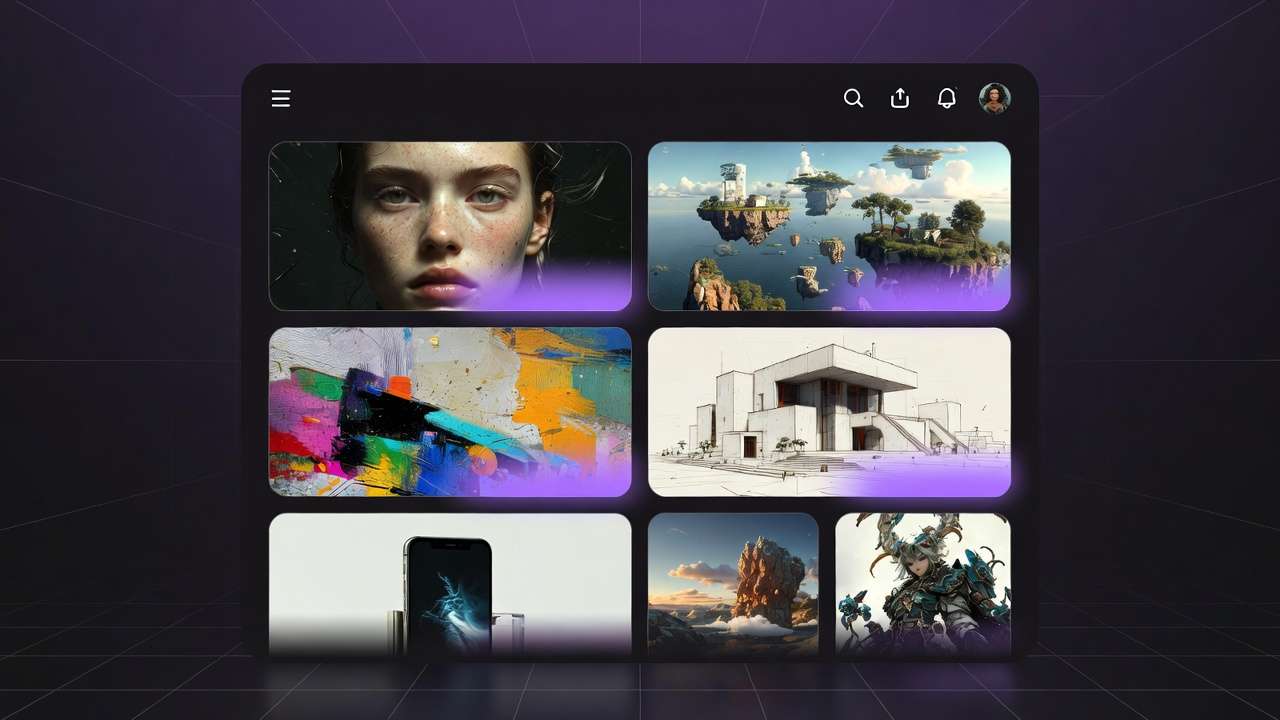
Access to all three models. One interface. One credit system. Starting at $9.99/mo.
That's the workflow. Everything else is a constraint.
Next Steps
- Access Sora 2 on Cliprise →
- Access Kling 3.0 on Cliprise →
- Access Veo 3.1 on Cliprise →
- See all video models on Cliprise →
- Multiple AI Models One Platform - Why unified access beats fragmented subscriptions
Related Guides & Deep Dives
- Best AI Video Generator 2026 - Full platform and model comparison
- Kling 3.0 vs Sora 2 - Head-to-head analysis
- Kling 3.0 vs Veo 3 - 4K and throughput comparison
- Google Veo 3 vs OpenAI Sora 2 - The AI video war
- AI Video Models Ranked 2026 - Model selection for every brief
- Sora 2 Complete Guide - Full Sora 2 specs
- Kling 3.0 Complete Guide - Kling workflows
- Multi-Model Strategy: When to Switch - Routing decisions
- All AI Models in One Subscription - Unified platform economics
- Multiple AI Models One Platform: Why It Matters - Architectural case for unified access