Kling 3.0 vs Sora 2: Complete AI Video Model Comparison 2026
Quick takeaway
Choose Kling 3.0 if: You need native 4K output, multi-shot storyboards (up to 6 cuts), precise camera control, or product videos and cinematic B-roll.
Choose Sora 2 if: You need dense world simulation (5+ characters), longer scene continuity (16s-25s), complex multi-character narratives, or when character performance matters more than camera direction.
How Kling 3.0 compares with Seedance 2.0 on Cliprise (narrative direction vs deep multimodal references) is a separate routing decision: see Seedance 2.0 vs Kling 3.0.
Kling 3.0 and Sora 2 are the two text to video ai models that define the current generation landscape. Kuaishou launched Kling 3.0 on February 4, 2026, introducing native 4K output, multi-shot storyboards, and integrated multilingual audio. OpenAI's Sora 2 arrived earlier and established itself through extended duration, complex scene handling, and strong prompt adherence for multi-element compositions.
Both Kling 3.0 and Sora 2 are available on Cliprise through the AI Video Generator, making direct comparison under identical conditions straightforward. You can test both models side-by-side in the same interface. This article breaks down every production-relevant difference so you can route each shot to the model that handles it best.
Quick Comparison Table
| Specification | Kling 3.0 | Sora 2 |
|---|---|---|
| Max resolution | 4K native (3840x2160) | 1080p |
| Max duration | 15 seconds | 25 seconds |
| Frame rates | 24 / 30 / 60fps | 24 / 30fps |
| Multi-shot storyboard | Up to 6 cuts | Storyboard UI (sequential) |
| Native audio | Yes - 5 languages, accent control | Yes - English-focused |
| Character consistency | Omni variant with reference locking | Strong from prompt description |
| Aspect ratios | 16:9, 9:16, 1:1 | 16:9, 9:16, 1:1 |
| Quality tiers | Standard / Professional | Standard / Pro |
| Best for | Camera control, product video, 4K output | Complex scenes, long clips, narrative |
Testing Methodology
This comparison is based on side-by-side testing on Cliprise. Duration tested: 5s, 10s, 15s (Kling) and 10s, 15s, 20s (Sora 2). Resolution tested: 1080p for both; Kling additionally at 4K native. Prompt structure: Action-first narrative prompts with camera direction; product-focused prompts with cinematography vocabulary. Generations compared: 40+ matched prompts across both models.
Resolution and Frame Rate
This is the most clear-cut technical difference between the two models.
Kling 3.0 generates natively at 4K resolution (3840x2160) at up to 60 frames per second. Native generation means detail is created at the pixel level during the diffusion process - fabric weave, hair strands, surface grain, and environmental micro-texture are resolved without upscaling artifacts. The 60fps option enables speed ramping and slow-motion extraction in post-production by conforming to 24fps delivery.
Sora 2 generates at 1080p resolution. Output is clean and detailed at that resolution, but projects requiring 4K delivery need upscaling through external tools, which introduces hallucinated detail and softened edges. Frame rate caps at 30fps, which covers most web and social delivery formats but limits post-production flexibility for speed manipulation.
When it matters: If your delivery pipeline requires 4K - large-screen presentations, broadcast standards, premium commercial work - Kling 3.0 eliminates the upscaling step entirely. For 1080p web and social content, the resolution difference is less significant in practice.
Duration
Sora 2 holds a clear advantage here with up to 25 seconds of continuous generation per clip. That is long enough for establishing shots, extended character actions, and complete narrative sequences without cuts.
Kling 3.0 generates up to 15 seconds per clip. While shorter in absolute terms, the multi-shot storyboard system allows up to six distinct camera cuts within that 15-second window. This means Kling 3.0 can produce an edited sequence - shot-reverse-shot, establishing-to-closeup progression, multi-angle product showcase - in a single generation.
The practical comparison is not simply "25 seconds vs 15 seconds." It is continuous single-take generation vs edited multi-shot generation. Both have production value depending on the project.
When it matters: If you need a continuous unbroken take of 16 seconds or longer - a character walking through an environment, an uncut tracking shot, a long product demonstration - Sora 2 is the only option. If your project involves edited sequences with multiple camera angles, Kling 3.0's storyboard approach may be faster than generating and assembling individual Sora 2 clips.
Motion Coherence and Temporal Consistency
Both models use transformer-based architectures that process temporal relationships between frames. The differences show up in what types of motion each handles well.
Kling 3.0 produces strong motion coherence for linear trajectories and standard camera operations. A person walking across frame, a vehicle on a road, a controlled dolly shot - these generate with smooth velocity profiles and consistent physics. The model maintains temporal consistency well for clips under ten seconds. Beyond ten seconds, complex scenes with multiple moving elements can accumulate subtle artifacts as the model balances computational attention across subjects.
Sora 2 handles motion complexity at a higher level. Scenes with multiple simultaneously moving characters, crowd dynamics, environmental bustle, and choreographed interactions maintain coherence that challenges other models. When five people need to do different things in the same frame, Sora 2's training on diverse motion scenarios gives it a measurable advantage.
When it matters: For controlled shots with one or two subjects performing clear actions, both models perform well. Kling 3.0 may even feel more controlled due to its strong camera adherence. For busy scenes with overlapping actions and many moving elements, Sora 2 handles the complexity more reliably. For detailed guidance on maximizing motion quality in Kling 3.0, see the full Kling 3.0 technical guide.
Camera Control
This is where Kling 3.0 establishes its strongest production advantage.
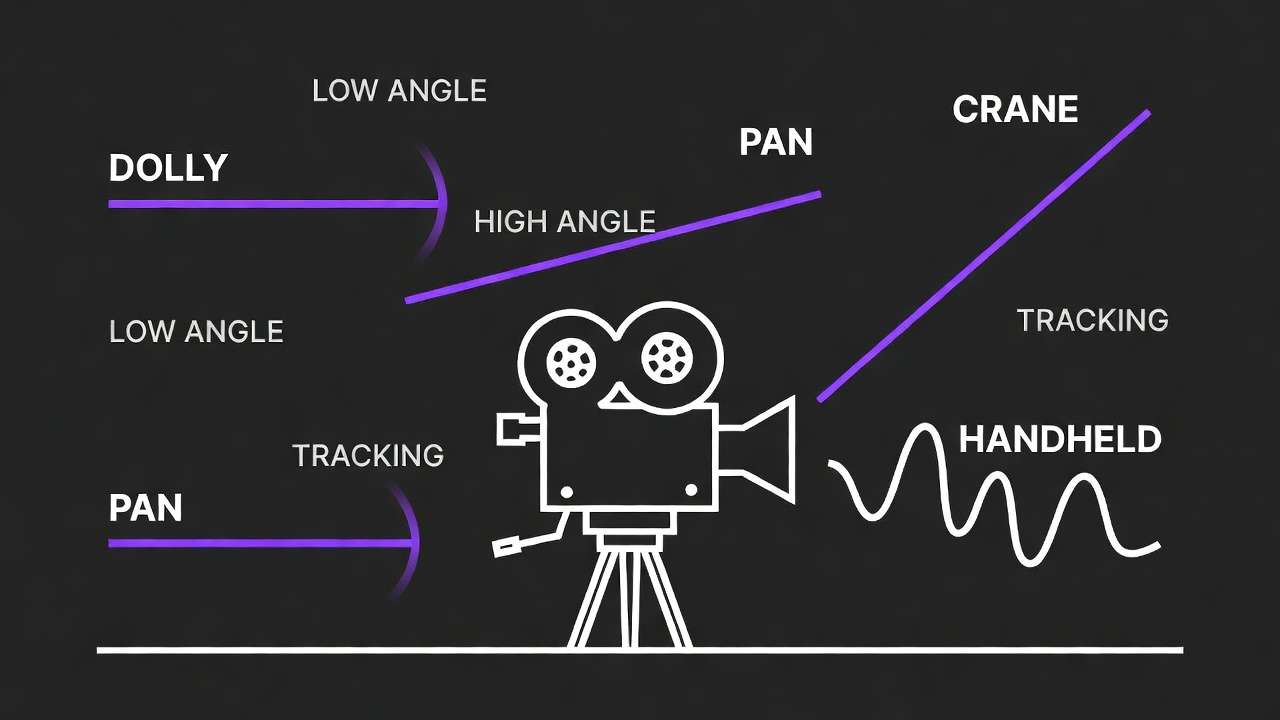
Kling 3.0 was trained on professional cinematography and responds to specific camera vocabulary with high fidelity. Describing a "slow dolly forward, 85mm lens, shallow depth of field" produces output that reflects the parallax shift, depth compression, and bokeh characteristics associated with that combination. The model differentiates between dolly, crane, orbit, tracking, and locked-off shots as distinct operations with different motion profiles.
Sora 2 interprets camera directions but prioritizes subject behavior over camera specificity. If the prompt describes both a complex camera movement and a detailed character action, Sora 2 tends to serve the character action first. Camera work may feel less intentional unless heavily specified and given priority in the prompt structure.
When it matters: If the shot is primarily about cinematography - a product orbit, an architectural walkthrough, a controlled dolly reveal - Kling 3.0 produces more predictable and intentional camera work. If the shot is primarily about what characters do and how they interact, camera behavior is secondary, and Sora 2's character-first interpretation may serve the content better.
Audio Generation
Both models generate audio alongside video, but with different capabilities.

Kling 3.0 generates synchronized lip-sync dialogue in five languages (English, Chinese, Japanese, Korean, Spanish) with regional accent control. Multi-character scenes can include dialogue in different languages within the same generation. Ambient sound and environmental audio generate in parallel. Speaker attribution is handled through explicit tagging in the prompt.
Sora 2 generates audio with English-language focus. Dialogue, sound effects, and ambient audio are supported, but multilingual capability and accent granularity are more limited than Kling 3.0's implementation.
When it matters: For multilingual content, international marketing, or projects requiring specific accent work, Kling 3.0's audio system is more capable. For English-language content with standard ambient audio needs, both models produce functional results. In both cases, broadcast-quality audio still benefits from post-production refinement.
Prompt Adherence
Prompt adherence differs between the models in what they prioritize when interpreting complex instructions.
Kling 3.0 prioritizes camera specifications. Technical cinematography instructions - shot type, camera movement, lens character, composition - translate reliably from prompt to output. Subject actions are interpreted within the camera framework. This makes the model predictable for technical direction but occasionally less responsive to nuanced character behavior.
Sora 2 prioritizes subject behavior. Character actions, interactions, expressions, and narrative events map more reliably from prompt to output. Characters do what you describe with more natural timing and specificity. Camera work may require more explicit prompting to feel intentional.
This difference is not about quality. It is about interpretation priority. Understanding which model prioritizes what allows you to write prompts that leverage each model's strength.
When it matters: Write camera-first prompts for Kling 3.0, action-first prompts for Sora 2. If you prompt both models with identical text, you may prefer Kling 3.0's output for shots where camera work matters most and Sora 2's output for shots where character performance matters most.
Character Consistency
Kling 3.0's Video 3.0 Omni variant supports character element locking through reference image upload. Provide 3-5 reference images and the model extracts and locks visual traits - face structure, body type, clothing, posture - across subsequent generations. This is hardware-level consistency, not prompt-dependent.
Sora 2 maintains character consistency through strong prompt adherence and internal memory within a generation. Character descriptions maintain well across the duration of a clip. For multi-clip projects, consistent detailed descriptions and seed management are required to maintain identity across separate generations.
When it matters: For projects requiring exact character identity across many separate clips - advertising campaigns, serialized content, brand characters - Kling 3.0's Omni reference locking provides more reliable consistency. For single-clip character work, both models perform well.
Photorealism
Neither Kling 3.0 nor Sora 2 leads the market in photorealism - that position belongs to Veo 3 in the current model landscape. See the Veo 3.1 complete tutorial for photorealism-focused workflows.

Between the two, Sora 2 produces slightly more photorealistic rendering for human subjects and environments, particularly for skin texture, natural lighting interaction, and environmental materials. Kling 3.0 produces clean, professional output that reads as high quality but occasionally presents a subtle processed quality that trained eyes can identify.
The difference is marginal for most social and web content. It becomes relevant only for premium commercial applications where the absolute highest photographic fidelity is required.
Pricing and Credit Efficiency
Both models are available on Cliprise through the credit system. Exact credit costs vary by duration, resolution, and quality tier.
Kling 3.0's standard quality mode generates at lower credit cost and faster speed, making it efficient for iteration and exploration. Professional mode costs more per generation but produces output suitable for final delivery. The two-tier approach enables a cost-effective workflow: iterate at standard quality, finalize at professional quality.
Sora 2 Standard and Sora 2 Pro operate on a similar tier structure. Pro generates at higher quality with better detail preservation but consumes more credits per clip.
For current credit costs across all models, see pricing.
Real-World Routing Decision Framework
The comparison data above translates into practical routing logic:
Route to Kling 3.0 when:
- Camera work is the primary creative variable (dolly, orbit, crane, tracking)
- 4K delivery is required
- Multi-shot edited sequences are needed from a single generation
- Product showcase or controlled product video
- Multilingual audio or specific accent requirements
- Character consistency across many clips (Omni variant)
- High-volume production where credit efficiency matters during iteration
Route to Sora 2 when:
- Continuous clips beyond 15 seconds are required
- Complex multi-character scenes with overlapping actions
- Subject behavior and character performance are the priority
- Crowd dynamics or environmental complexity exceeds 3-4 simultaneous subjects
- Maximum photorealistic rendering of human subjects is needed
- Narrative-driven content where story events matter more than camera technique
Generate with both and compare when:
- Hero shots that carry the most weight in a project
- Ambiguous scenes where both camera work and character performance matter
- Client work where the best output wins regardless of source
This routing logic does not require choosing one model. On platforms that provide access to both, the decision happens per shot, not per project. Detailed model routing strategy is covered in the multi-model strategy guide.
Which Model Is "Better"?
Neither. The question assumes a single model can dominate all production scenarios, and the technical evidence shows that is not the case.
Kling 3.0 is the better choice for controlled cinematography, 4K output, multi-shot storyboard efficiency, and multilingual audio. Sora 2 is the better choice for complex scenes, extended duration, character-driven narrative, and photorealistic human rendering.
The teams producing the strongest AI video in 2026 are not using one model exclusively. They are routing each shot to whichever model handles it best. The comparison data in this article is designed to make those routing decisions faster and more precise.
Frequently Asked Questions
Can I use both Kling 3.0 and Sora 2 in the same project?
Yes. On Cliprise, both models are accessible through the same AI Video Generator interface. You can generate different shots with different models, manage all assets in one library, and assemble the final project from the best output regardless of source model.
Which model is faster?
Generation speed varies by settings. Kling 3.0's standard quality mode tends to generate faster for shorter clips. Sora 2 Standard is competitive for similar durations. For production workflows, the practical bottleneck is iteration count, not individual generation speed - and routing to the right model reduces iteration count.
Which model is cheaper?
Credit costs depend on duration, resolution, and quality tier. For short-duration standard-quality iteration, Kling 3.0 is typically more credit-efficient. For longer clips where Sora 2 generates usable output in fewer attempts, the total cost may favor Sora 2. Actual credit consumption depends on workflow, not just per-generation cost.
Does Kling 3.0 replace Sora 2?
No. Their strengths are complementary, not overlapping. Kling 3.0 does not match Sora 2's scene complexity handling or maximum duration. Sora 2 does not match Kling 3.0's resolution ceiling or multi-shot storyboard capability. Both models improve a multi-model workflow.
Related Articles
- Kling 3.0 Complete Guide: Architecture, Prompting, and Production Workflows
- Sora 2 Complete Guide: Professional Video Generation Mastery
- Kling 3.0 vs Veo 3: AI Video Model Comparison
- Google Veo 3 vs OpenAI Sora 2: The New AI Video War
- Kling 3.0 Prompt Examples: 50 Production-Ready Prompts
- Multi-Model Strategy: When to Switch Between AI Generators
- AI Video Generation: The Complete Guide 2026