Kling 3.0 vs Veo 3: AI Video Generation Model Comparison for Production Workflows
Quick takeaway
Choose Kling 3.0 if: You need native 4K output, multi-shot storyboards (up to 6 cuts), longer clips (15s vs 8s), or prioritize camera control and workflow efficiency.
Choose Veo 3 if: You need maximum photorealism (broadcast, brand film), hero product photography or premium B-roll, 1080p delivery is sufficient, or single-shot quality matters more than duration.

Kling 3.0 and Veo 3 approach AI video generation from different architectural philosophies. Kuaishou built Kling 3.0 around cinematographic control - native 4K, multi-shot storyboards, precise camera vocabulary, and multilingual audio. Google DeepMind built Veo 3 around photorealistic rendering - physically accurate materials, natural lighting simulation, and output that consistently approaches broadcast commercial quality.
Both Kling 3.0 and Veo 3 are available on Cliprise through the AI Video Generator. You can test both models directly inside the AI Video Generator. This comparison covers every production-relevant difference to help you route each shot to the model that handles it best. When the brief is reference-heavy vs narrative-led and ByteDance's multimodal stack is in play, add Seedance 2.0 vs Kling 3.0 to the same test batch.
For still-image briefs where Veo is on the shortlist, use the focused Veo 3 image-to-video workflow.
Quick Comparison Table
| Specification | Kling 3.0 | Veo 3 |
|---|---|---|
| Max resolution | 4K native (3840x2160) | 1080p |
| Max duration | 15 seconds | 8 seconds |
| Frame rates | 24 / 30 / 60fps | 24fps |
| Multi-shot storyboard | Up to 6 cuts | No |
| Native audio | Yes - 5 languages, accent control | Yes |
| Photorealism | Moderate-High | Very High |
| Camera control | Strong (cinematography vocabulary) | Strong (photography vocabulary) |
| Physics accuracy | Good | Very Good |
| Aspect ratios | 16:9, 9:16, 1:1 | 16:9, 9:16, 1:1 |
| Quality tiers | Standard / Professional | Fast / Quality |
| Best for | Camera control, 4K, storyboards, scale | Commercial photorealism, premium hero shots |
Testing Methodology
This comparison is based on side-by-side testing on Cliprise. Duration tested: 5s, 8s, 15s (Kling); 5s, 8s (Veo 3). Resolution tested: 1080p for both; Kling also at 4K native. Prompt structure: Photography-focused prompts (lighting, materials); product and portrait scenes. Generations compared: 35+ matched prompts across both models.
Resolution and Frame Rate
Kling 3.0 has a clear technical advantage in output specifications. Native 4K generation at up to 60fps means output holds up on large screens, in broadcast contexts, and in post-production workflows that require speed ramping or slow-motion extraction. Detail is resolved during the diffusion process, not interpolated after generation.
Veo 3 generates at 1080p at 24fps. While the resolution is lower, the photographic quality within that 1080p frame is exceptionally high. Veo 3's rendering at 1080p often looks more photorealistic than other models at higher resolutions because its training prioritized rendering fidelity over resolution ceiling. The fixed 24fps output produces a cinema-standard temporal cadence that feels natural in narrative and commercial contexts.
When it matters: If your project requires 4K delivery or high frame rates for post-production manipulation, Kling 3.0 is the only option. If your project delivers at 1080p and the visual quality within each frame matters more than resolution specification, Veo 3's rendering quality is competitive despite the lower resolution number.
Duration
Kling 3.0 generates up to 15 seconds per clip with multi-shot storyboard support for up to six camera cuts within that window. This enables complete edited sequences - establishing shot to close-up, product orbits to feature reveals, scene-setting to dialogue - from a single generation.

Veo 3 generates up to 8 seconds per clip without multi-shot capability. Each generation is a single continuous shot. Multi-shot sequences require generating individual clips and assembling them in editing.
The duration gap is significant. Kling 3.0 can produce nearly twice the footage per generation, and the storyboard feature means that footage arrives as an edited sequence rather than raw single takes.
When it matters: For production volume and workflow efficiency, Kling 3.0's longer duration and storyboard capability reduce the number of generations needed to cover a project. For premium single-shot work where every frame needs maximum quality, Veo 3's 8-second window is often sufficient - hero shots and B-roll seldom need to exceed 8 seconds.
Photorealism
This is Veo 3's defining strength and the most important routing signal between these two models.
Veo 3 produces output with the highest photorealistic rendering quality in the current model landscape. Skin texture, material surfaces, natural lighting interaction, depth of field behavior, and environmental detail consistently approach professional photography standards. The model interprets photography-specific terminology - f-stop references, lighting ratios, color temperature specifications, material descriptions - with high accuracy, producing output that reads as photographed rather than generated.
Kling 3.0 produces clean, professional output with strong detail preservation at 4K. However, trained observers can sometimes identify a subtle processed quality in the rendering - particularly in skin tones, specular highlights, and environmental material interaction. For most social media, web, and mid-tier commercial applications, this difference is invisible to the audience. For premium brand advertising and broadcast commercial work, the difference matters.
When it matters: If the shot will be scrutinized at close range in a premium context - broadcast advertising, brand film, hero product photography - Veo 3's rendering advantage is relevant. For social media content, web video, general marketing, and high-volume production, Kling 3.0's output quality is more than sufficient and comes with resolution and duration advantages.
Camera Control
Both models respond to professional camera vocabulary, but their interpretation frameworks differ.
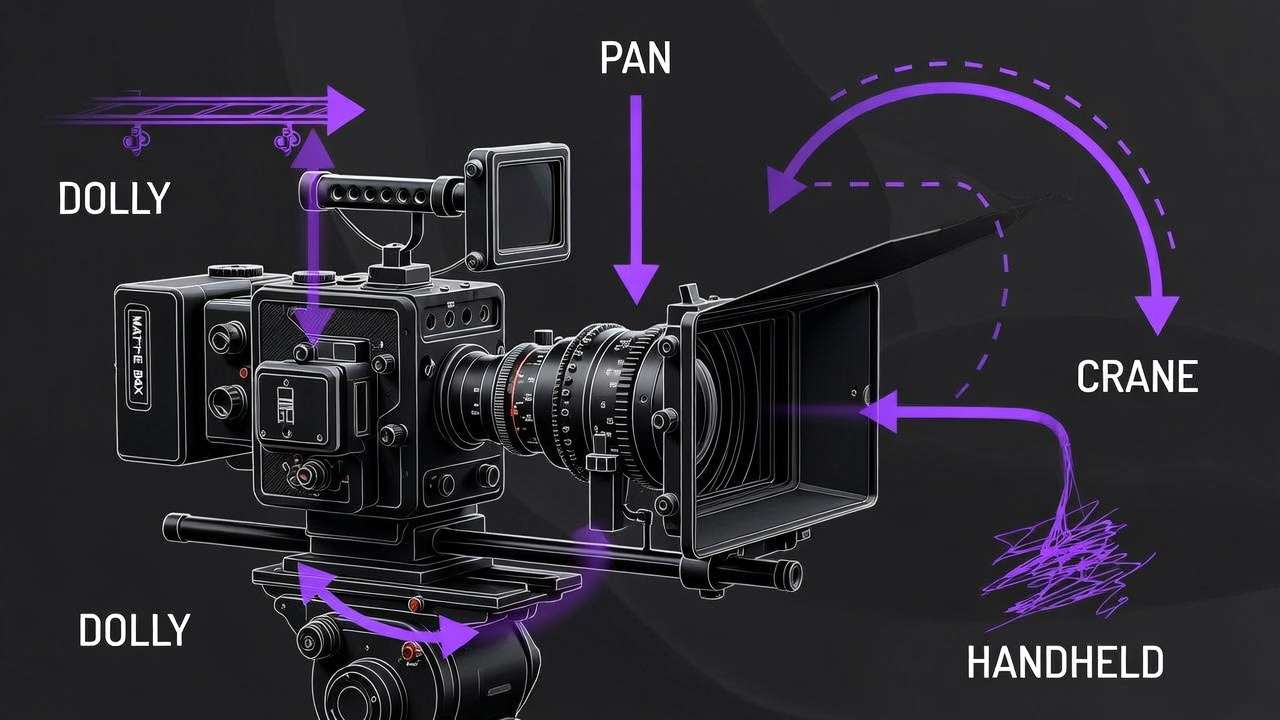
Kling 3.0 was trained on cinematography. It differentiates between dolly, crane, orbit, tracking, and locked-off shots as distinct operations with specific motion profiles. "Slow dolly forward" produces parallax shift and depth perspective change consistent with physical camera movement on a dolly track. Camera specifications take interpretation priority - the model serves the camera direction first and fits subject behavior within that framework.
Veo 3 was trained on professional photography and cinema. It responds strongly to photography-adjacent terminology - f-stop, focal length, lighting setup descriptions, material properties - that affect how the frame looks rather than how the camera moves. Camera movement is supported but typically produces smoother, more subtle operations. Veo 3 excels at locked-off or minimal-movement shots where the rendering quality of the still frame carries the visual weight.
When it matters: For dynamic camera work - orbits, dolly pushes, crane movements, tracking shots - Kling 3.0 produces more intentional and controlled results. For static or near-static shots where composition, lighting, and material rendering matter most, Veo 3's approach serves the content better.
Physics and Material Rendering
Veo 3 handles physics simulation with higher fidelity than Kling 3.0. Falling objects, fluid dynamics, collision interactions, fabric movement, and material deformation look more physically plausible. Water pours realistically. Glass breaks convincingly. Fabric catches wind with natural dynamics. These physics-informed generations come from training data that weighted physical accuracy.
Kling 3.0 produces good physics for standard scenarios - walking, running, vehicle movement, basic fluid behavior. Complex physics interactions (splashing water, shattering objects, intricate fabric dynamics) may simplify or produce less convincing results compared to Veo 3.
When it matters: If a specific shot depends on physically accurate material interaction - a product interacting with water, food preparation involving pouring or mixing, fabric movement in a fashion context - Veo 3 produces more convincing results. For shots where physics requirements are standard (people moving, objects at rest, simple environmental motion), both models handle the physics adequately.
Audio Generation
Kling 3.0 has a more developed audio system. Native generation includes synchronized lip-sync dialogue in five languages (English, Chinese, Japanese, Korean, Spanish) with regional accent differentiation. Multi-character scenes support dialogue in different languages within the same clip. Ambient sound and environmental audio generate alongside the video output.
Veo 3 generates audio with synchronized sound but with less granular control over dialogue specifics, language variety, and accent selection.
When it matters: For multilingual content, dialogue-driven scenes, or projects requiring specific accent work, Kling 3.0's audio capabilities are substantially more flexible. For ambient audio and basic sound design, both models produce functional output.
Production Speed and Credit Efficiency
Kling 3.0's standard quality mode generates faster and at lower credit cost than its professional mode, enabling a cost-effective two-pass workflow: iterate at standard quality, finalize at professional quality. The 15-second storyboard capability also means fewer total generations per project.
Veo 3 offers Fast and Quality tiers with a similar tradeoff. Veo 3 Fast generates at roughly 25% of the cost of Veo 3 Quality, making it practical for iteration. However, Veo 3's 8-second maximum duration means more individual generations are needed to cover the same amount of footage.
For high-volume production where credit efficiency matters, Kling 3.0's longer duration, lower standard-mode cost, and storyboard capability compound into measurably lower per-project costs. For premium single-shot work where fewer total shots are needed, Veo 3's higher per-generation quality may reduce iteration cycles, offsetting the higher per-generation cost.
For detailed credit comparisons across all models, see pricing.
Real-World Routing Decision Framework
Route to Kling 3.0 when:
- 4K delivery is required
- Dynamic camera work is the primary creative variable
- Multi-shot storyboard sequences are needed
- Multilingual dialogue or specific accent control is required
- Production volume and credit efficiency are priorities
- Clips longer than 8 seconds are needed
- Character consistency across many clips (Omni variant)
Route to Veo 3 when:
- Maximum photorealism is the requirement
- The shot is a premium hero shot that carries the most scrutiny
- Physically accurate material interaction is central to the content
- Photography-style rendering with specific lighting and material control matters
- Static or near-static compositions with high rendering fidelity
- Broadcast commercial or brand film quality standards apply
Generate with both and compare when:
- Product close-ups where both camera movement and material rendering matter
- Ambiguous shots where the balance between dynamic camera and photorealistic rendering is unclear
- Any shot where client expectations demand selecting the absolute best output
The strongest production workflows route different shots to different models. A project might use Kling 3.0 for dynamic camera-driven shots, Veo 3 for premium static hero shots, and Sora 2 for complex multi-character scenes. For complete model routing logic across all three, see the Sora 2 complete guide and the Veo 3.1 tutorial.
Side-by-Side Scenario Comparison
To illustrate routing logic, here is how the same project brief routes across both models.
Project: Luxury Watch Brand - 30-Second Product Film
| Shot | Description | Route To | Reason |
|---|---|---|---|
| 1 | Slow orbit around watch on velvet surface | Kling 3.0 | Dynamic camera orbit, 4K detail on materials |
| 2 | Macro close-up of mechanism through crystal | Veo 3 | Material rendering fidelity, physics of light through glass |
| 3 | Wrist shot, person walking in city, medium tracking | Kling 3.0 | Tracking camera movement, natural human motion |
| 4 | Static hero shot, watch on stone surface, golden hour light | Veo 3 | Photorealistic rendering, lighting accuracy, static composition |
| 5 | Multi-angle sequence: face, crown, caseback | Kling 3.0 | Multi-shot storyboard, 3 cuts in one generation |
Three shots route to Kling 3.0 (camera and efficiency), two route to Veo 3 (rendering fidelity). Total project benefits from both models. Neither model alone would produce the same overall quality.
Which Model Is "Better"?
They optimize for different things. Kling 3.0 optimizes for production capability - resolution, duration, storyboard efficiency, camera control, multilingual audio. Veo 3 optimizes for visual fidelity - photorealism, physics accuracy, material rendering, lighting simulation.
Asking which is better is like asking whether a steadicam or a lighting rig is more important on set. The answer depends on the shot. The teams producing the strongest results use both, routing each shot to the model whose strengths serve that specific shot's requirements.
For a deep breakdown of Kling 3.0's architecture and advanced prompting strategies, see the Kling 3.0 complete guide.
Frequently Asked Questions
Can I use both models in the same project on Cliprise?
Yes. Both models are accessible through the same AI Video Generator. Generate different shots with different models, manage all assets in one library, and assemble the final project from the best output.
Which model is better for social media content?
For most social media use cases, Kling 3.0 offers a stronger overall package: native 9:16 vertical generation, 15-second clips covering full ad durations, multi-shot storyboards for complete sequences, and lower credit cost for high-volume production. Veo 3 is worth testing for premium brand content on social platforms where photorealistic quality differentiates the content.
Should I always use Veo 3 for product videos?
Not necessarily. Product videos with dynamic camera movement (orbits, dollies, tracking) often perform better in Kling 3.0 due to superior camera control. Static hero shots with emphasis on material texture and lighting quality favor Veo 3. Many product video projects benefit from using both.
Which model has better character rendering?
Veo 3 produces more photorealistic human subjects in individual frames. Kling 3.0's Omni variant maintains better character consistency across multiple separate generations through reference locking. The choice depends on whether single-shot realism or cross-clip consistency is more important for your project.
Related Articles
- Kling 3.0 Complete Guide: Architecture, Prompting, and Production Workflows
- Veo 3.1 Complete Tutorial: First Video and Advanced Settings
- Kling 3.0 vs Sora 2: Complete AI Video Model Comparison
- Google Veo 3 vs OpenAI Sora 2: The New AI Video War
- Kling 3.0 Prompt Examples: 50 Production-Ready Prompts
- Multi-Model Strategy: When to Switch Between AI Generators