
Nano Banana 2 vs Imagen 4 vs Flux 2: Which AI Image Model Wins in 2026?
Quick answer: Use Nano Banana 2 for versatile lifestyle images and editing-oriented workflows, Google Imagen 4 for product accuracy, and Flux 2 for portrait photorealism. Test all three from the AI image generator before committing a campaign style.
Three of the strongest AI image generation models available in 2026 - Nano Banana 2, Imagen 4, and Flux 2 - occupy different positions in the production stack.
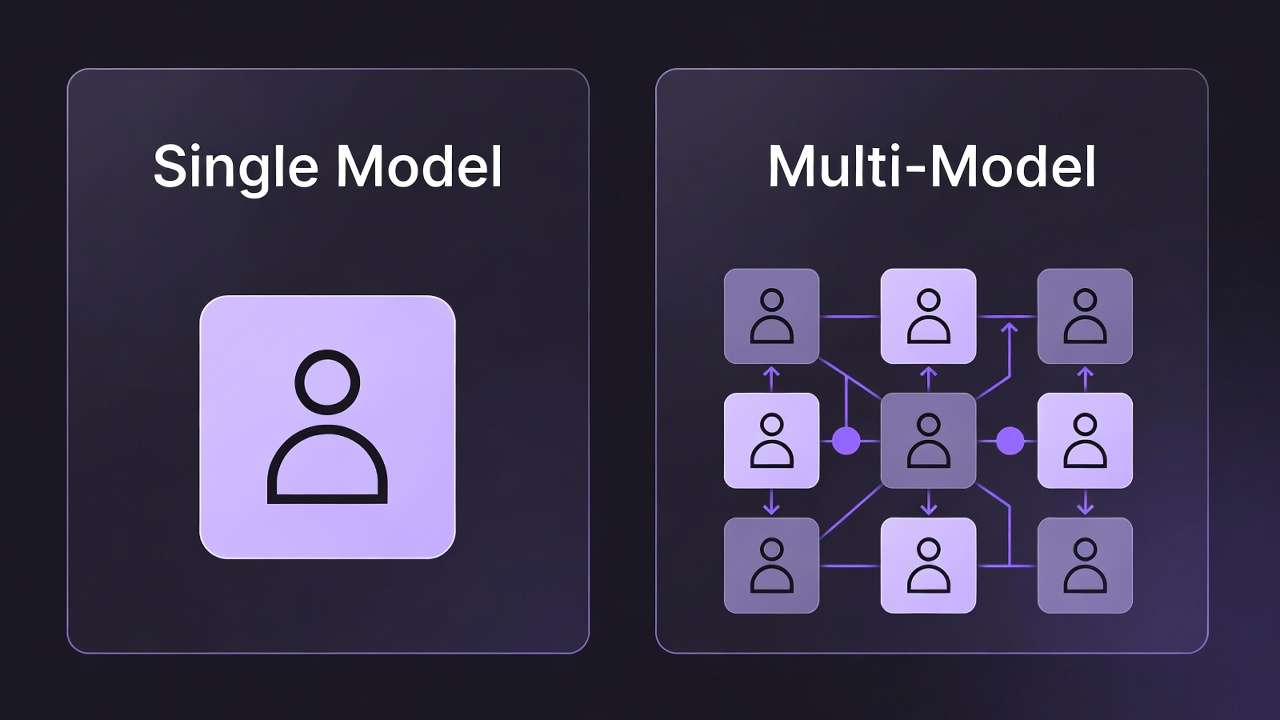
The relationship between them is not "which one is best." All three are best at different things. Nano Banana 2 leads for text rendering, editing, and character consistency. Imagen 4 leads for product accuracy. Flux 2 leads for portrait photorealism. Understanding these positions - and knowing when to route a brief to which model - is what separates practitioners who create ai images with consistently strong output from those who generate and iterate until something works.
This comparison covers all three models across every dimension relevant to commercial production decisions.
Quick takeaway
Nano Banana 2 wins: Text rendering, editing, character consistency, world knowledge, versatility. Imagen 4 wins: Product photography accuracy, e-commerce catalog, brand product fidelity. Flux 2 wins: Portrait photorealism, skin texture, lifestyle photography with human subjects. All three available on Cliprise.
At a Glance: Three-Model Spec Comparison
| Specification | Nano Banana 2 | Imagen 4 | Flux 2 |
|---|---|---|---|
| Developer | Google DeepMind | Google DeepMind | Black Forest Labs |
| Architecture | Gemini 3.1 Flash Image | Diffusion (specialized) | Flux 2 (rectified flow) |
| Launch date | February 26, 2026 | Mid 2025 | Late 2025 |
| Max resolution | 4K native | 4K | 4K (Pro) / varies by tier |
| Aspect ratios | All standard + 4:1, 1:4, 8:1 | Standard | Standard |
| Text in images | Yes - production-ready | Limited | Limited |
| In-image text editing | Yes | No | No |
| Multi-character consistency | Up to 5 characters | 1 subject reference | 1 subject (approximate) |
| Object fidelity tracking | 14 simultaneous objects | Strong (product focus) | Limited |
| Image editing (natural language) | Yes - built-in | No | No (external tools) |
| World knowledge grounding | Yes - Gemini search | No | No |
| Content credentials | SynthID + C2PA | SynthID | No native watermark |
| API access | Google AI Studio, Vertex AI | Vertex AI, Google Cloud | Replicate, fal.ai, BFL API |
| Cliprise access | Yes | Yes | Yes |
How Each Model Approaches Photorealism
The most important quality dimension for commercial image production is photorealism - but photorealism is not one thing. It's multiple things that different models have optimized for differently.
When the same campaign also needs hero illustrations or stylized key art before you lock Imagen on SKU stills, treat Cliprise’s AI art generator as the exploratory lane and keep this three-model photoreal shootout for the literal deliverables.
Flux 2: The Portrait Realism Standard
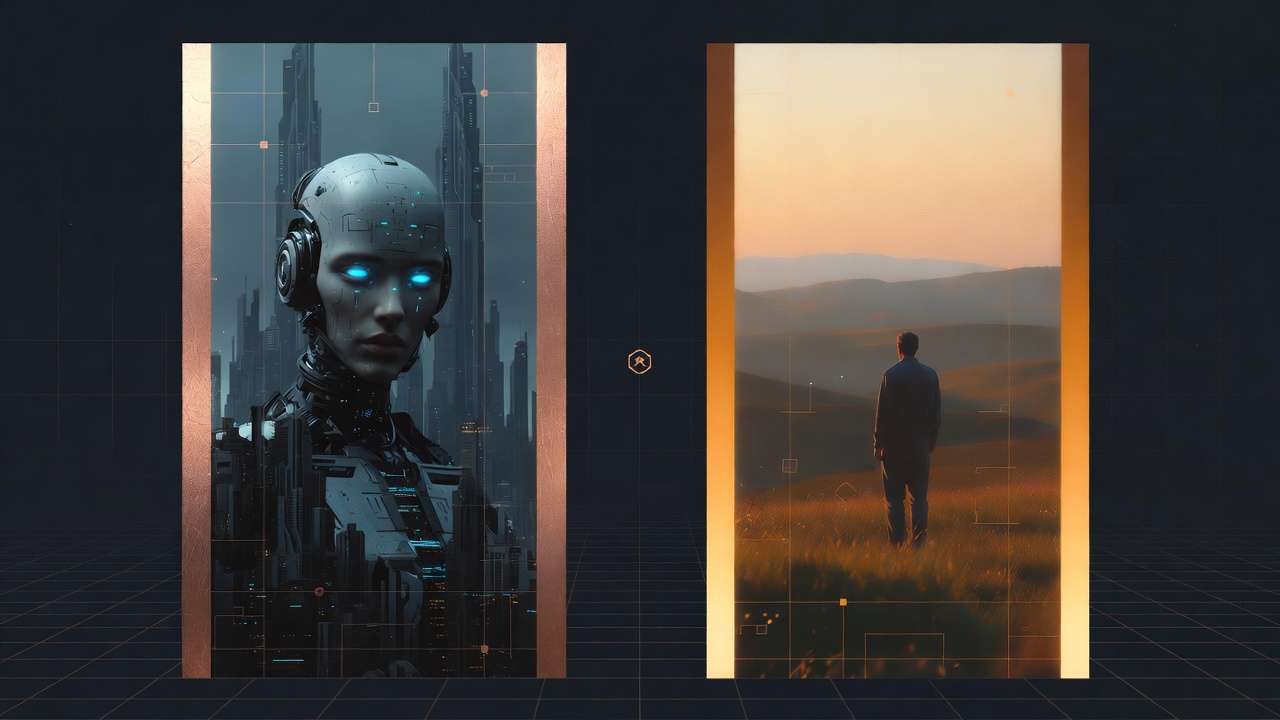
Flux 2, released by Black Forest Labs, was built with a specific technical focus: photographic realism for human subjects. The model uses a rectified flow transformer architecture specifically optimized for the denoising process in ways that produce sharper, more accurate skin rendering than diffusion models of equivalent size.
The specific capabilities Flux 2 leads in:
- Skin texture at portrait distance - individual pore structure, micro-skin surface, the subtle variation in skin tone across a face. At full resolution, Flux 2 skin rendering is the closest to photographic quality of any model currently available.
- Facial microexpression accuracy - the model renders subtle emotional expression (a slight smile, concern, concentration) with the nuance that distinguishes genuine emotion from the slightly-off "uncanny valley" that earlier AI faces exhibited.
- Hair rendering - individual strand definition, light interaction with different hair types, realistic falloff from hairline to background.
- Depth of field and bokeh - shallow depth of field effects that look photographic rather than computationally generated.
Where Flux 2 limits: Text rendering in images fails in the way older AI models fail - blurry, misspelled, inconsistent letterforms. Editing capability requires external tools (Photoshop, third-party UI). Character consistency across multiple generations requires careful prompt engineering without guarantee. No built-in API workflow for multi-character or series production.
Access Flux 2 via Cliprise → | Read the Flux 2 Complete Guide →
Imagen 4: Product Accuracy as Primary Objective
Google's Imagen 4 was developed for a specific commercial need that neither Flux 2 nor general-purpose models were reliably meeting: accurate photographic representation of physical products. The model is trained on an exceptional volume of product imagery - catalog photography, commercial stills, product detail shots - with the primary optimization target being that the generated product looks exactly like the real product.
The specific capabilities Imagen 4 leads in:
- Product color accuracy - generating the correct Pantone match for a specific product color, maintaining color accuracy across different lighting conditions, rendering color variants accurately
- Material rendering precision - the exact texture of different materials (brushed steel, matte plastic, leather grain, ceramic glaze) rendered with commercial photography precision
- Product geometry and proportion - maintaining correct shape, scale, and proportion for specific products without the creative interpretation that general-purpose models apply
- Multi-angle consistency - generating the same product from different camera angles while maintaining geometric consistency
Where Imagen 4 limits: Human subjects are handled competently but Flux 2 leads significantly for portrait realism. Text rendering is limited. Editing capability requires external tools. The model's narrow optimization for product accuracy makes it less versatile for lifestyle, editorial, or conceptual content.
Access Imagen 4 via Cliprise → | Read the Imagen 4 Complete Guide →
Nano Banana 2: Intelligence and Versatility
Nano Banana 2 (Gemini 3.1 Flash Image) approaches image generation differently from both Flux 2 and Imagen 4. Where those models are specialized - Flux 2 for portrait realism, Imagen 4 for product accuracy - Nano Banana 2 is a general-intelligence image model that derives quality from the Gemini 3.1 model's understanding of the world, creative context, and compositional intent.
The result is a model that doesn't lead in the narrowest definition of photorealism but leads in almost every other production-relevant category:
- Text in images - production-ready text rendering with correct spelling, stylistic integration, and multilingual support
- Editing capability - natural language editing of generated or existing images without external tools
- Character consistency - up to 5 simultaneous character references maintained across a session
- World knowledge grounding - generates culturally accurate, location-specific imagery from real-world knowledge
- Instruction following - complex multi-condition prompts executed with high accuracy
Where Nano Banana 2 limits: At the very highest standard of skin texture and portrait photorealism - the close-inspection level where individual skin cells are visible - Flux 2 still leads. For product color accuracy at commercial photography precision, Imagen 4 leads. Nano Banana 2 is strong in both areas but not the leader in either.
Access Nano Banana 2 via Cliprise → | Read the Nano Banana 2 Complete Guide →
Category-by-Category Winner Analysis
Portrait Photography and Human Subjects
Winner: Flux 2
For face-forward portraits where maximum photorealistic skin rendering is the primary criterion, Flux 2 is the leader in 2026. The difference between Flux 2 and Nano Banana 2 for portrait work is visible at full resolution and at social media display sizes for close-inspection content (beauty, skincare, high-fashion editorial).
Nano Banana 2 produces strong portrait work and is sufficient for most commercial applications. Where Flux 2 specifically leads is in the very highest standard of skin quality - the output that a beauty brand, a skincare line, or a premium fashion label would want.
Recommendation: Flux 2 for beauty, skincare, premium fashion, and any portrait work where skin quality is the primary evaluation criterion. Nano Banana 2 for lifestyle portraiture and editorial where maximum skin detail is secondary to compositional accuracy and scene context.
See Flux 2 vs Imagen 4 photorealism test →
Product Photography
Winner: Imagen 4
For generating images of specific products with commercial accuracy - correct color, correct material, correct geometry - Imagen 4 is the leader. Its training optimization for product photography creates a level of product accuracy that neither Flux 2 nor Nano Banana 2 matches.
The practical test: generate the same product from the same reference with all three models. Imagen 4 will produce a product that looks most like the actual product, with correct color matching and material rendering. Nano Banana 2 will produce an accurate product with slightly more creative interpretation. Flux 2 will produce a photorealistic product image that looks "like a product" but may drift on specific color or material details.
Recommendation: Imagen 4 as primary model for e-commerce catalog images, product hero shots, and any image where product accuracy is the primary criterion. Nano Banana 2 for product-in-context lifestyle imagery where character consistency and scene composition matter more than strict product accuracy.
See AI product photography guide →
Marketing Graphics and Text-Overlay Images
Winner: Nano Banana 2
For any image that includes text - marketing mockups, promotional images with pricing, social media graphics with copy, YouTube thumbnails with text hooks - Nano Banana 2 is the clear leader. Both Flux 2 and Imagen 4 fail at text rendering in ways that make them unusable for this category without post-processing.
Nano Banana 2's in-image text production is currently the strongest of any model except Ideogram v3 (which specializes in this specific category). For marketing teams producing high volumes of promotional imagery with integrated copy, Nano Banana 2 eliminates the Canva or Photoshop post-processing step.
Recommendation: Nano Banana 2 for all images requiring integrated text. Ideogram v3 for specialized thumbnail and graphic design work where its specific text-hook optimization produces results worth the model-specific workflow.
See Best AI for YouTube Thumbnails → | Ideogram v3 vs Midjourney text rendering →
Lifestyle and Brand Photography (Multiple People)
Winner: Nano Banana 2
For lifestyle photography featuring multiple people in a scene - a family using a product, a team in an office, a group in a lifestyle context - Nano Banana 2's character consistency system is the decisive advantage. The ability to maintain consistent appearance for up to five simultaneous characters across a session means producing a lifestyle campaign with the same talent appearing in multiple distinct scenes is achievable within a single session.
Flux 2 produces excellent individual portraits but doesn't maintain character consistency across multiple generations without extensive prompt engineering. Imagen 4's product focus means it handles human subjects but doesn't specialize in character consistency for multi-person lifestyle.
Recommendation: Nano Banana 2 for multi-person lifestyle imagery, brand campaigns with recurring characters, and any production requiring character consistency across multiple images.
E-Commerce Contextual (Product + Lifestyle)
Winner: Workflow - Imagen 4 + Nano Banana 2
The highest-performing workflow for e-commerce imagery in 2026 is not choosing one model - it's routing within the same session:
- Imagen 4 for hero product shots (white background, accurate color, material precision)
- Nano Banana 2 for lifestyle context shots (product in scene with lifestyle elements, character-consistent models using the product)
This two-model approach produces the full e-commerce image set - accurate product representation for catalog and the lifestyle context that drives conversion - at the respective models' best quality for each image type.
All three models are accessible from one credit system on Cliprise, making this routing workflow practical without platform switching.
Recommendation: Use both. Imagen 4 for catalog accuracy. Nano Banana 2 for lifestyle context. Both accessible from Cliprise →.
International Campaign Localization
Winner: Nano Banana 2
For marketing teams producing campaigns across multiple international markets, Nano Banana 2's world knowledge integration and in-image localization capability are unique advantages. The model can generate culturally specific imagery for different markets - accurate representation of local interior design aesthetics, clothing styles, food traditions, and social contexts - and can generate the same advertisement with in-image text in multiple languages.
Neither Flux 2 nor Imagen 4 has equivalent world knowledge integration. Both generate generic or approximated representations of specific cultural contexts because they lack the real-world knowledge grounding that Nano Banana 2 derives from the Gemini model.
Recommendation: Nano Banana 2 exclusively for international campaign work requiring cultural accuracy or multilingual text.
Editorial and Artistic Photography
Winner: Flux 2 (or Midjourney v7)
For editorial photography where the distinctive, slightly-stylized aesthetic of high-fashion editorial or premium magazine photography is the target - where "too photographic" is not the criticism and "too AI-generated" is - Flux 2 produces output with the right aesthetic register.
For work that needs to be more distinctively artistic, Midjourney v7 remains the stronger choice for visual differentiation.
Nano Banana 2 produces competent editorial work but is optimized for instruction-following accuracy rather than aesthetic distinctiveness. Imagen 4 is not suited for editorial as a primary use case.
Recommendation: Flux 2 for premium editorial lifestyle. Midjourney v7 for stylistically distinctive brand or artistic work. See Midjourney vs Flux 2 →.
The Content Credentials Question
For brands and agencies producing content for EU audiences in 2026, the EU AI Act Article 50 machine-readable marking requirement (August 2026 enforcement) creates a compliance consideration in model selection.
Nano Banana 2: All outputs include SynthID invisible watermark and C2PA Content Credentials metadata. EU AI Act Article 50 technical marking is built in.
Imagen 4: All outputs include SynthID watermark. C2PA metadata implementation: check current Google documentation for status.
Flux 2: No native watermarking on outputs from Black Forest Labs. Platforms built on Flux 2 may add their own marking, but the model itself does not include the equivalent of SynthID.
For production teams with explicit EU AI Act compliance requirements, Nano Banana 2 and Imagen 4's built-in SynthID implementation provides the machine-readable marking that Article 50 requires. Flux 2 outputs require additional marking workflow for compliant deployment.
Read the EU AI Act Article 50 compliance guide →
Pricing: What Each Model Costs
Direct API Access
Nano Banana 2 (Gemini API, Google AI Studio):
- Free tier: Via Gemini app (limited daily credits)
- API: Pay-per-image (Flash pricing - see current Google AI Studio pricing)
- Significantly cheaper per generation than Nano Banana Pro
Imagen 4 (Vertex AI, Google Cloud):
- Enterprise/API access - consumption-based pricing via Vertex AI
- Typically higher per-generation cost than Nano Banana 2 (Pro-tier equivalent pricing)
- Free generation within Google Flow workspace
Flux 2 (Replicate, fal.ai, Black Forest Labs API):
- Pay-per-generation via API providers
- Flux 2 Pro: higher quality at higher cost
- Flux 2 Flex: lower cost, lower quality ceiling
Via Cliprise (Unified Access)
All three models - Nano Banana 2, Imagen 4, and Flux 2 - are accessible on Cliprise from the same credit system:
- Free: 30 signup credits once + 10 credits/day (auto-reset)
- Starter ($9.99/mo): 900 credits/month
- Pro ($29.99/mo): 3,500 credits/month
- Business ($79.99/mo): 10,000 credits/month
Credit costs per generation vary by model and resolution. Running all three models on the same brief for comparison costs approximately 3x the individual model credit cost - typically still cheaper than maintaining three separate direct subscriptions plus the administrative overhead.
Practical Routing Guide: Which Model for Each Brief
This is the production decision framework that drives efficient model selection:
| Brief type | Primary model | Secondary model | Reason |
|---|---|---|---|
| Beauty / skincare portrait | Flux 2 | - | Skin texture leadership |
| E-commerce hero product | Imagen 4 | - | Product color/material accuracy |
| E-commerce lifestyle | Nano Banana 2 | - | Character + scene composition |
| Marketing graphic with text | Nano Banana 2 | Ideogram v3 | Text rendering |
| YouTube thumbnail (face) | Flux 2 | Nano Banana 2 | Photorealism + text |
| YouTube thumbnail (text-heavy) | Ideogram v3 | Nano Banana 2 | Text hook optimization |
| International campaign | Nano Banana 2 | - | World knowledge + localization |
| Fashion editorial | Flux 2 | Midjourney v7 | Aesthetic quality |
| Multi-person lifestyle | Nano Banana 2 | - | Character consistency (5 chars) |
| Product series (colorways) | Imagen 4 | - | Color accuracy at scale |
| Brand concept exploration | Midjourney v7 | Flux 2 | Creative distinctiveness |
See Best AI Image Generator 2026 → for the complete ranked model guide.
Why All Three Belong in Your Production Stack
The 2026 AI image production stack is not a winner-takes-all situation. The three models are genuinely complementary - they lead in different categories and serve different brief types in the same production workflow.
A brand campaign production might realistically use:
- Imagen 4 for product catalog shots (hero images, colorway variants, detail shots)
- Nano Banana 2 for campaign lifestyle imagery (product-in-context with consistent brand talent, international market adaptations, any image with integrated copy)
- Flux 2 for beauty and portrait work (talent close-ups, skin-forward product-plus-person imagery)
- Midjourney v7 for initial creative direction (concept exploration, mood reference, art direction)
Managing four separate model subscriptions and platforms is administratively expensive. Cliprise provides access to all four - plus Ideogram v3, Seedream, Nano Banana Pro, and the full video model library - from one credit system and one interface.
Note
Run Nano Banana 2, Imagen 4, and Flux 2 side by side - Access 15+ image models and 20+ video models from $9.99/month. 10 free credits daily. Try Cliprise Free →
Frequently Asked Questions
Is Nano Banana 2 better than Flux 2?
Neither is universally better. Nano Banana 2 leads for text rendering, editing capability, character consistency, world knowledge, and versatility. Flux 2 leads for maximum portrait photorealism and skin texture quality at close inspection. Which is better depends entirely on the brief type.
Is Nano Banana 2 better than Imagen 4?
Again, it depends on the use case. Imagen 4 leads for product photography accuracy - correct color, material, and geometry for specific products. Nano Banana 2 leads for lifestyle imagery, text rendering, editing, and character consistency. For e-commerce, the best workflow uses both.
Can Nano Banana 2 replace Flux 2 for portrait work?
For most commercial portrait applications, Nano Banana 2 produces strong results. For the highest-standard beauty, skincare, and editorial portrait work where skin texture at extreme close range is the primary evaluation criterion, Flux 2 still leads. For everything else - lifestyle portraits, group photography, character-consistent series - Nano Banana 2 is sufficient and adds editing and character consistency advantages.
What is Imagen 4 best at?
Product photography. Imagen 4 is specifically optimized for generating accurate photographic representations of physical products with correct color, material, and geometry. For e-commerce catalog images, product hero shots, and brand product visualization, Imagen 4 is the most accurate model available.
Does Flux 2 support text in images?
No. Flux 2's text rendering fails in the way earlier AI models fail - blurry, misspelled, inconsistent. For images requiring readable text, use Nano Banana 2 or Ideogram v3.
Which model is most EU AI Act compliant?
Nano Banana 2 and Imagen 4 include SynthID watermarking (Google's imperceptible AI content mark) and C2PA Content Credentials metadata. Flux 2 does not include native watermarking. For EU AI Act Article 50 machine-readable marking compliance, Nano Banana 2 or Imagen 4 are the better choices.
Can I run all three models on the same brief to compare?
Yes, on Cliprise. All three models are accessible from one interface and credit system, making side-by-side brief testing straightforward. Most production teams find this comparison workflow is how they establish model routing preferences for specific content categories.
Related Comparisons and Guides
Comparisons between these models:
- Flux 2 vs Imagen 4: Photorealism Test →
- Midjourney vs Flux 2: Image Quality Showdown →
- Midjourney vs Imagen 4: Style Comparison →
- Qwen vs Nano Banana: Budget Image Models →
- Seedream vs Nano Banana →
Model guides:
- Nano Banana 2 Complete Guide →
- Nano Banana Pro: Complete Guide
- Gemini Flash Image Models: Complete Guide
- Imagen 4 Complete Guide →
- Flux 2 Pro vs Flex In-Depth →
Production guides using these models:
- Best AI Image Generator 2026 →
- AI Product Photography →
- Best AI for YouTube Thumbnails →
- AI for E-Commerce →
News:
Models on Cliprise:
Nano Banana 2 released February 26, 2026. All three models under active development - capabilities evolving.