OpenAI launched Sora 2 on December 18, 2025 - the production-ready successor to the research demonstration that circulated in 2024. Where the original Sora was a research preview, Sora 2 is a working tool: accessible via subscription, designed for creative production, and substantially more capable on every production-relevant metric. The launch ended months of speculation about when and how OpenAI would commercialize its video generation capability.
Why it matters now: Sora 2 is the first AI video model built for actual production - not demos, not experiments. Storyboard mode lets you direct multi-scene narratives. Character consistency means brand spokespeople and recurring characters stay recognizable. Native audio means no separate sound design pass. For anyone creating video at scale in 2026, Sora 2 is the narrative gold standard. Access it via ChatGPT Pro ($200/mo) or Cliprise (from $9.99/mo with 47+ models).
What Sora 2 Delivers
Storyboard mode. The feature that most distinguishes Sora 2 from other AI video models. Creators define multiple distinct "beats" - scenes within a video - and Sora 2 generates a cohesive continuous video that transitions between them while maintaining visual consistency. It's the closest thing to actual scene direction available in AI video generation. No other frontier model (Veo 3.1, Kling 3.0, Runway Gen-4.5) offers equivalent multi-beat generation in a single workflow. For brand narratives, product launch sequences, and any content that requires multiple distinct shots with consistent characters or environments, Storyboard mode is the differentiator. The Sora 2 complete tutorial covers Storyboard workflows in detail.
Up to 20 seconds of generation. On Sora Pro (ChatGPT Pro, $200/mo), up to 20 seconds of continuous video at 1080p. This is the longest single-generation length available among the major video models at launch. Kling 3.0 and Veo 3.1 offer comparable or shorter limits; Sora 2's 20-second ceiling matters for narrative content where a single continuous shot carries the story beat.
Character consistency via reference images. Upload a photo to anchor a subject's appearance across the generation - or across multiple Storyboard beats. Character drift, the most common failure mode in AI video with human subjects, is significantly reduced. For brand spokespeople, recurring characters in series content, and any brief where a specific person must appear consistently, the reference image feature is essential. Seedance 2.0 extends reference flexibility with up to 12 inputs, but Sora 2's character anchoring remains best-in-class for narrative use cases.
Native audio generation. Ambient sound, music, and lip-sync generated alongside the video output. Not layered in post - generated as part of the same process. Veo 3.1 also offers native audio with spatial coherence; Sora 2's implementation is competitive for dialogue and ambient sound. For content that doesn't require beat-perfect music sync (where Seedance 2.0 leads with @Audio reference), Sora 2's native audio eliminates a post-production step.
Remix and Blend. Remix lets you modify a completed generation by rewriting part of the prompt. Blend merges two separate generations into a composite output. Both enable iterative refinement that wasn't possible with single-shot AI generation. For creative iteration - "same scene but different lighting" or "combine the best parts of two takes" - these features reduce regeneration cycles.
Access and Pricing
ChatGPT Plus ($20/mo): Rate-limited access, 720p resolution, 10-second maximum, visible watermark. Suitable for learning and testing. The how to use Sora 2 for free guide explains free-tier options and limitations.
ChatGPT Pro ($200/mo): Full production access - 1080p, 20-second maximum, no watermark, higher generation volume, priority queue. Designed for professional use. See OpenAI Sora 2 pricing for detailed cost comparison with multi-model access.
4K rollout: OpenAI has indicated 4K is coming to Sora Pro subscribers. No confirmed timeline at launch. For 4K delivery today, Kling 3.0 remains the native option. The Kling 3.0 vs Sora 2 comparison breaks down when to choose each.
Regional availability: Currently available in the US, Canada, Japan, and South Korea natively. International access has restrictions. Creators in Europe, Latin America, and other markets often cannot subscribe to ChatGPT Pro for Sora 2.
Via Cliprise: Full Sora 2 access (same API, same output quality, no regional restrictions) from pricing starting at $9.99/mo as part of the multi-model platform subscription. For international creators and for anyone who uses Sora 2 alongside Kling 3.0, Veo 3.1, or other models, this is the more accessible access architecture. One credit pool, one billing cycle, and the freedom to route each brief to the best model - Sora 2 for narrative, Kling for 4K product, Veo for environmental.
How Sora 2 Compares to the 2024 Preview
The 2024 Sora demos were research demonstrations - manually curated outputs produced by OpenAI researchers to showcase capability. They were not representative of average user output. Expectations set by those demos led to disappointment when early adopters of other models found that typical generation quality fell short of the curated reels.
Sora 2 in production is different: it's designed for actual user workflows, with an interface built for iteration, a feature set designed for production use cases, and capability that's accessible through prompt skill rather than internal researcher access. You're not comparing your output to a hand-picked demo - you're working with a model tuned for real creative production. The quality in day-to-day production is high - not the peak of the 2024 demo reels, but genuinely professional for the right content types. Narrative video, character-consistent content, and brand storytelling are Sora 2's strength categories. For product demos requiring 4K or environmental footage emphasizing physics, Kling 3.0 and Veo 3.1 remain alternatives. The Sora 2 vs Veo 3.1 and Sora 2 vs Kling 3.0 comparisons help route work to the right model.
Prompt Strategy for Sora 2
Sora 2 responds well to specific, scene-directed prompts. These patterns work reliably:
Storyboard mode: Define each beat separately - action, setting, transition. One paragraph for the full sequence underperforms. Establish environment and lighting in the first beat; consistency carries to later beats.
Character consistency: Match reference image angle to target shot. Face-forward reference → face-forward generation. The prompt engineering masterclass covers patterns that transfer across models; Sora 2 loves cinematic, directional language.
Native audio: Imply sound in the prompt - "waves crashing," "crowd murmuring," "wind through trees." Silent descriptions get generic ambience; explicit cues improve sync.
Remix and Blend: Start with a strong base generation. Refinement works best when the first output is close to the target. The negative prompts guide helps exclude elements that persist across iterations.
For narrative (Sora 2) vs. physics and stylistic range (Runway), see Sora 2 vs Runway Gen-4. International creators: Cliprise has no regional restrictions - full Sora 2 access where ChatGPT Pro isn't available.
Getting Started in 5 Minutes
- First Storyboard: Describe 2-3 distinct beats (e.g., "beach sunset," "cut to interior café," "end on close-up of coffee cup"). Don't overload the first run.
- Character test: Upload a clear face-forward photo. Generate a shot where the subject faces camera. Check consistency before multi-beat sequences.
- Audio test: Add one audio cue to your prompt. Compare output to a prompt without it - you'll hear the difference.
- Compare models: Same prompt on Sora 2, Veo 3.1, Kling 3.0. Narrative briefs favor Sora 2; product or environmental often favor the others.
The Sora 2 complete tutorial walks through production workflows step by step.
Use Cases That Shine
Brand storytelling: Multi-scene campaign launches, product reveals, origin stories. Storyboard mode lets you direct beats; character consistency keeps spokespeople recognizable.
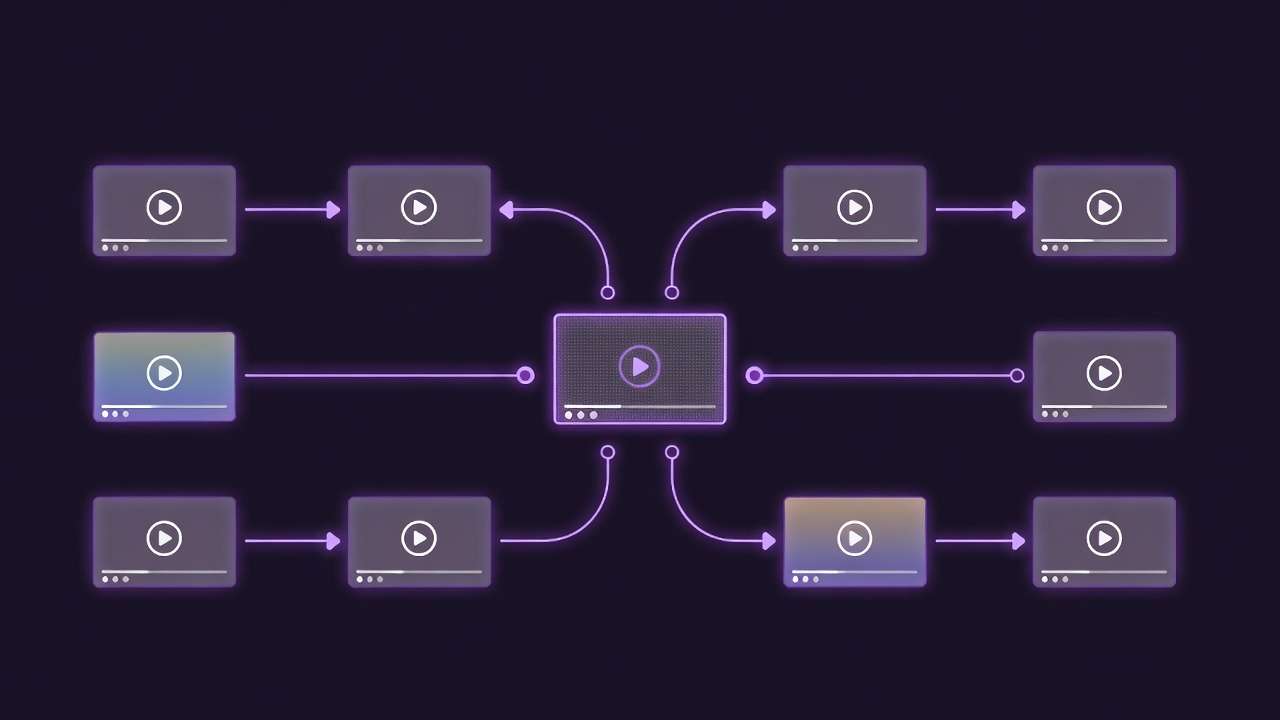
Episodic content: Series intros, recurring characters, consistent environments. Reference images anchor appearance; Remix refines without full regeneration.
Product demos: When 4K isn't required, Sora 2's narrative quality suits hero product moments. For 4K delivery, Kling 3.0 remains the go-to.
Social and short-form: 10-20 second clips with native audio - no separate sound design. Ideal for Instagram Reels, YouTube Shorts, TikTok when cinematic polish is desired.
What to avoid: Sora 2 excels at narrative and character work. For heavy product close-ups requiring 4K, Kling 3.0 is stronger. For physics-heavy environmental footage (water, cloth, particles), Veo 3.1 and Runway Gen-4.5 often outperform. The Sora 2 vs Veo 3.1 and Sora 2 vs Kling 3.0 comparisons help you route work correctly. Match the model to the brief - narrative is Sora 2's lane.
Quick Links
- Sora 2 complete tutorial →
- Sora 2 vs Veo 3.1 comparison →
- Sora 2 vs Kling 3.0 →
- Access Sora 2 on Cliprise →
Sora 2 is available on Cliprise alongside Kling 3.0, Veo 3.1, and 44 other models under one subscription.