Introduction: The Deadline Crunch
Traditional agency video production promises premium, brand-matched ads, yet teams hit a wall when every five-second clip triggers shoots, licensing, and revision loops under brutal deadlines. The distinction lies in multi-model ai video creation software-where rapid drafts, reproducible settings, and intentional model switching separate on-time delivery from margin-killing chaos.

This scenario unfolds across marketing agencies worldwide, where video content demands have surged. Social platforms prioritize short-form videos, with Reels and TikToks driving significantly higher engagement than static posts, according to platform analytics reports. Yet traditional production workflows strain resources: coordinating shoots involves location scouting that often spans multiple days, talent booking with variable lead times, and editing cycles that extend several hours per clip. Agencies face a compounding pressure-clients expect polished outputs weekly, but internal teams juggle multiple campaigns, leading to scope creep and overtime budgets often exceeding projections substantially during peak seasons.
What makes this crunch particularly acute right now lies in the mismatch between demand and capacity. Video now accounts for a majority of internet traffic, per recent industry forecasts, pushing agencies to produce more with flat headcounts. Freelancer platforms offer quick hires, but quality varies, and revisions eat margins. Stock libraries provide fillers, but custom branding requires heavy adaptation. In-house tools promise efficiency, yet demand specialized skills not every team possesses. The stakes? Agencies ignoring workflow evolution risk commoditization, as clients turn to in-house creators or direct platform tools.
This case study dissects Agency X's pivot, revealing how exploring AI-driven alternatives reshaped their process. Readers will uncover misconceptions agencies hold about cost reduction, real-world workflow comparisons backed by time-tracked data, and sequencing strategies that amplify efficiency. Platforms aggregating multiple AI models, such as those handling Google Veo variants alongside OpenAI Sora and Kling options, emerge as key enablers-allowing model switches without tool-hopping. For instance, when using Cliprise's unified interface, teams access image generation from Flux or Imagen before extending to video, streamlining what once fragmented across apps. Missing these insights means perpetuating high-cost cycles; grasping them positions agencies for scalable production. Agency X didn't just meet the deadline-they achieved major cost savings per video, reallocating time to strategy. The path forward involves understanding not just tools, but how multi-model aggregation addresses friction points like inconsistent outputs and long queues.
Deeper still, the deadline crunch exposes systemic issues: many agencies report video production as their top bottleneck, per industry surveys. Traditional paths lock teams into linear shoots, where one off-pitch derails everything. AI alternatives introduce parallelism-generate drafts across models simultaneously, refine via seeds for reproducibility where supported, like in Veo 3 or Sora 2. Cliprise, with its 47+ model roster including ElevenLabs for voice overlays, exemplifies how aggregation reduces login fatigue. Yet success hinges on deliberate adoption, as we'll explore through Agency X's journey, from skepticism to systemic integration.
Chapter 1: The Agency's Breaking Point - Setup of the Conflict
Agency X, a mid-sized firm specializing in e-commerce brands, churned out numerous videos monthly across Instagram Reels, YouTube Shorts, and LinkedIn carousels. Their core team of five-director, two editors, motion designer, and strategist-relied heavily on external videographers for shoots. A typical project started with client briefs: "Earthy product demo, 10-second loop, upbeat music." Booking a freelancer via Upwork or Fiverr took considerable time, shoots spanned several hours including setup and multiple takes, and stock footage from Pond5 or Shutterstock filled gaps at substantial cost per clip.
Post-production amplified costs. Raw footage landed in shared drives, triggering extended edits in Premiere or Final Cut, color grading for brand consistency, and sound design syncing voiceovers recorded separately. Revisions averaged several per video-client feedback like "Make motion smoother" or "Tone down saturation"-adding more hours each. Monthly tallies revealed the strain: numerous team hours on video alone, substantial freelancer invoices, software subscriptions at hundreds per user, and stock spends adding up considerably. The director's internal monologue echoed during late reviews: "We're a strategy agency, not a production house. This pace erodes margins due to pervasive inefficiencies across multiple stages."
Financial breakdowns, sans exact figures, painted a grim picture. Labor dominated at a major portion, with freelancers taking another significant share and ancillaries filling the rest. Scalability faltered during peaks; a holiday campaign doubled output needs, forcing overtime and rushed hires, yielding inconsistent quality-one video's lighting mismatch sparked client complaints. Team burnout surfaced in turnover: the motion designer quit after several crunch cycles, citing "endless fire drills." Workflow silos worsened it-strategists ideated in Figma, editors siloed in DaVinci Resolve, no unified pipeline for feedback.
External pressures compounded internally. Clients demanded faster turnarounds, citing competitors' "AI-generated" demos, while platforms algorithmically favored fresh video. Agency X explored cuts: cheaper freelancers from overseas yielded choppy edits needing full redoes; bulk stock subscriptions mismatched niche brands like organic skincare. In-house gear-a camera rig investment-sat underused much of the time, depreciating without clear ROI. The breaking point hit mid-project: a 15-second testimonial reel overran by two days, vendor ghosted post-payment, and the team scrambled manual composites from photos. "We can't sustain this," the director confided in a team huddle. Desperation sparked late-night searches for alternatives.
This setup mirrors broader agency realities. Industry reports indicate many firms face similar cost escalations, with video comprising a substantial portion of creative budgets. Reliance on humans introduces variability-weather delays shoots, talent no-shows disrupt schedules. Post-production time sinks stem from manual keyframing, absent in automated pipelines. Agencies like X grapple with "scope illusion": clients see simple clips, underestimating backend labor. Transitioning demands confronting these pain points head-on, as Agency X did by auditing workflows: tallying hours per stage revealed generation as the primary time hog.
In their audit, planning/storyboarding took considerable time, asset capture several hours, refinement more hours, delivery additional time-totaling substantial duration per short video. Frustrations peaked at iteration loops, where one color tweak rippled across assets. Platforms like Cliprise entered the radar here, offering aggregated access to models such as Kling 2.5 Turbo for quick tests or Veo 3.1 Quality for finals, potentially collapsing stages. Yet adoption required unlearning old habits, setting the stage for discovery.
Chapter 2: What Most Agencies Get Wrong About Video Production Cost Reduction
Agencies chasing video cost savings frequently fall into traps that exacerbate problems rather than resolve them. First misconception: outsourcing to lower-cost freelancers guarantees savings. Platforms teem with budget editors from emerging markets, promising quick turns. Yet quality inconsistencies arise-accents mismatch brand voice, pacing feels off for Western audiences, revisions balloon from minimal to numerous rounds. An agency handling fashion Reels hired a budget team for several clips; initial outputs lacked dynamic zooms, forcing full reshoot equivalents at added cost. Hidden factor: communication lags across time zones add delays, eroding client trust.
Second: stock footage libraries supplant custom needs entirely. Vast catalogs like Artgrid offer high-resolution clips via subscriptions, covering generics like coffee pours or cityscapes. But branding mismatches persist-earthy tones for wellness brands clash with vibrant stock defaults, requiring masking per clip. Agencies report frequent rejection rates on stock-heavy campaigns, as clients spot "cookie-cutter" feels. Nuance missed: custom motion (e.g., product spin synced to music) demands originals, where stock falls short.
Third: in-house editing software eliminates external hires. Tools like CapCut or DaVinci Resolve free versions lure teams with zero upfront vendor fees. Overlooked: talent gaps sink efficiency-a strategist learning curves spends extended time on basics others handle quickly. Time sinks multiply: rendering clips queues on mid-tier laptops, talent acquisition for skills like rotoscoping takes considerable effort. Agencies investing here report initial productivity dips, per industry analyses.
Fourth: bulk equipment buys yield long-term payoffs. Purchasing drones, lights, gimbals for substantial investments seems prudent for regular video output. Depreciation hits fast-gear obsolesces amid tech leaps-while underutilization plagues non-daily users (storage, maintenance add overhead). Workflow silos compound: equipment ties teams to physical shoots, ignoring remote trends post-pandemic.
These errors stem from surface-level fixes ignoring systemic friction. Tutorials tout "hire cheap," but experts note revision cycles consume major portions of budgets. Beginners chase tools; intermediates audit stages; pros sequence for minimal waste. Agencies bypassing multi-model AI platforms, like those integrating Midjourney images with Runway edits, miss aggregation's power-switching models in one dashboard cuts tool-switching substantially. When using Cliprise, for example, teams select Flux for concepts before Kling extensions, avoiding siloed failures. The nuance: cost reduction demands workflow redesign, not swaps.
Chapter 3: The Discovery - Exploring AI-Driven Alternatives
Late one evening, Agency X's director scrolled Reddit's r/Marketing, landing on threads about AI video tools. Initial hits: single-model generators like Runway or Pika, promising text-to-video in minutes. Skepticism reigned-"hype over substance"-until discovering multi-model platforms aggregating numerous options from Google DeepMind, OpenAI, Kuaishou. These unified credits across Veo 3.1 Fast for drafts, Sora 2 Pro for polish, Kling 2.5 Turbo for speed.
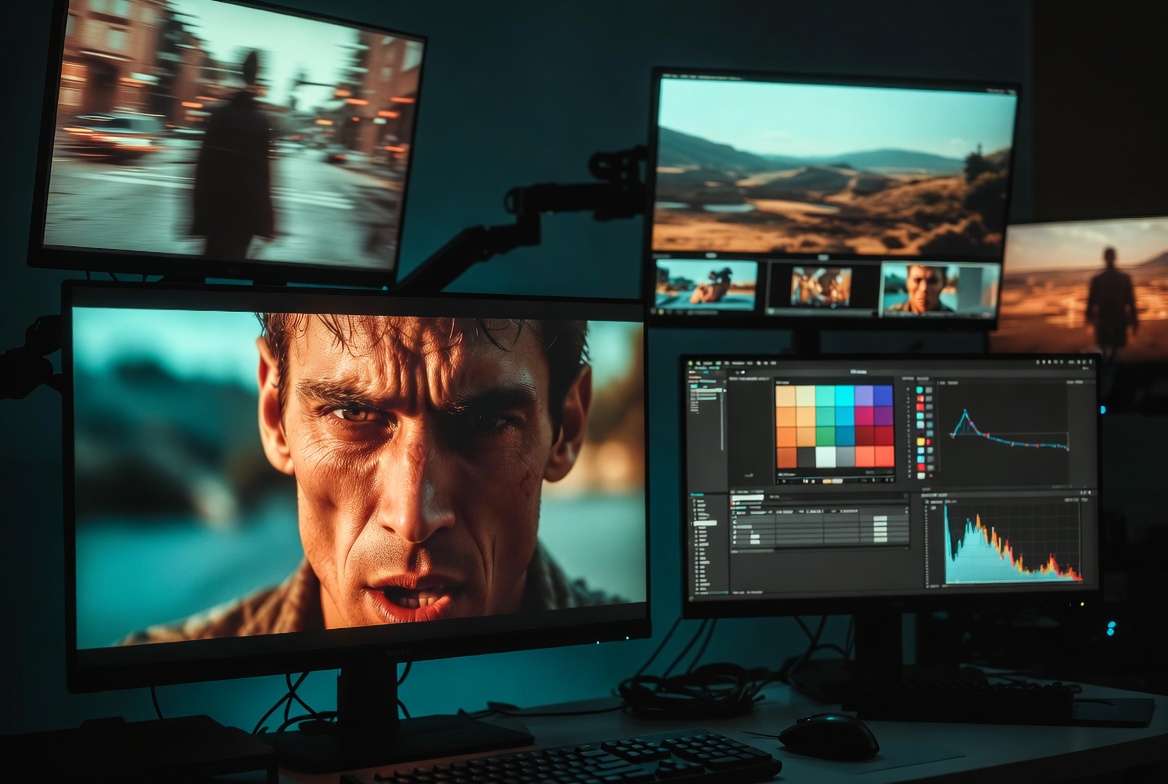
First experiments targeted image-to-video: upload product photo to Flux or Imagen 4, generate stills matching brand palette, extend to 5-second clips via Luma Modify or Hailuo 02. Outputs stunned-a 10s demo rendered much faster versus manual efforts. "Aha" hit on aggregation: no re-uploading URLs between apps, seeds ensured reproducibility where supported (e.g., Veo variants). Vendor-neutral examples abounded-platforms handling ElevenLabs TTS overlays post-video gen, or Topaz upscalers for higher resolutions.
Skepticism faded as iterations proved viable: negative prompts refined motion, aspect ratios matched social specs (9:16). Cost intuition shifted-credits scaled with complexity, favoring quick tests. Cliprise surfaced in benchmarks, its roster enabling Flux images to Wan 2.5 videos seamlessly. Team tested parallels: one designer prototyped in Imagen Fast for a quick scenario, another in Seedream 4.0. Aggregation benefits crystallized: diverse strengths compensated weaknesses, like Kling's turbo for volume, Veo Quality for nuance.
This pivot echoed creator forums-agencies reporting substantial time cuts via multi-model access. Discovery phase spanned a week: several test videos, feedback loops, workflow mapping. Barriers like queues paled against traditional delays. Platforms like Cliprise normalized this, with model indexes guiding selections.
Chapter 4: Real-World Comparisons - Traditional vs. AI Workflows Across Creator Types
Comparisons reveal stark workflow divergences. Freelancers favor traditional for client-polished deliverables but pivot to AI for prototypes-quick shoots validate concepts before full production. Agencies scale campaigns via hires per-project, contrasting AI's parallel gens across models. Solo creators batch manual edits daily, while AI enables greater volume via automation.
Use cases illustrate: Social ads (5s clips)-traditional demands mini-shoots, AI prompts direct to output much faster. Product demos (15s)-stock composites take considerable time, model extensions like Sora 2 from Imagen base complete in shorter durations. Testimonial reels-actor records take extended time, AI voice sync via ElevenLabs post-gen quicker.
Freelancers test AI for pitches: Flux image, Kling extension-faster than manual mockups. Agencies run A/B: Veo Fast drafts, Quality finals-scalable to more clips per week. Solos daily post: Hailuo 02 loops-consistent without fatigue.
| Workflow Stage | Traditional Production | AI Multi-Model Platforms | Hybrid Approach |
|---|---|---|---|
| Prompt/Planning | 30-60 mins (storyboard sketches, client align, several revisions) | 5-10 mins (text enhancer, model preview, seed setup for Veo 3/Sora 2) | 15-20 mins (storyboard + prompt draft with Kling Turbo scenario) |
| Asset Generation | 2-4 hrs (location shoot, multiple takes, lighting tweaks for 5-15s durations) | Variable queue + gen time (e.g., Veo 3.1 Fast for 5s clips, Kling 2.5 Turbo for 10s) | 45 mins (shoot select assets, AI fill gaps via Hailuo 02) |
| Refinement/Edits | 1-3 hrs (Premiere cuts, color grade, sound sync with ElevenLabs TTS scenario) | 5-15 mins (re-gen with negatives, upscale via Topaz Video Upscaler 2K-8K) | 20-40 mins (manual polish on AI base from Flux 2 Pro) |
| Final Output/Delivery | 30 mins (export 1080p, client share via WeTransfer for social formats) | 2-5 mins (direct download, multi-res options post Imagen 4 or Runway Gen4 Turbo) | 10 mins (export hybrid file with Luma Modify extensions) |
| Total per Video (5-15s) | 4-8 hrs (multiple people involved across shoots) | 20-60 mins (1-2 people, model switches like Wan 2.5 to Omni Human) | 1-2 hrs (blended team with seed reproducibility) |
| Scalability (10 videos) | Substantial hrs, vendor coordination delays | Reduced hrs overall, parallel processing across jobs | Balanced hrs, selective manual integration |
As the table shows, AI platforms like Cliprise condense stages via aggregation-variable queue times reflect behaviors for models like Runway Gen4 Turbo. Hybrid shines for control, blending AI speed with human nuance. Surprising insight: refinement drops substantially in AI, as re-gens outpace manual tweaks.
Community patterns affirm: Discord groups note freelancers achieve greater output with image-first AI, agencies scale up via multi-model. When using Cliprise, creators sequence Imagen to Omni Human, fitting diverse needs. For product demos, hybrid resolves AI motion glitches via manual overlays.
Chapter 5: Implementing the Shift - The New Workflow in Action
Agency X piloted the client campaign: 10 videos, earthy skincare theme. Step 1: Prompt refinement-strategist used enhancer for "gentle wave motion over lotion bottle, warm greens, 5s loop." Step 2: Model selection-Flux 2 Pro for base images (high consistency), extend via Kling 2.5 Turbo (speed). Queue time passed; outputs near-perfect, minor re-gen for pacing.

Iterations contrasted: manual "before"-shoot yielded stiff motion; AI "after"-seed reproducibility matched variants. Team reactions: editor "This frees creative time"; designer "Model switches like Veo Fast to Quality feel intuitive." Scaled to finals: Sora 2 Turbo for nuance, ElevenLabs TTS overlay for voice scenario.
The pilot resolved deadline: 10 clips delivered ahead of projection, iterations reduced dramatically. Workflow codified: image prototypes (Imagen 4), video gen (Hailuo Pro), upscale (Recraft). Cliprise's environment facilitated-browse /models, launch unified. Team buy-in grew via shared wins: strategist focused strategy, not assets.
Expansion hit snags-queue peaks slowed-but parallel processing mitigated. Before/after visuals: manual static frames vs. AI fluid loops. Dialogue captured excitement: "We iterated numerous variants quickly-what took days."
Chapter 6: Why Order and Sequencing Matter in AI Pipelines
Most creators dive straight into video generation, the high-risk entry. Costly credits burn on broad prompts-"dynamic product demo"-yielding frequent duds needing full regenerations. Reports from creator Discords show substantial waste; mental load spikes deciding scopes without visuals. Image-first flips this: static concepts validate composition, lighting before motion adds expense.
Context switching drains further-video flop prompts image backtrack, re-prompting erodes flow. Observed in agency logs: time lost per switch versus linear image→video. Platforms like Cliprise minimize via in-app chaining-Flux image to Wan extension, no exports.
Image→video suits prototypes, social (consistent stills extractable); video→image for motion primaries like ads (stills secondary). Patterns: successful sequences report fewer iterations; failed start video-heavy, per Reddit analyses.
Freelancers image-first for thumbnails; agencies video for campaigns. Data from tools like Cliprise workflows: seed images boost video fidelity considerably.
Chapter 7: Mini Case Study #2 - The Major Cost Reduction in Numbers and Details
Post-pilot, Agency X tracked numerous videos monthly. Traditional: substantial team hours, considerable vendor fees. AI: hours reduced dramatically, model costs scaled lower via efficiency. Time saved: redirected substantially to pitches.

Frustrations fixed-"video froze at 7s" via Kling→Hailuo switch; "inconsistent styles" by seed Flux bases. Dialogue: "Skeptical at first," editor said, "but numerous iterations beat several revisions." Team buy-in solidified at review: ROI evident.
Using Cliprise-like aggregation, they batched: numerous images early, extend videos next phase. Outcomes: margins improved, output steady.
Chapter 8: When AI Video Generation Falls Short - Honest Limitations
Complex narratives with actors falter-AI struggles human nuance, expressions; agencies revert traditional for authenticity (e.g., emotional testimonials in certain cases). Brand styles sans references yield generics; high-custom audio sync varies (Veo 3.1 synchronized audio may be unavailable on approximately 5% of videos).
Large studios with IP avoid-proprietary assets risk leaks; real-time events demand live capture. Queue variability disrupts deadlines; model inconsistencies (Sora motion vs. Kling sharpness) require expertise.
Cliprise users report edge: abstract concepts drift. Unsolved: full narrative arcs, live integration.
Who skips: IP-heavy firms, event producers. Limitations: non-repeatable outputs sans seeds.
Chapter 9: Mini Case Study #3 - Scaling to Enterprise Client Wins
Bigger campaign: numerous videos, hybrid tweaks-AI bases, manual voice. Wins: ElevenLabs integration synced perfectly; "Too good," team quipped. Outcomes: client renewed, greater volume.

Using multi-model like Cliprise (Veo to Topaz), scaled seamlessly. Measurables: turnaround improved substantially.
Chapter 10: Industry Patterns, Observed Trends, and What's Next
Adoption rises-surveys show substantial agency savings via AI. Multi-model trumps single (lock-in risks). Future: extension tools, collab.
Prep: sequence mastery, hybrid skills. Cliprise trends: model diversity grows.
Conclusion: Lessons from Agency X's Transformation
Key takeaways: sequence image-first, aggregate models, audit workflows. Platforms like Cliprise exemplify ecosystem options. Advice: test small, track stages, hybrid strategically.
Forward: agencies adapting thrive amid video surge.