Kling 2.6 Motion Control: Complete Guide to Precision AI Video
Kling 2.6 Motion Control gives you explicit control over camera trajectory and subject motion in AI-generated video. This ai video generation guide covers how the motion control system works, how to specify parameters effectively, production use cases, and how to integrate it into a broader video generation workflow alongside Kling 3.0 and other Cliprise video models.
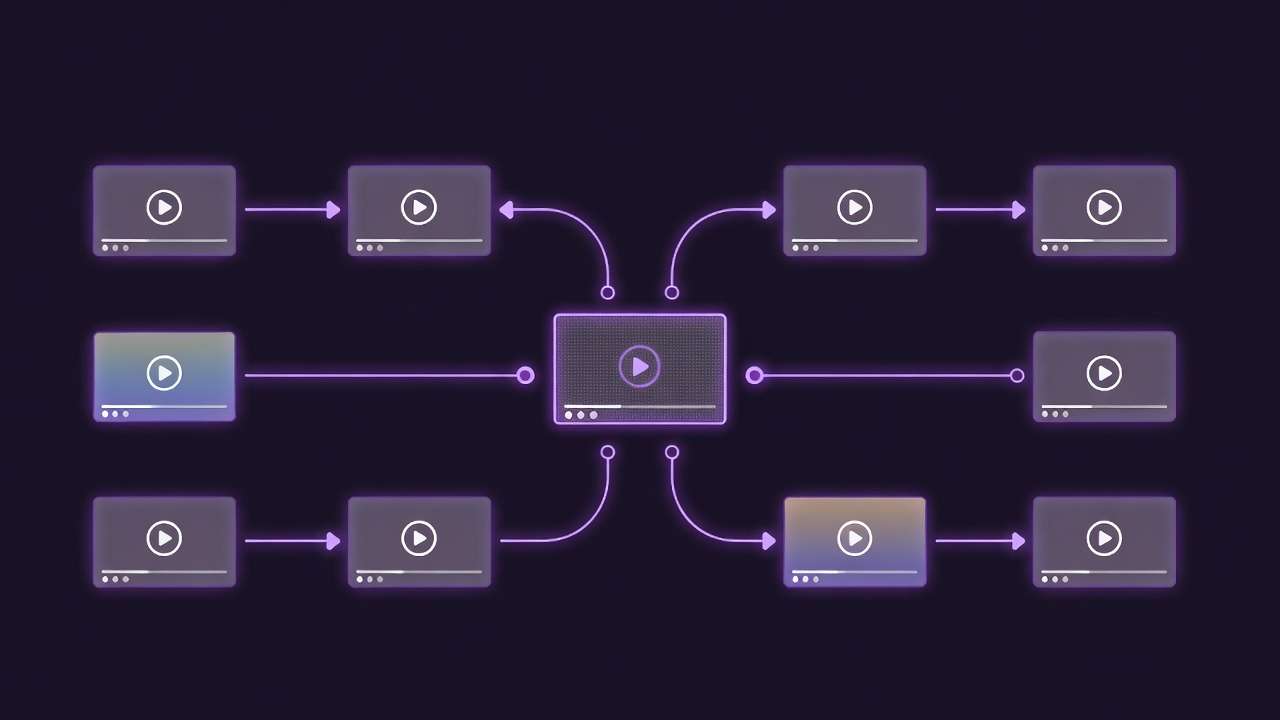
Why Motion Control Matters
Standard AI video generation models-including Kling 3.0 and Sora 2-interpret motion from text descriptions. "Camera slowly orbits the product" will produce an orbit, but the exact arc radius, speed, and trajectory are determined by the model's creative interpretation, not your specification.
For one-off creative shots, this variability is acceptable or even desirable. For production workflows that require:
- Exact camera behavior on a specific shot
- Consistent motion patterns across a series of clips
- Precise execution of a storyboarded camera move
- Repeatable shot templates reused across a campaign
-text-prompted motion generation is insufficient. Motion control solves this.
Camera Control Parameters
Kling 2.6 Motion Control accepts explicit camera trajectory parameters:
Movement types
| Type | Description | Parameter Key |
|---|---|---|
| Pan | Horizontal camera rotation | pan_left / pan_right |
| Tilt | Vertical camera rotation | tilt_up / tilt_down |
| Dolly | Camera moves toward/away from subject | dolly_in / dolly_out |
| Crane | Camera moves vertically through space | crane_up / crane_down |
| Orbit | Camera circles around a central subject | orbit + angle spec |
| Zoom | Focal length change (no camera movement) | zoom_in / zoom_out |
| Static | No camera movement | static |
Speed parameters
slow- deliberate, controlled movementmedium- standard cinematic pacingfast- dynamic, energetic movement
Magnitude (for orbit and arc movements)
45- quarter-orbit90- 90-degree arc180- half-orbit360- full circle (only achievable in longer clips)
Subject Motion Control
In addition to camera movement, Kling 2.6 Motion Control can apply motion vectors to detected subjects within the frame.
Subject motion parameters specify direction and speed: forward, backward, left, right, up, down, toward_camera, away_from_camera.
Multi-subject control allows individual motion vectors for multiple subjects in a scene by position (left, right, primary).
Production Use Cases
Product showcase: orbit shot
The orbit shot is the most common motion control application in commercial video production. Specifying a consistent 180° orbit across a product line produces uniform orbit behavior across all clips-a shot pattern that would require multiple physical setups in traditional video production.
Product reveal: dolly in
A controlled push-in from a wide establishing shot to a close detail-ideal for smartphone, product, and hero shots.
Architectural visualization: crane up
Establishing shots rising through space-modern buildings, exteriors, urban environments.

Scene reveal: pan across
Revealing a landscape or environment through a horizontal pan-mountain valleys, cityscapes, interiors.
Combining Camera and Subject Motion
The most complex motion control setups combine camera movement with subject movement:
- Opposing movements create dynamic energy (camera pushes in while subject moves away)
- Matching movements create synchronized flow (camera tracks alongside moving subject)
- Counterpoint movements create cinematic complexity (camera orbits right while subject turns left)
Workflow Integration
Use Kling 3.0 for concept, Motion Control for production
The recommended two-stage workflow:
Stage 1 - Concept (Kling 3.0): Generate exploratory video with Kling 3.0 using text-prompted motion descriptions. Maximum quality, creative interpretation, rapid concept validation. Identify which shots work and what camera behavior you want.
Stage 2 - Production (Kling 2.6 Motion Control): Once specific shots are approved in concept stage, rebuild them in Motion Control with explicit parameters. The approved creative direction from stage 1 becomes the brief for precise technical execution in stage 2.
This mirrors traditional production workflow: exploratory development followed by precise technical execution.
Building shot templates
Motion control parameters can be saved as reusable shot templates in your Cliprise API integration-Standard Product Orbit, Quick Product Reveal, Establishing Crane-and applied across different subject prompts to maintain consistent camera behavior across a production series.
Troubleshooting
The camera isn't moving the way I specified:
- Check parameter syntax-common error is incorrect key names
- Reduce subject complexity in the prompt-very complex scenes can override camera specification
- Specify static camera in the base prompt text as reinforcement
Motion feels unnatural or jerky:
- Use
slowspeed for more control; fast movements at short clip lengths sometimes clip before the motion completes naturally - For orbit movements, ensure clip length is sufficient for the specified angle at the selected speed
Subject not moving as specified:
- Subject motion requires the model to detect a subject in the scene; highly abstract scenes may not respond
- Be explicit in the text prompt about the presence and position of the subject you want to move
Comparison with Full Kling Lineup
| Model | Motion Control | Quality | Best For |
|---|---|---|---|
| Kling 2.6 Motion Control | ★★★★★ | ★★★★☆ | Precise shot execution |
| Kling 3.0 | ★★★☆☆ | ★★★★★ | Maximum quality, creative generation |
| Kling 2.6 | ★★★☆☆ | ★★★★☆ | Standard generation at 2.6 quality |
| Kling 2.5 Turbo | ★★★☆☆ | ★★★☆☆ | Speed-priority generation |
See the full comparison: Kling 2.6 Motion Control vs Kling 3.0.
Frequently Asked Questions: Kling 2.6 Motion Control
When should I use Kling 2.6 Motion Control instead of Kling 3.0?
Use Kling 2.6 Motion Control when you need precise, repeatable camera behavior-product orbits, dolly reveals, crane shots, or consistent motion across a campaign. Use Kling 3.0 when you prioritize maximum visual quality and creative interpretation over parameter control. The recommended workflow: validate concepts with Kling 3.0, then execute approved shots in Motion Control. See Kling 2.6 Motion Control vs Kling 3.0.
What camera movements does Motion Control support?
Pan (left/right), tilt (up/down), dolly (in/out), crane (up/down), orbit (with angle specs: 45°, 90°, 180°, 360°), zoom (in/out), and static. Speed parameters: slow, medium, fast. For product showcases, orbit shots are the most common application. Compare with Runway Gen4 Turbo for alternative camera control approaches.
Why is my camera not moving as specified?
Check parameter syntax-incorrect key names are a common error. Reduce subject complexity in the prompt; very complex scenes can override camera specification. Reinforce with "static camera" in the base prompt text if needed. For image-to-video workflows, ensure your keyframe composition supports the intended camera move.
How do I integrate Motion Control into a multi-model workflow?
Stage 1: Generate exploratory video with Kling 3.0 or Sora 2 using text-prompted motion. Identify which shots work. Stage 2: Rebuild approved shots in Kling 2.6 Motion Control with explicit parameters. Save parameters as reusable shot templates. See motion control mastery for camera angle best practices.
Does Motion Control work for product video and e-commerce?
Yes. Orbit shots are the standard for product showcases-a consistent 180° orbit across a product line produces uniform behavior. Dolly-in reveals work for hero shots. For AI product photography pipelines, generate base images with Flux 2 or Imagen 4, then extend to video with Motion Control for precise product spins.
Summary
Kling 2.6 Motion Control is a precision production tool. Its value is not visual quality-Kling 3.0 leads there-but reliable, parameter-driven shot execution that text-prompted generation cannot deliver. For production workflows where specific camera behavior is a requirement rather than a suggestion, motion control is the only technically correct solution.

Use it in the production stage of your workflow, after concepts have been validated with generative models. Build shot templates. Apply them consistently. This is how professional video production workflows integrate AI video generation. For aspect ratio optimization across platforms, pair Motion Control with platform-native ratios (9:16 for Reels, 16:9 for YouTube).
Related News:
Related:
- Kling 2.6 Motion Control vs Kling 3.0 comparison →
- Kling 3.0 complete guide →
- Motion control mastery guide →
- Sora 2 vs Runway Gen4: Camera Control Comparison →
- Aspect Ratio Mastery: Optimize for Every Platform →
Explore all Kling models at the Cliprise models hub.