Gemini 3 Pro vs Imagen 4: Complete 2026 Comparison
Two of the most capable AI image generation models in 2026 share the same parent company. Gemini 3 Pro and Imagen 4 both originate from Google's AI research divisions, yet they are architecturally distinct products that optimize for different primary use cases. The choice between them is not obvious without understanding what each model is actually built to do.

This comparison examines both models across the dimensions that matter for professional workflows: architecture, prompt adherence, output quality, speed, cost, and practical use cases. Both are available on Cliprise without separate Google API accounts.
Test both inside Cliprise’s Google-powered image generator stack when you want to compare Gemini’s reasoning-heavy prompts against Imagen’s photographic bias without spinning up separate Vertex projects.
Architecture
Gemini 3 Pro is a multimodal foundation model. Its image generation capability is conditioned on a large language model backbone-the model processes prompts as semantic structures, which is why it handles complex relational instructions so precisely. Text is not a trigger for image synthesis here; it is a first-class representation that the model reasons over before generating anything visual.
Imagen 4 is Google DeepMind's dedicated image generation model, a direct-lineage successor to the Imagen series. Built on a diffusion-based architecture optimized specifically for visual output quality, it treats the generation task as a visual problem from the ground up. The result is a model that produces photographic fidelity that a language-first model cannot fully replicate.
The architectural difference is not a quality ranking-it is a design philosophy difference that manifests in specific strengths.
Prompt Adherence
Gemini 3 Pro is the stronger model for complex prompt adherence. Multi-subject compositions with explicit spatial positioning, long prompts exceeding 200 words, and instructions that involve subject relationships execute faithfully because the language model backbone genuinely understands the instruction before generating.
Imagen 4 handles standard to moderately complex prompts excellently, but shows increasing variability as prompt complexity grows. For the majority of content generation tasks-a product on a clean background, a landscape scene, a portrait in a described style-both models perform comparably. The gap opens specifically on highly structured or technically demanding multi-element prompts.
Winner for complex prompts: Gemini 3 Pro
Winner for standard prompts: Comparable
Image Quality
Imagen 4 is the stronger model on raw photographic realism for single-subject imagery. Portraits, product shots on neutral backgrounds, lifestyle photography, nature scenes-the model's diffusion-specialized architecture produces sharpness, texture, and lighting quality that consistently approaches photographic standards. This is what it was built for.
Gemini 3 Pro matches Imagen 4 on quality for complex multi-element compositions where semantic accuracy determines perceived quality. For editorial illustration, conceptual imagery, and outputs where "getting it right" matters more than photographic polish, the quality difference is negligible and often reverses in Gemini 3 Pro's favor.
Winner for photographic realism: Imagen 4
Winner for complex compositions: Gemini 3 Pro
Winner for text within images: Gemini 3 Pro (significant advantage)
Speed
Both models run inference in the 10-20 second range at standard resolutions on Cliprise. Gemini 3 Pro is slightly slower on very long prompts due to language processing overhead. For standard prompt lengths and typical resolutions (1024×1024), the difference is under 3 seconds-negligible in most workflows.
For speed-priority workflows, Gemini 3 Flash is the relevant comparison point, not Imagen 4 standard mode. Both Pro-tier models are premium quality options, not speed-tier options.
Winner: Comparable at standard use; Imagen 4 slightly faster on long prompts
Side-by-Side Comparison Table
| Criterion | Gemini 3 Pro | Imagen 4 |
|---|---|---|
| Architecture | Multimodal LLM + diffusion decoder | Dedicated diffusion model |
| Context window | 32K context window | Standard prompt length |
| Complex prompt adherence | ★★★★★ | ★★★★☆ |
| Photographic realism | ★★★★☆ | ★★★★★ |
| Text rendering in image | ★★★★★ | ★★★☆☆ |
| Multi-subject accuracy | ★★★★★ | ★★★★☆ |
| Single-subject quality | ★★★★☆ | ★★★★★ |
| Speed (standard prompt) | 10-18 sec | 10-16 sec |
| Max resolution | 2048×2048 | 2048×2048 |
| Credit tier | Premium | Premium |
Best Use Cases
Choose Gemini 3 Pro when:
- Your prompt is instruction-heavy with multiple specific requirements
- You need accurate text rendered within the image (labels, signage, UI elements)
- You're generating complex multi-subject compositions with explicit spatial relationships
- The prompt is long and detailed (200+ words)
- Editorial, conceptual, or abstract imagery where semantic interpretation matters
- You need consistent performance across a wide variety of prompt types

Choose Imagen 4 when:
- Single-subject photographic realism is the primary quality criterion
- You're generating portraits, product photography, or lifestyle imagery
- Visual quality measured against photographic standards is the success metric
- Standard to moderately complex prompts where visual output is the goal
- Fashion, beauty, and lifestyle content where photographic production values are expected
Workflow Recommendation
The most effective production workflow uses both models routed by content type. This is not a hedge-it reflects the genuine architectural differentiation between the models.
Route to Gemini 3 Pro: Complex multi-element scenes, any image requiring text, conceptual and editorial illustration, long detailed prompts, instruction-precision tasks.
Route to Imagen 4: Product photography, portraits, lifestyle and fashion imagery, single-subject photorealistic outputs, standard prompts where photographic quality is the measure.
Both models are available through Gemini 3 Pro and Google Imagen 4 model pages. For volume generation on either model family, consider Gemini 3 Flash as the speed-tier option that preserves Gemini's semantic coherence at lower cost and faster inference.
Final Verdict
There is no universal winner. Gemini 3 Pro leads on semantic precision, text rendering, and complex compositional accuracy. Imagen 4 leads on photographic realism and single-subject visual quality. Both are best-in-class for their respective strengths.
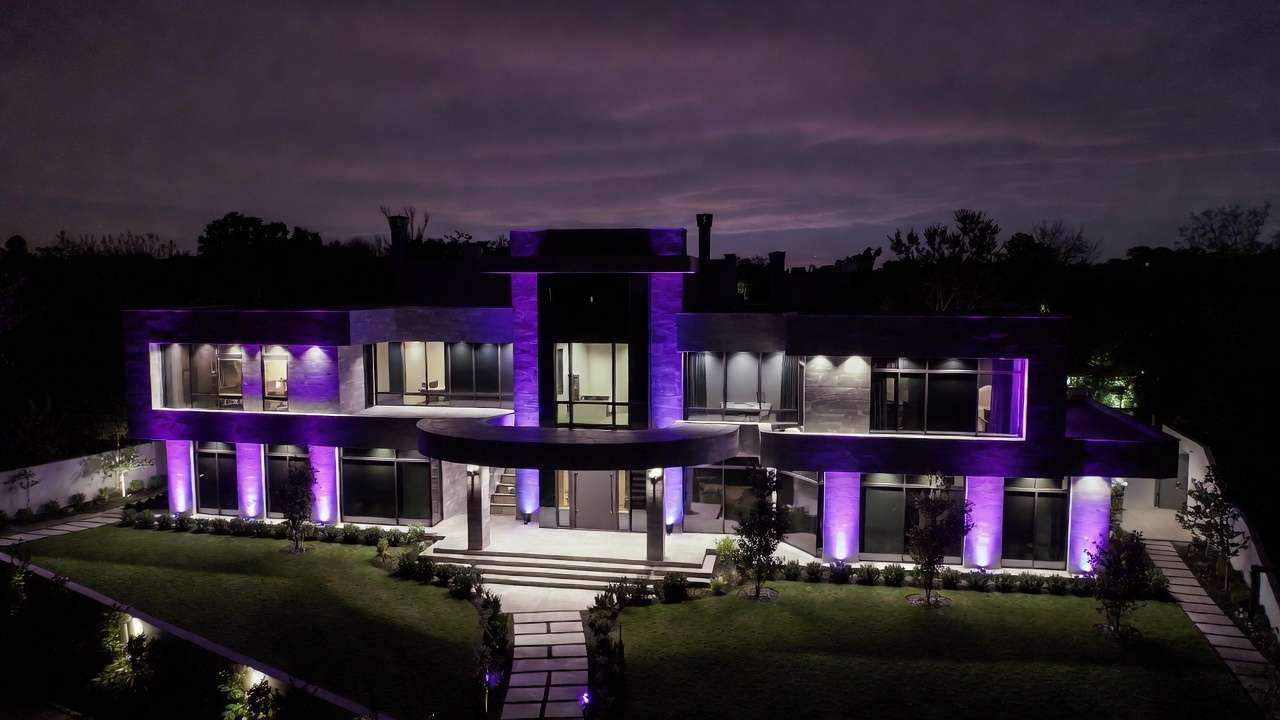
For teams building serious AI image generation workflows in 2026, the correct answer is not "which one"-it is "which one for which task type." Cliprise's unified credit system makes both available without separate vendor accounts, enabling intelligent model routing without operational overhead.
Related News:
Related:
- Gemini 3 Pro prompting guide →
- Google Imagen 4 complete guide →
- AI image generation complete guide →
Explore Gemini 3 Pro, Gemini 3 Flash, and Google Imagen 4 before routing a production batch.